


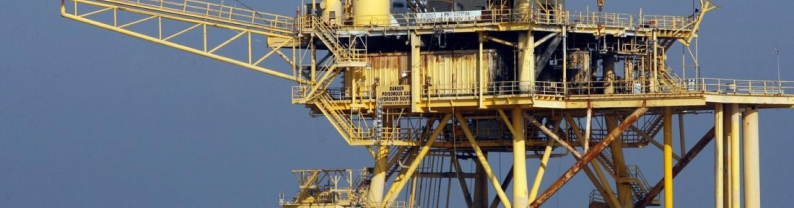
Oil prices stabilized on Thursday (February 12th), as the market reassigned a risk premium to US-Iran tensions despite US inventory data showing swelling domestic supplies. This movement confirms one thing: geopolitical headlines are still more "noise" than signals of a short-term surplus. As of 3:50 PM WIB, Brent was at $69.60/barrel (+0.29%) and WTI was at $64.83/barrel (+0.31%). The gains were moderate, but enough to keep prices near the psychological $70 level for Brent. From a geopolitical perspective, market focus is on the potential for escalation in the Middle East. Recent reports...
The S&P Global US Services PMI rose to 54.3 in March 2025, a three-month high, from 51 in February, surpassing market expectations of 50.8, preliminary data showed. Service sector output rebounded strongly after hitting a 15-month low in February, driven by improved business inflows, strengthening customer demand, and better weather conditions. However, exports remained a weak spot, declining for the third straight month. Employment edged up in April, reversing February's small decline, though job growth remained sluggish as firms hesitated to hire amid demand uncertainty. Input costs...
The S&P Global US Manufacturing PMI fell to 49.8 in March 2025 from 52.7 in February, missing market expectations of 51.8, a preliminary estimate showed. Manufacturing output declined after February's sharpest increase in nearly three years, with factories reporting fewer instances of output being boosted by the front-running of tariffs and new orders growth nearly stalling. Input purchasing in the sector also slipped back into decline. However, export sales saw their smallest decline in nine months, supported by rising orders from Canada, Germany, and other EU countries, suggesting...
The White House is adjusting its approach to tariffs that will take effect on April 2, likely eliminating a series of industry-specific tariffs while imposing reciprocal tariffs aimed at countries with significant trade ties with the United States, according to the Wall Street Journal. US President Donald Trump has declared April 2 as "Liberation Day" for the US, when he will implement so-called reciprocal tariffs that seek to match US tariffs with those imposed by trading partners, as well as tariffs on sectors such as autos, pharmaceuticals and semiconductors, which he has repeatedly said...
Donald Trump's top trade chief, Jamieson Greer, plans to speak with his Chinese counterpart next week, the U.S. president said on Friday amid an escalating tariff war. Talks between the world's biggest economies would occur just days before the long-threatened April 2 unveiling of fresh U.S. tariffs on every country that taxes U.S. imports, potentially including new steps against China. Trump did not say what he hoped the next set of U.S.-China talks would achieve, or whether they might lead to a roll-back of levies on Chinese imports. Trump has imposed 20% levies on all imports from...
President Donald Trump said on Thursday the United States will sign a minerals and natural resources deal with Ukraine shortly and that his efforts to achieve a peace deal for the country were going "pretty well" after his talks this week with the Russian and Ukrainian leaders. Trump made the comments at a White House event after signing an order to increase U.S. production of critical minerals. "We're doing very well with regard to Ukraine and Russia. And one of the things we are doing is signing a deal very shortly with respect to rare earths with Ukraine." Trump referred to his...
US citizens filing new applications for unemployment insurance rose to 223K for the week ending March 15, the US Department of Labor (DOL) reported on Thursday. This missed the preliminary estimate and was slightly higher than the previous week's revised count of 221K (revised from 220K). The report also highlighted the seasonally adjusted insured unemployment rate at 1.2%, while the four-week moving average rose by 750 to 227K from the previous week's revised average. Additionally, Continuing Jobless Claims rose by 33K to 1.892 million for the week ending March 8. (Newsmaker23) Source:...
German producer prices rose by 0.7% year-on-year in February 2025, up from 0.5% in January but still below market consensus of 1%. However, this was the fourth consecutive month of producer inflation, mainly driven by higher prices of non-durable consumer goods (3.0%) and durable consumer goods (1.2%).In particular, capital goods costs also rose (2.0%), especially machinery (1.9%) and motor vehicles, trailers, and semi-trailers (1.4%). In addition, intermediate goods prices rose by 0.3%. Excluding energy, producer prices rose by 1.4%. Meanwhile, energy prices shrank by 0.8%, mainly due to...
Australian employment posted a surprise fall in February although the jobless rate stayed unchanged, a soft result that sent the local dollar lower. Figures from the Australian Bureau of Statistics on Thursday showed net employment fell 52,800 in February from January. That was well under market forecasts for a 30,000 rise. The jobless rate stayed at 4.1%, matching market expectations. The Australian dollar slipped 0.3% to $0.6341 after the data. Source: Reuters
 Gold rises in the early Asian trade. There's a broad commodities uptrend, driven by macro uncertainty, a weaker dollar, and persistent demand for "hard" assets, says Fawad Razaqzada, market analyst...
 Oil extended declines after OPEC+ agreed to a bigger-than-expected production increase next month, raising concerns about oversupply just as US tariffs fan fears about the demand outlook.
Brent...
Oil extended declines after OPEC+ agreed to a bigger-than-expected production increase next month, raising concerns about oversupply just as US tariffs fan fears about the demand outlook.
Brent...
 The Japanese Yen (JPY) weakened against its US counterpart and reversed part of Friday's recovery from the lowest level since July 23 following Bank of Japan (BOJ) Governor Kazuo Ueda's remarks....