


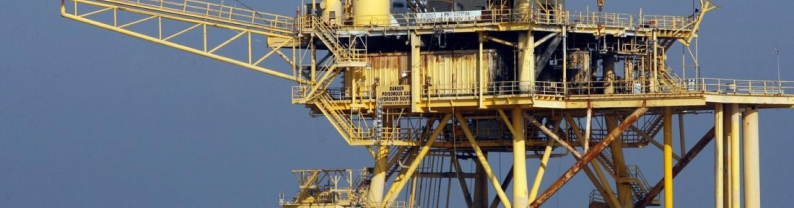
Oil prices stabilized on Thursday (February 12th), as the market reassigned a risk premium to US-Iran tensions despite US inventory data showing swelling domestic supplies. This movement confirms one thing: geopolitical headlines are still more "noise" than signals of a short-term surplus. As of 3:50 PM WIB, Brent was at $69.60/barrel (+0.29%) and WTI was at $64.83/barrel (+0.31%). The gains were moderate, but enough to keep prices near the psychological $70 level for Brent. From a geopolitical perspective, market focus is on the potential for escalation in the Middle East. Recent reports...
Gold prices weakened slightly on Thursday (February 12th), as more solid US employment data reduced market confidence in an imminent Federal Reserve interest rate cut. The strong employment data prompted market participants to shift expectations of a "quick rate cut," while a stronger dollar added pressure on the precious metal. Spot gold fell 0.42% to $5,062.94/oz. Other metals also corrected after a sharp rally the previous day. Silver fell 0.99% to $83.481/oz, indicating the market is beginning to cool down from the high volatility that had occurred. Pressure was also seen on precious...
Oil prices rose on Wednesday (February 11th), supported by a combination of geopolitical risk premiums from US-Iran tensions and more solid Asian demand signals particularly from India which helped ease concerns about a market surplus. Market participants considered Middle East headlines to be "outweighing" the negative sentiment from the surge in US oil inventories. At 09:15 GMT, Brent rose 78 cents (+1.13%) to $69.77 per barrel, while WTI gained 75 cents (+1.18%) to $64.52 per barrel. This increase extended the gains of the past two days, as the market reassessed a "risk premium" on...
Gold prices strengthened on Wednesday, supported by a weaker US dollar and falling US bond yields after the latest economic data reinforced the narrative that the Federal Reserve is likely to continue its policy easing. Investors are now adopting a more defensive stance while awaiting the release of US Nonfarm Payrolls (NFP), which has the potential to trigger further volatility. Based on updated spot prices, spot gold is at around $5,076.10 per ounce, up $34.20 (+0.68%). This data was recorded at 4:43 AM ET (approximately 4:43 PM WIB). In the derivatives market, US gold futures also...
Gold experienced a slight correction in the European session on Tuesday (February 10th), but remained above $5,000/oz as the market held its breath ahead of a series of US data that could alter interest rate expectations. Spot gold fell around 0.2% to $5,047.11/oz. What kept gold resilient wasn't just the data and the weakening dollar, but also the persistent geopolitical risk premium. Most notably, US-Iran tensions have once again brought the Strait of Hormuz into the spotlight. The US recently issued guidelines for US-flagged vessels passing through to stay away from Iranian territorial...
Oil remained in the green zone on Tuesday (February 10th), as the market refused to abandon the Middle East risk premium. As of 13:07 GMT (20:07 WIB), Brent rose +0.4% to $69.32/barrel, while WTI rose +0.2% to $64.51/barrel. The primary fuel source remains the same: the Strait of Hormuz. US maritime authorities have issued guidance for US-flagged vessels passing through to stay as far away from Iranian territorial waters as possible and to verbally refuse any requests for boarding from Iranian authorities. Although only "guidance," the market interpreted it as a risk signal as Hormuz is a...
Gold held above the psychological $5,000 level at the start of the week, supported by a combination of factors that are "right" for the precious metal : physical demand from China, expectations of lower US interest rates, and a weakening dollar. The main trigger came from weekend data showing the People's Bank of China (PBOC) again adding to its gold reserves. This means China has recorded gold purchases for the 15th consecutive month, indicating that demand remains strong amid fiscal concerns and global economic shutdowns. From the US side, the market is also increasingly betting that the...
Oil prices fell about 1% on Monday as concerns about conflict in the Middle East eased slightly. The market calmed after the US and Iran agreed to resume talks on Tehran's nuclear program, reducing fears of imminent supply disruptions. Brent fell about 67 cents to $67.38 per barrel, while WTI weakened 61 cents to $62.94 per barrel. Market participants believe that as long as the dialogue remains active, the likelihood of sudden supply disruptions is smaller at least temporarily. The talks in Oman were described as "positive" by both sides, although significant differences remain. Most...
 Gold rises in the early Asian trade. There's a broad commodities uptrend, driven by macro uncertainty, a weaker dollar, and persistent demand for "hard" assets, says Fawad Razaqzada, market analyst...
 Oil extended declines after OPEC+ agreed to a bigger-than-expected production increase next month, raising concerns about oversupply just as US tariffs fan fears about the demand outlook.
Brent...
Oil extended declines after OPEC+ agreed to a bigger-than-expected production increase next month, raising concerns about oversupply just as US tariffs fan fears about the demand outlook.
Brent...
 The Japanese Yen (JPY) weakened against its US counterpart and reversed part of Friday's recovery from the lowest level since July 23 following Bank of Japan (BOJ) Governor Kazuo Ueda's remarks....