


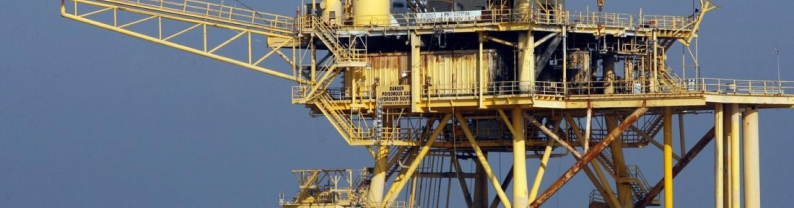
Oil prices stabilized on Thursday (February 12th), as the market reassigned a risk premium to US-Iran tensions despite US inventory data showing swelling domestic supplies. This movement confirms one thing: geopolitical headlines are still more "noise" than signals of a short-term surplus. As of 3:50 PM WIB, Brent was at $69.60/barrel (+0.29%) and WTI was at $64.83/barrel (+0.31%). The gains were moderate, but enough to keep prices near the psychological $70 level for Brent. From a geopolitical perspective, market focus is on the potential for escalation in the Middle East. Recent reports...
The USD/CHF currency pair moved steadily near 0.7950 in late Asian trading on Thursday. This movement continued the recovery that began on Wednesday, after a sharp correction on January 19-20. This strengthening was supported by increased buying interest in the US dollar following US President Donald Trump's speech at the World Economic Forum (WEF) in Davos. At the same time, the US Dollar Index (DXY) traded firmly around 98.80, near the previous day's high. Trump stated that the United States would not use military action or threaten tariffs against the European Union over the Greenland...
The Japanese yen weakened to near 158.5 per dollar on Thursday, amid market concerns over the worsening fiscal outlook. The Bank of Japan (BOJ) began a two-day policy meeting, and traders remained wary of possible intervention to stabilize the yen. Prime Minister Sanae Takaichi called a snap election and pledged to ease fiscal policy, including eliminating the 8% sales tax on food. Meanwhile, the BOJ is expected to keep interest rates steady at 0.75% after a hike in December, maintaining monetary stability even as pressure on the yen remains high. Economically, Japanese exports rose for...
Gold prices rose sharply again on Tuesday (January 20th), hitting a new record, breaking through the psychological barrier above $4,700 per ounce. This rise was driven by a "flight to safety" as geopolitical tensions escalated and trade war concerns resurfaced in global markets. On the spot market, gold rose more than 3% to around $4,750/oz, after hitting an intraday peak of $4,766.10/oz. US gold futures for February delivery closed 3.7% higher at $4,765.80/oz. This movement indicates that demand for gold remains strong despite prices reaching unprecedented levels. The trigger came from a...
Gold prices hit another record high, while silver held near its all-time high. This rise was driven by two major factors: the escalating Greenland crisis and turmoil in the Japanese government debt market, which sent investors rushing to safe havens. In Davos, US President Donald Trump showed no signs of backing down from his plan to take over the Arctic island. The situation further heightened market tensions after Greenland's Prime Minister urged the public to prepare for the possibility of a military invasion though he insisted the scenario was remote. Amid the tensions, the spot price...
Oil prices rose on Tuesday, supported by a combination of supply disruptions from Kazakhstan, improved global economic growth projections, and a weakening US dollar, making dollar-denominated oil cheaper for foreign buyers. Brent rose to around $64.43 per barrel, while WTI strengthened to around $60 per barrel. However, market participants remained cautious as geopolitical developments particularly regarding Greenland have the potential to trigger renewed trade tensions between the US and Europe. On the supply side, Tengizchevroil (TCO) halted production at its Tengiz and Korolevskoye...
The USD/CHF pair weakened for the third consecutive day and traded around 0.7960 in early European trading on Tuesday. The Swiss franc strengthened on increased demand for safe haven assets, following US President Donald Trump's new tariff threats that have shaken global markets. Trump plans to impose 10% tariffs starting February 1st on several European countries and the UK, with the possibility of increasing the tariffs to 25% if a deal fails. This threat, which also relates to the Greenland issue, triggered a sell-off in US assets. Investors fear that prolonged uncertainty will undermine...
The US Dollar Index (DXY) trended sluggishly around 99.06 on Monday (January 19th), as liquidity thinned as US markets were closed for Martin Luther King Jr. Day. Despite limited movement, global sentiment remained "heavy" after US President Donald Trump threatened tariffs related to the Greenland dispute, sending market participants back into risk-off mode. Trump stated that he would impose 10% tariffs starting February 1 on goods from Denmark, Norway, Sweden, France, Germany, the Netherlands, Finland, and the UK, and threatened to escalate to 25% on June 1 if no agreement is reached on...
Gold prices remained near all-time highs on Tuesday, hovering around $4,670 per ounce. Demand for safe haven assets remained strong as US-European trade tensions escalated, prompting investors to refrain from aggressively returning to riskier assets. The latest spotlight comes from Greenland. Reports suggest Denmark is increasing its military presence in the region, while US President Donald Trump has reportedly not ruled out the use of force to strengthen control over the island. This situation has added to market unease as geopolitical risks are increasingly unpredictable. On the trade...
 Gold rises in the early Asian trade. There's a broad commodities uptrend, driven by macro uncertainty, a weaker dollar, and persistent demand for "hard" assets, says Fawad Razaqzada, market analyst...
 Oil extended declines after OPEC+ agreed to a bigger-than-expected production increase next month, raising concerns about oversupply just as US tariffs fan fears about the demand outlook.
Brent...
Oil extended declines after OPEC+ agreed to a bigger-than-expected production increase next month, raising concerns about oversupply just as US tariffs fan fears about the demand outlook.
Brent...
 The Japanese Yen (JPY) weakened against its US counterpart and reversed part of Friday's recovery from the lowest level since July 23 following Bank of Japan (BOJ) Governor Kazuo Ueda's remarks....