


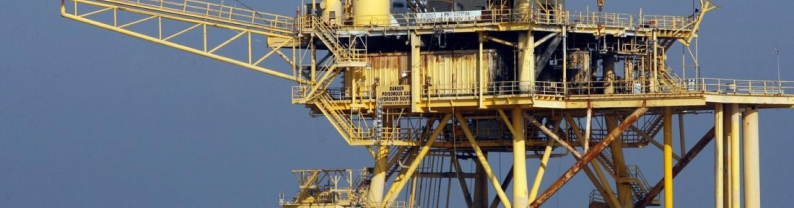
Oil prices stabilized on Thursday (February 12th), as the market reassigned a risk premium to US-Iran tensions despite US inventory data showing swelling domestic supplies. This movement confirms one thing: geopolitical headlines are still more "noise" than signals of a short-term surplus. As of 3:50 PM WIB, Brent was at $69.60/barrel (+0.29%) and WTI was at $64.83/barrel (+0.31%). The gains were moderate, but enough to keep prices near the psychological $70 level for Brent. From a geopolitical perspective, market focus is on the potential for escalation in the Middle East. Recent reports...
The US dollar weakened at the start of the week after tensions between the United States and the European Union escalated over the Greenland issue. Markets assessed that the political conflict, which has escalated into tariffs, has the potential to disrupt transatlantic trade relations, increasing pressure on the dollar. The US Dollar Index (DXY) fell around 0.25% and moved between 99.10 and 99.15. This weakening occurred as investors began reducing exposure to dollar-based assets and shifting to currencies perceived as safer amid growing geopolitical uncertainty. The main trigger came...
The Australian dollar (AUD) held strong at the start of the week after strong Australian inflation data, while the US dollar weakened as market sentiment grew cautious due to the US-Greenland dispute. This combination kept the AUD/USD pair stable and prevented significant declines. Strengthening in Australia came from the TD-MI Inflation Gauge, which rose to 3.5% YoY in December, from 3.2% previously. On a monthly basis, inflation jumped 1.0% MoM reportedly the fastest pace since December 2023. This data led the market to believe that price pressures in Australia had not yet fully...
Gold and silver hit new records after US President Donald Trump threatened to impose tariffs on eight European countries that oppose his Greenland plan. This situation immediately pushed investors into safe havens, leading to a sharp increase in demand for precious metals. Trump said the initial 10% tariff would take effect on February 1, 2026, and then rise to 25% in June 2026. This threat sparked fears of retaliation from Europe, which could escalate into a full-blown trade war a situation such as this typically increases demand for gold and silver. European leaders are reportedly set to...
Gold price rises on Friday, poised to end with weekly gains of nearly 4% as an employment report in the US was mixed, with the economy adding fewer jobs than projected. Still, the Unemployment Rate ticked lower, yet investors are still betting the Federal Reserve (Fed) to cut rates this year. At the time of writing, XAU/USD trades at $4,507, up 0.65%. Bullion rallies as weaker payrolls keep Fed cut bets aliveThe US economic data weighed on investors' expectations of lower interest rates in the short term. But for the whole year, traders seem confident that the Federal Reserve would lower...
Harga emas kembali menguat pada perdagangan terbaru setelah sempat tertekan, didorong oleh melemahnya dolar AS dan turunnya imbal hasil obligasi pemerintah AS. Investor kembali memburu emas sebagai aset lindung nilai di tengah ketidakpastian arah kebijakan moneter Federal Reserve serta sensitivitas pasar terhadap perkembangan geopolitik global. Kenaikan emas juga dipicu oleh aksi beli saat harga turun (buy on dip), menyusul reli kuat dalam beberapa pekan terakhir. Pelaku pasar kini menanti sinyal lanjutan dari data ekonomi AS dan pernyataan pejabat The Fed, yang akan menentukan apakah...
Gold prices fell on Thursday (January 8) as investors braced for futures selling related to the commodity index rebalance, with a stronger U.S. dollar adding to the pressure by making the metal more expensive for overseas buyers. Spot gold prices fell 0.6% to $4,427.48 per ounce, as of 0921 GMT. U.S. gold futures for February delivery fell 0.6% to $4,435.40. "Gold and silver remain under pressure as the annual commodity index rebalance gets underway. Over the next five days, COMEX futures could see selling in the range of $6 to $7 billion for each metal," said Ole Hansen, head of commodity...
The US dollar is expected to rise for a third straight day on Thursday (January 8), but trading remains cautious as investors position themselves ahead of Friday's Nonfarm Payrolls (NFP) report. Recent US data releases have sent mixed signals: the labor market appears to be cooling, while service sector activity surprised with an increase—keeping the Fed's outlook balanced. Latest levels: DXY ~98.74, EUR/USD 1.1679, GBP/USD ~1.3456, USD/JPY ~156.7, AUD/USD ~0.6698, NZD/USD ~0.5754. Markets continue to interpret the labor market picture as "no hiring, no firing," while stronger service...
Oil traded in a tight range on Thursday after two straight sessions of losses, as markets digested a sharper US push to shape Venezuela's crude flows—alongside fresh tanker seizures tied to sanctions. Brent hovered near $60.20 a barrel, while WTI held around $56.21. The US plan is expected to start with offering stored crude before moving into broader Venezuelan supply sales, with officials indicating the oil is already being marketed. Investors are also watching how the policy shift could reroute Venezuelan barrels, potentially diverting flows away from Asia and reshaping trade patterns...
 Gold rises in the early Asian trade. There's a broad commodities uptrend, driven by macro uncertainty, a weaker dollar, and persistent demand for "hard" assets, says Fawad Razaqzada, market analyst...
 Oil extended declines after OPEC+ agreed to a bigger-than-expected production increase next month, raising concerns about oversupply just as US tariffs fan fears about the demand outlook.
Brent...
Oil extended declines after OPEC+ agreed to a bigger-than-expected production increase next month, raising concerns about oversupply just as US tariffs fan fears about the demand outlook.
Brent...
 The Japanese Yen (JPY) weakened against its US counterpart and reversed part of Friday's recovery from the lowest level since July 23 following Bank of Japan (BOJ) Governor Kazuo Ueda's remarks....