


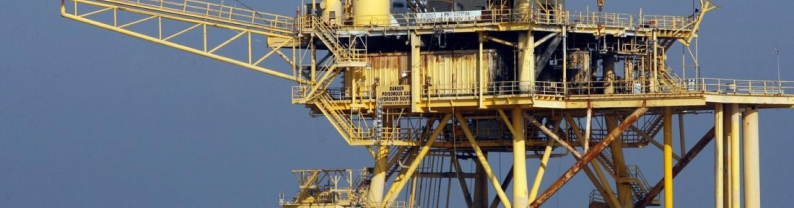
Oil prices stabilized on Thursday (February 12th), as the market reassigned a risk premium to US-Iran tensions despite US inventory data showing swelling domestic supplies. This movement confirms one thing: geopolitical headlines are still more "noise" than signals of a short-term surplus. As of 3:50 PM WIB, Brent was at $69.60/barrel (+0.29%) and WTI was at $64.83/barrel (+0.31%). The gains were moderate, but enough to keep prices near the psychological $70 level for Brent. From a geopolitical perspective, market focus is on the potential for escalation in the Middle East. Recent reports...
President Trump said he would impose a 25% tariff on global auto imports into the U.S., making good on his pledge to sanction foreign car and truck manufacturers. "What we're going to do is we're going to put a 25% tariff on all cars that are not made in the U.S.," Trump said Wednesday in the Oval Office, appearing to rule out possible exemptions for countries such as Canada and Mexico, which have free-trade agreements with the U.S. The U.S. will begin imposing auto tariffs on April 3, Trump said, a day after he announced a broader set of trade actions. The so-called reciprocal tariffs,...
Wednesday brought a stark warning from Senator Elizabeth Warren regarding the potential for President Donald Trump to dismiss Federal Reserve Chair Jerome Powell. In an interview with Bloomberg News on Wednesday, the Massachusetts Democrat expressed concerns that Trump's broad interpretation of his authority to remove officials from independent agencies could lead to significant instability in the US markets. Warren highlighted the dangers of such actions, suggesting that if the president can remove civil servants and leaders of independent agencies at will, it would result in a...
President Donald Trump is preparing to announce new auto tariffs as early as Wednesday, escalating trade tensions ahead of a broader tariff rollout next week, according to a report from Bloomberg, citing people familiar with the matter. The details of the tariffs, including their scope and possible exemptions, remain unclear, said Bloomberg. The news caused midday volatility in large U.S. auto stocks, including GM, Ford, Tesla (NASDAQ:TSLA), and Stellantis (NYSE:STLA). Bloomberg said it is also uncertain whether the tariffs will take effect immediately or be implemented over...
The UK (UK) Consumer Price Index (CPI) rose 2.8% year-on-year (YoY) in February, following a 3.0% acceleration in January, data released by the Office for National Statistics (ONS) showed on Wednesday. Markets were expecting a 2.9% growth in the reported period. The reading remains well above the Bank of England's (BoE) target of 2%. Core CPI (excluding volatile food and energy) rose at an annual rate of 3.5% in the same period, compared to a 3.7% surge in January, which was below market expectations of 3.6%. (Newsmaker23) Source: FXstreet
Australia's monthly inflation indicator showed price pressures continued to cool in February, keeping the door open for the Reserve Bank of Australia to cut interest rates further, perhaps as early as next month. The inflation indicator rose 2.4% in the 12 months to February, slightly below market expectations and well entrenched within the RBA's target band, the Australian Bureau of Statistics said Wednesday. The data for February comes after the indicator held steady at 2.5% for the previous two months. The hot spots for price gains over the last year were in food and non-alcoholic...
The US economy entered 2025 with a fair amount of momentum. However, GDP growth in the first quarter of the year looks to be soft. Real consumer spending declined in January, although the weakness may be attributable, at least in part, to bad weather. Furthermore, the surge in imports in January, which mechanically reduce GDP (everything else equal), will also weigh on output growth in Q1. In our view, the surge in imports reflects front-running ahead of potential increases in tariff rates.Tariff announcements have come and gone in recent weeks. In terms of our forecast, we assume that the...
US President Donald Trump said Monday that auto tariffs would go into effect soon, though he indicated that not all of the levies he has threatened would go into effect on April 2 and that some countries might get waivers, a move Wall Street took as a sign of flexibility on an issue that has roiled markets for weeks. At the same time, Trump opened another front in the global trade war by imposing secondary tariffs of 25% on any country that buys oil or gas from Venezuela, a directive that sent oil prices soaring. At the White House, Trump told reporters that not all of the new tariffs...
United States (US) President Donald Trump spoke with reporters in Washington, DC on Monday, re-announcing plans to issue additional tariffs on automobiles, aluminum, and pharmaceuticals "soon". This follows the Trump administration's recent unilateral 25% import tax on all steel and aluminum entering the US. President Trump also took the opportunity to make a new tariff threat, announcing that the US would be imposing an additional 25% tariff on all goods coming to the US from countries that buy Venezuelan Crude Oil products. Never one to miss an opportunity to make a statement, Donald...
 Gold rises in the early Asian trade. There's a broad commodities uptrend, driven by macro uncertainty, a weaker dollar, and persistent demand for "hard" assets, says Fawad Razaqzada, market analyst...
 Oil extended declines after OPEC+ agreed to a bigger-than-expected production increase next month, raising concerns about oversupply just as US tariffs fan fears about the demand outlook.
Brent...
Oil extended declines after OPEC+ agreed to a bigger-than-expected production increase next month, raising concerns about oversupply just as US tariffs fan fears about the demand outlook.
Brent...
 The Japanese Yen (JPY) weakened against its US counterpart and reversed part of Friday's recovery from the lowest level since July 23 following Bank of Japan (BOJ) Governor Kazuo Ueda's remarks....