


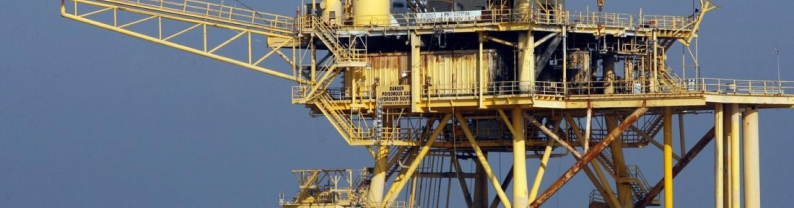
Oil prices stabilized on Thursday (February 12th), as the market reassigned a risk premium to US-Iran tensions despite US inventory data showing swelling domestic supplies. This movement confirms one thing: geopolitical headlines are still more "noise" than signals of a short-term surplus. As of 3:50 PM WIB, Brent was at $69.60/barrel (+0.29%) and WTI was at $64.83/barrel (+0.31%). The gains were moderate, but enough to keep prices near the psychological $70 level for Brent. From a geopolitical perspective, market focus is on the potential for escalation in the Middle East. Recent reports...
The National Development and Reform Commission of the People's Republic of China (NDRC) has trimmed the number of items on its negative list from 117 to 106. China's Negative List is a government-issued list that identifies areas and industries in which foreign investment is restricted or forbidden. It's an important part of China's effort to manage and gradually liberalize its foreign investment policy. The Chinese authorities partially liberalize eight national measures, including telecommunications services, TV production, pharmaceuticals, internet information services for drugs and...
Japanese Finance Minister Katsunobu Kato told G7 countries on Thursday that "US tariffs are highly disappointing.US tariffs, countermeasures are creating uncertainties in financial market.Stressed that free trade regime promotion important.Constructive policy discussion important.No comment on Bessent's foreign exchange remarks.Many countries make reference to US tariffs.Forex rate should be determined by market.Excessive forex move negatively affect economy.In meeting with Bessent tomorrow, hope to hold talks on the basis of past understanding on the need for the two countries to coordinate...
Sales of new single-family homes in the United States surged by 7.4% from the previous month to a seasonally adjusted annualized rate of 724,000, extending the 1.8% increase in the earlier period to the highest in six months, and firmly above market expectations of 680,000 homes. The sales were in line with the growth in mortgage applications in the period as benchmark borrowing costs fell. Source: Trading Economics
The latest Services PMI data, released by Markit Economics, has indicated a slowdown in the growth of the private sector service companies. The actual figure came in at 51.4, a significant drop from the forecasted 52.8. The Services PMI, a key indicator of economic health, is based on surveys of over 400 executives in private sector service companies, covering sectors such as transport and communication, financial intermediaries, business and personal services, computing & IT, hotels and restaurants. An index level above 50 signals an improvement, while a level below 50 indicates a...
The Manufacturing Purchasing Managers' Index (PMI) in the US has shown an unexpected increase, according to recently released data. The actual PMI was reported to be 50.7, outperforming both the forecasted and previous figures. Predictions for the PMI had been set at 49.0, indicating a forecasted contraction in the manufacturing sector. However, the actual figure of 50.7 not only exceeded this forecast but also surpassed the previous month's PMI of 50.2. This indicates a slight expansion in the manufacturing sector, as a PMI reading above 50 is generally seen as a sign of growth. The PMI...
U.S. President Donald Trump delivered remarks on the state of trade relations with China and other countries Tuesday, emphasizing the positive impact of tariffs on the American economy and outlining his administration's approach to international trade deals. Trump highlighted the reduction of trade deficits and the revenue generated from tariffs on imported automobiles, steel, and aluminum. Trump asserted that the U.S. is "doing fine with China" and other countries, contrasting the current situation with the previous administration, which he claimed saw the U.S. losing "$5 billion a day" on...
Japan's 10-year government bond yield edged above 1.3% on Tuesday as the country held a liquidity enhancement auction, offering insights into investor appetite for super-long maturity bonds. The Finance Ministry was scheduled to issue a total of 450 billion yen in long-dated securities, drawing market focus to potential shifts in demand. Looking ahead, attention is turning to next week's Bank of Japan policy meeting. The central bank is widely expected to keep its benchmark interest rate steady at 0.5%, but may revise its economic growth projections downward amid growing external risks....
U.S. President Donald Trump is laying the groundwork to blame the Federal Reserve under Chair Jerome Powell for any economic weakness resulting from his trade tariffs, the Wall Street Journal's Nick Timiraos wrote on Monday. Trump is signaling that he will blame the Fed if the central bank does not concede to his demands for interest rate cuts soon, Timiraos said, in a process that could also delegitimize the central bank's independence. Timiraos' comments come after Trump engaged in a social media tirade against the Fed and Chair Powell, calling him a "major loser" and "Mr. Too Late" amid...
 Gold rises in the early Asian trade. There's a broad commodities uptrend, driven by macro uncertainty, a weaker dollar, and persistent demand for "hard" assets, says Fawad Razaqzada, market analyst...
 Oil extended declines after OPEC+ agreed to a bigger-than-expected production increase next month, raising concerns about oversupply just as US tariffs fan fears about the demand outlook.
Brent...
Oil extended declines after OPEC+ agreed to a bigger-than-expected production increase next month, raising concerns about oversupply just as US tariffs fan fears about the demand outlook.
Brent...
 The Japanese Yen (JPY) weakened against its US counterpart and reversed part of Friday's recovery from the lowest level since July 23 following Bank of Japan (BOJ) Governor Kazuo Ueda's remarks....