


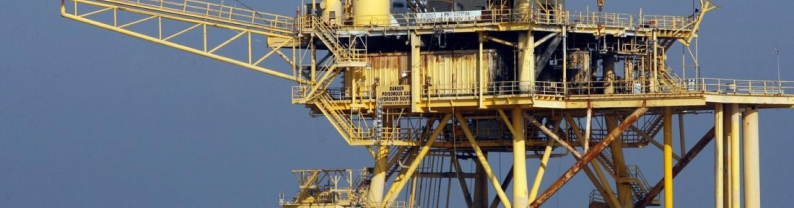
Oil prices stabilized on Thursday (February 12th), as the market reassigned a risk premium to US-Iran tensions despite US inventory data showing swelling domestic supplies. This movement confirms one thing: geopolitical headlines are still more "noise" than signals of a short-term surplus. As of 3:50 PM WIB, Brent was at $69.60/barrel (+0.29%) and WTI was at $64.83/barrel (+0.31%). The gains were moderate, but enough to keep prices near the psychological $70 level for Brent. From a geopolitical perspective, market focus is on the potential for escalation in the Middle East. Recent reports...
The U.S. economy contracted at an annualized rate of 0.3% in the first quarter of 2025, marking the first decline since the first quarter of 2022. This was a sharp reversal from 2.4% growth in the previous quarter and came in below market expectations of 0.3% growth, according to an advance estimate. A 41.3% surge in imports contributed to the slowdown, as businesses and consumers rushed to stockpile goods in anticipation of higher costs following a series of tariff announcements by the Trump administration. Consumer spending growth also cooled to 1.8%, the slowest pace since Q2 2023,...
Private business in the US added 62k workers to their payrolls in April of 2025, less than half of the downwardly revised 147k payrolls in the previous month and well below market expectations of 115k. It was the softest increase since July of last year, underscoring the impact of tariffs by the US government on businesses' intake of new labor. New employment rose by 34k in service providing industries, with increase in trade/transportation/utilities (21K) and financial activities (20K) offsetting the sharp declines in education/health services (-23K), and information (-8K). In turn,...
China has created a list of U.S.-made products that would be exempted from its 125% tariffs and is quietly notifying companies about the policy, two people familiar with the matter said, as Beijing seeks to ease the impact of its trade war with Washington. China has already granted tariff exemptions on select products including select pharmaceuticals, microchips and aircraft engines and was asking firms to identify critical goods they need levy-free, Reuters reported on Friday. However, the existence of a so-called 'whitelist' had not been previously reported. The quiet approach allows...
U.S. President Donald Trump on Tuesday approved additional relief for domestic automakers from his 25% vehicle and auto parts tariffs set in motion less than a month ago, saying it would help the industry to move more production back to the U.S. Trump's latest orders mark the latest softening of his multi-layered tariff assault on trading partners as he seeks to negotiate deals aimed at lowering other countries' trade barriers to U.S. exports. Earlier this month, Trump's administration exempted smartphones, computers and other electronics largely made in China from triple digit tariffs at...
President Donald Trump again criticized Federal Reserve Chairman Jerome Powell as he championed his economic policies and tariff regime during an event Tuesday to mark his 100 days in office. "Inflation is basically down and interest rates are down despite the fact that I have a Fed guy that's not really doing a very good job," Trump said at a rally outside Detroit, Michigan. The president's criticism came despite saying earlier this month that he had no plans to fire the central bank chief, despite ongoing criticism of the Fed's pace of interest rate cuts. The uncertainty surrounding...
U.S. President Donald Trump resumed his criticism of the Federal Reserve on Tuesday evening, claiming that Chair Jerome Powell was not doing a good job and that he knew more about interest rates. Speaking at a rally in Warren, Michigan, commemorating his first 100 days in office, Trump did not mention Powell by name, but largely hinted at his past criticism of the Fed Chair. "Interest rates came down despite the fact that I have a Fed person who's not really doing a good job, but I won't say that… I want to be very nice and respectful to the Fed," Trump said. "You're not supposed to...
US consumer sentiment extended its decline in April, as the Conference Board's Consumer Confidence Index fell from 93.9 (revised from 92.9) to 86.0—its weakest reading since April 2020. Consumer sentiment showed fresh signs of strain in April, as views on current business and labor market conditions softened. The Present Situation Index edged down by 0.9 points to 133.5. More notably, the Expectations Index—which tracks short-term outlooks for income, business activity, and employment—plunged 12.9 points to 54.4. That marks its lowest reading since October 2011 and remains well below the...
Job openings in the United States fell by 288,000 to 7.192 million in March 2025, the lowest in six months and well below market expectations of 7.48 million. The drop was broad-based, with the largest decreases reported for transportation, warehousing, and utilities (-59K), accommodation and food services (-42K), construction (-38K), federal governemnt (-36K), real estate and rental and leasing (-39K), and health care and social assistance (-37K). On the other hand job openings increased in finance and insurance (25K), other services (20K), state and local education (17K), wholesale trade...
 Gold rises in the early Asian trade. There's a broad commodities uptrend, driven by macro uncertainty, a weaker dollar, and persistent demand for "hard" assets, says Fawad Razaqzada, market analyst...
 Oil extended declines after OPEC+ agreed to a bigger-than-expected production increase next month, raising concerns about oversupply just as US tariffs fan fears about the demand outlook.
Brent...
Oil extended declines after OPEC+ agreed to a bigger-than-expected production increase next month, raising concerns about oversupply just as US tariffs fan fears about the demand outlook.
Brent...
 The Japanese Yen (JPY) weakened against its US counterpart and reversed part of Friday's recovery from the lowest level since July 23 following Bank of Japan (BOJ) Governor Kazuo Ueda's remarks....