


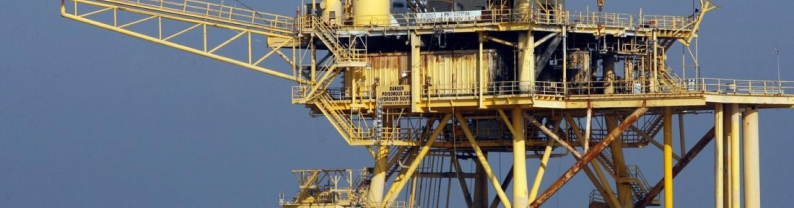
Oil prices stabilized on Thursday (February 12th), as the market reassigned a risk premium to US-Iran tensions despite US inventory data showing swelling domestic supplies. This movement confirms one thing: geopolitical headlines are still more "noise" than signals of a short-term surplus. As of 3:50 PM WIB, Brent was at $69.60/barrel (+0.29%) and WTI was at $64.83/barrel (+0.31%). The gains were moderate, but enough to keep prices near the psychological $70 level for Brent. From a geopolitical perspective, market focus is on the potential for escalation in the Middle East. Recent reports...
Federal Reserve Governor Stephen Miran said better-than-expected inflation data and signs of continued weakness in the labor market call for a third consecutive interest rate cut in December. In the absence of new economic information due to the government shutdown, a half-point cut next month is still "appropriate," Miran said Monday in an interview with CNBC. "At a minimum," he added, the central bank should lower rates by an additional quarter of a percentage point. "We have new inflation data that is better than expected, which would lead one to think that it would be reasonable to be...
Slowing payroll growth in the U.S. is more likely the result of weaker demand for workers rather than reduced labor force from tightened immigration policies, according to San Francisco Federal Reserve President Mary Daly. In an essay published Monday, Daly noted that slowing wage growth indicates businesses need fewer workers rather than struggling to find employees amid immigration restrictions implemented by the Trump administration. Monthly job growth in the U.S. has declined from approximately 150,000 per month in 2024 to around 50,000 in the first half of 2025. "Demand for workers...
Two weeks before the US Federal Reserve's final meeting, with the federal government's data taps closed, Atlanta Fed staff bolstered their economic outlook by analyzing how previous surveys of business executives aligned with data on employment, spending, output, and other data recorded in federal reports. These results bolstered their confidence that central bank policymakers still have a good, if rough, alternative ahead of the October 28-29 meeting: between surveys proven to closely track the economy, private data the Fed has used for years, and new insights from emerging technology...
Chicago Federal Reserve President Austan Goolsbee on Thursday said the lack of official data on inflation during the government shutdown "accentuates" his caution about cutting interest rates further. "I lean more to the, when it's foggy, let's just be a little careful and slow down" Goolsbee said in an interview with CNBC. Fed policymakers are relying on private data and their own surveys and outreach to gauge where the economy is heading while official economic data from the Bureau of Labor Statistics and other U.S. agencies is on pause during what is now a record-long federal government...
Parts of the U.S. economy, particularly housing, may already be in recession because of high interest rates, U.S. Treasury Secretary Scott Bessent said Sunday, repeating his call for the Federal Reserve to accelerate rate cuts. "I think that we are in good shape, but I think that there are sectors of the economy that are in recession," Bessent said on CNN's "State of the Union" program. "And the Fed has caused a lot of distributional problems with their policies." Bessent said that, although the overall U.S. economy remains solid, high mortgage rates still hinder the real estate market....
The Reserve Bank of Australia (RBA) decided to maintain the cash rate at its current level following its November policy meeting. The RBA assessed that despite improving financial conditions, inflationary pressures remain in the economy, particularly with recovering private demand and a slightly tighter labor market. The RBA Board also recognized that the full impact of the previous rate cut had not yet been fully felt, choosing to remain cautious and update its outlook based on evolving data. The RBA also emphasized the importance of monitoring developments in the global economy, financial...
Federal Reserve Bank of Dallas President Lorie Logan said she does not support the U.S. central bank's decision to cut interest rates this week and will likely consider it appropriate to keep rates unchanged at its next meeting because inflation remains too high. "I don't see a need to cut rates this week. And I would find it difficult to cut rates again in December unless there is clear evidence that inflation will fall more quickly than expected or that the labor market will cool more rapidly," Logan said Friday in prepared remarks for an event in Dallas. Fed officials cut their...
The Federal Reserve is shifting from the driving seat back to the back seat, moving to data dependence just as it faces a data blackout due to the government shutdown. Despite these challenges, Morgan Stanley believes rate cuts in December and January remain on the table as the softer labor market will continue to drive monetary policy. The shutdown has suspended several official data releases, including critical jobs reports, leaving the Fed to rely more on market signals and private sector data. "The Fed is effectively flying blind for now," Morgan Stanley economists said in a recent...
 Gold rises in the early Asian trade. There's a broad commodities uptrend, driven by macro uncertainty, a weaker dollar, and persistent demand for "hard" assets, says Fawad Razaqzada, market analyst...
 Oil extended declines after OPEC+ agreed to a bigger-than-expected production increase next month, raising concerns about oversupply just as US tariffs fan fears about the demand outlook.
Brent...
Oil extended declines after OPEC+ agreed to a bigger-than-expected production increase next month, raising concerns about oversupply just as US tariffs fan fears about the demand outlook.
Brent...
 The Japanese Yen (JPY) weakened against its US counterpart and reversed part of Friday's recovery from the lowest level since July 23 following Bank of Japan (BOJ) Governor Kazuo Ueda's remarks....