


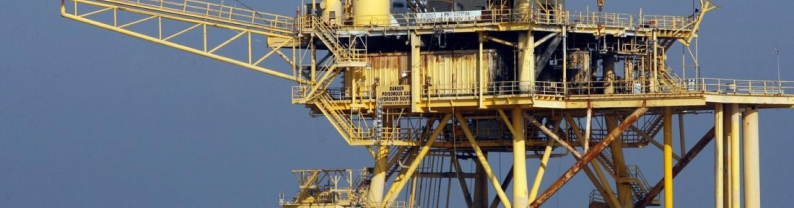
Oil prices stabilized on Thursday (February 12th), as the market reassigned a risk premium to US-Iran tensions despite US inventory data showing swelling domestic supplies. This movement confirms one thing: geopolitical headlines are still more "noise" than signals of a short-term surplus. As of 3:50 PM WIB, Brent was at $69.60/barrel (+0.29%) and WTI was at $64.83/barrel (+0.31%). The gains were moderate, but enough to keep prices near the psychological $70 level for Brent. From a geopolitical perspective, market focus is on the potential for escalation in the Middle East. Recent reports...
The U.S. Federal Reserve is expected to cut interest rates on Wednesday as policymakers grapple with a data gap caused by the recent government shutdown and address conflicting views about the risks facing the economy. The anticipated quarter-percentage-point cut is likely to be accompanied by an uncertain or even aggressive approach to the interest rate path next year, given the division among policymakers between those skeptical about the need for more rate cuts amid persistently high inflation and those who believe the economy and job market could weaken if the U.S. central bank doesn't...
Federal Reserve (Fed) officials are expected to cut interest rates again on Wednesday, marking the third consecutive rate cut. However, many analysts believe that after this move, the Fed will likely pause and not rush to cut rates again early next year. This is because some officials are starting to worry that excessive cuts could trigger an overheated economy. Within the Fed itself, there are sharp differences of opinion. Some believe that interest rates are currently at a "neutral" level, meaning they are neither slowing nor accelerating economic growth. On the other hand, others believe...
The Reserve Bank of Australia (RBA) kept its benchmark interest rate unchanged at 3.6% for the third consecutive year at its final meeting on Tuesday. The decision was unanimously adopted by the nine-member board amid a combination of resurgent inflationary pressures and a still-tight labor market. In its statement, the RBA emphasized that its next move would depend heavily on incoming economic data, and that it needed more time to assess the strength and persistence of inflationary pressures. Following the decision, the Australian dollar weakened to around US$0.6616, while the three-year...
The U.S. Federal Reserve's meeting this week will begin to set expectations for President Donald Trump's upcoming nominee to lead the central bank, potentially leaving policymakers in a bind between inflation concerns shared broadly and Trump's demands for interest rate cuts. A quarter-percentage-point rate cut seems a given at the two-day meeting that ends on Wednesday, but language around that decision and accompanying economic projections will show whether the next chair will take over a body primed against further cuts or more open to argument and with a more dovish near-term...
The FOMC is expected to cut interest rates by 25 basis points with potential dissent, reflecting the tension between inflation risks and weakening employment. Federal Reserve Chairman Jerome Powell is likely to emphasize data-driven policymaking ahead of January, while the new dot chart may still underestimate the influence of the incoming Trump administration's policies, reports Rabobank Senior US Strategist Philip Marey. Powell is expected to downplay policy divisions. "We expect the FOMC to cut the federal funds rate by 25 basis points to its target range of 3.50–3.75% from 3.75–4.00%....
National Economic Council Director Kevin Hassett stated that the Federal Reserve should cut interest rates at its upcoming meeting next week and predicted a reduction of 25 basis points. In an interview on Fox News, Hassett was asked if he believed the Federal Open Market Committee would cut rates. "I think we should, and I think that we are likely to," Hassett said, referencing recent communications from Fed governors and regional presidents. "They now seem much more like they're leaning in the direction of a rate cut." His comments come as speculation grows about President Donald Trump's...
The Federal Reserve is expected to reduce interest rates by 25 basis points to a range of 3.5%-3.75% at next week's meeting, but Bank of America says Chair Jerome Powell faces the most divided committee in years. "We expect him to try to deliver a hawkish cut as a compromise," BofA strategists led by Mark Cabana said in a Thursday note. "We're skeptical about whether he will be able to pull this off. But for now, markets are giving him the benefit of the doubt," they added. Markets are still pricing only modest easing beyond December, expecting just 8 basis points of potential cuts in...
Treasury Secretary Scott Bessent said Wednesday he will push for a new rule requiring regional Federal Reserve chairpersons to live in their district for at least three years. The initiative is Bessent's latest push for a major overhaul of the US central bank—which he has repeatedly accused of mission drift and straying from its primary mandate of setting monetary policy. "I believe there is a disconnect now from the original framework" of the Fed, Bessent said during a discussion at a New York Times event. The US central bank, founded more than a century ago, established a board of...
 Gold rises in the early Asian trade. There's a broad commodities uptrend, driven by macro uncertainty, a weaker dollar, and persistent demand for "hard" assets, says Fawad Razaqzada, market analyst...
 Oil extended declines after OPEC+ agreed to a bigger-than-expected production increase next month, raising concerns about oversupply just as US tariffs fan fears about the demand outlook.
Brent...
Oil extended declines after OPEC+ agreed to a bigger-than-expected production increase next month, raising concerns about oversupply just as US tariffs fan fears about the demand outlook.
Brent...
 The Japanese Yen (JPY) weakened against its US counterpart and reversed part of Friday's recovery from the lowest level since July 23 following Bank of Japan (BOJ) Governor Kazuo Ueda's remarks....