


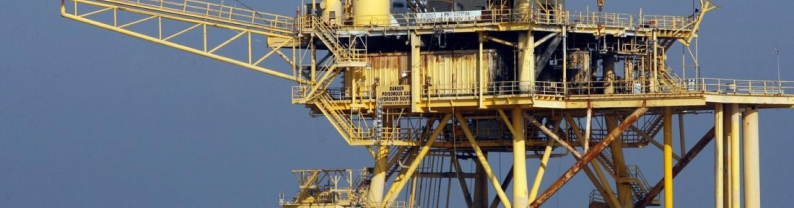
Oil prices stabilized on Thursday (February 12th), as the market reassigned a risk premium to US-Iran tensions despite US inventory data showing swelling domestic supplies. This movement confirms one thing: geopolitical headlines are still more "noise" than signals of a short-term surplus. As of 3:50 PM WIB, Brent was at $69.60/barrel (+0.29%) and WTI was at $64.83/barrel (+0.31%). The gains were moderate, but enough to keep prices near the psychological $70 level for Brent. From a geopolitical perspective, market focus is on the potential for escalation in the Middle East. Recent reports...
Donald Trump's Republicans are promising to hit the gas next year when they assume full control of the U.S. Congress, with little to stop them from executing the president-elect's promises to slash taxes and reorder the global trade landscape. But the $28 trillion Treasury debt market is flashing a red warning light against adding excessively to a debt load already expanding at a pace of $2 trillion a year. What is yet to be seen is whether these concerns will be enough to slow Republican lawmakers' ambitions or push them to find offsetting savings on a tax break agenda estimated to cost...
MRB warns of fewer cuts next year.The Fed is likely to rein in its forecast for rate cuts next year as Fed members are teeing up the idea of a higher neutral rate pointing to much shallower rate-cut cycle, MRB Partners said in a recent note. "Investors should expect the Fed's median forecast of the longer-run (or neutral) policy rate to rise ahead," strategists at MRB Partners said. "The implication is that Fed will ease rates less next year than what it had signaled in the September dot-plot, and what the bond market has been pricing in." The Fed cut rates by 25 basis points in November...
Chicago Federal Reserve President Austan Goolsbee on Thursday reiterated his support for further interest rate cuts and his openness to doing them more slowly, remarks that underscore the U.S. central bank's debate that it's not about whether, but over how fast and how far, borrowing costs should be lowered. Some Fed policymakers worry that progress lowering inflation may have stalled and call for a cautious approach, while others want to make sure the labor market doesn't cool further, suggesting the need for continued rate cuts. And over all of those differences hangs the uncertainty of...
It remains uncertain how far interest rates can fall, though the initial reductions made by the U.S. central bank are a vote of confidence that inflation is returning to its 2% target, Kansas City Fed President Jeffrey Schmid said on Tuesday. "The decision to lower rates is an acknowledgement of the ... growing confidence that inflation is on a path to reach the Fed's 2% objective - a confidence based in part on signs that both labor and product markets have come into better balance in recent months," Schmid said in remarks prepared for delivery to the Omaha Chamber of Commerce. He said...
U.S. President Joe Biden pledged a $4 billion U.S. contribution to the World Bank's International Development Association fund for the world's poorest countries, two sources with knowledge of the commitment said on Monday. Biden announced the U.S. pledge during a closed session of the Group of 20 summit in Rio de Janeiro, according to the sources, who spoke on condition of anonymity. The amount is a record and substantially exceeds the $3.5 billion Washington committed in the previous IDA fund replenishment round in December 2021. A White House spokesperson in Washington declined comment...
Federal Reserve Chair Jerome Powell said the recent performance of the US economy has been "remarkably good," giving central bankers room to lower interest rates at a careful pace. "The economy is not sending any signals that we need to be in a hurry to lower rates," Powell said Thursday in prepared remarks in Dallas. "The strength we are currently seeing in the economy gives us the ability to approach our decisions carefully." US central bankers began lowering borrowing costs in September with an aggressive half-percentage-point cut, and then lowered the policy rate again by a...
The Federal Reserve approved its second consecutive interest rate cut Thursday, moving at a less aggressive pace than before but continuing its efforts to rightsize monetary policy. In a follow-up to September's big half percentage point reduction, the Federal Open Market Committee lowered its benchmark overnight borrowing rate by a quarter percentage point, or 25 basis points, to a target range of 4.50%-4.75%. The rate sets what banks charge each other for overnight lending but often influences consumer debt instruments such as mortgages, credit cards and auto loans. Markets had widely...
Federal reserve memangkas suku bunga acuan mereka sebesar 25 bps setelah mereka menganggap bahwa inflasi telah mendingin dan telah mendekati ke target yang di harapkan sebesar 2%. Langkah pemangkasan juga dilakukan olehThe Fed guna memperluas upaya untuk menjaga ekspansi ekonomi AS pada pijakan yang kokoh, ia juga masih adanya tekanan pada sektor tenaga kerja Amerika walaupun sudah sedikit mereda dan tingkat pengangguran telah menigkat tetapi tetap rendah. Sumber: newsmaker.id
 Gold rises in the early Asian trade. There's a broad commodities uptrend, driven by macro uncertainty, a weaker dollar, and persistent demand for "hard" assets, says Fawad Razaqzada, market analyst...
 Oil extended declines after OPEC+ agreed to a bigger-than-expected production increase next month, raising concerns about oversupply just as US tariffs fan fears about the demand outlook.
Brent...
Oil extended declines after OPEC+ agreed to a bigger-than-expected production increase next month, raising concerns about oversupply just as US tariffs fan fears about the demand outlook.
Brent...
 The Japanese Yen (JPY) weakened against its US counterpart and reversed part of Friday's recovery from the lowest level since July 23 following Bank of Japan (BOJ) Governor Kazuo Ueda's remarks....