


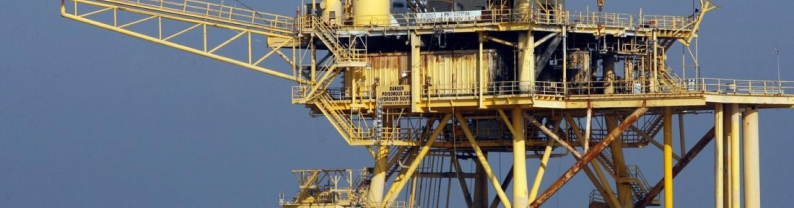
Oil prices stabilized on Thursday (February 12th), as the market reassigned a risk premium to US-Iran tensions despite US inventory data showing swelling domestic supplies. This movement confirms one thing: geopolitical headlines are still more "noise" than signals of a short-term surplus. As of 3:50 PM WIB, Brent was at $69.60/barrel (+0.29%) and WTI was at $64.83/barrel (+0.31%). The gains were moderate, but enough to keep prices near the psychological $70 level for Brent. From a geopolitical perspective, market focus is on the potential for escalation in the Middle East. Recent reports...
Gold prices rose near $4,120 per ounce on Monday (October 24th) after a modest weekly decline as investors awaited US retail sales and PPI data due on Tuesday and weekly jobless claims on Wednesday. Comments from New York Fed President John Williams and Fed Governor Christopher Waller increased the odds of a 25 bps interest rate cut in December to about 79%, according to CME FedWatch. The repricing pushed Treasury yields lower and weakened the dollar, reducing the opportunity cost of holding bullion and providing clear support for prices, even as the AI-driven equity rally again attracted...
Gold (XAU/USD) traded slightly higher on Monday (November 24th) as investors considered developments in the Federal Reserve's monetary policy outlook alongside improving sentiment on risk assets. At the time of writing, XAU/USD was trading around $4,087, up nearly 0.50% after bouncing off an intraday low near $4,040. Market sentiment remains anchored by renewed expectations for a December interest rate cut after New York Fed President John Williams said on Friday that he still sees room for near-term easing. His remarks helped revive rate cut expectations after a period of waning...
Oil prices fluctuated between gains and losses as traders weighed the prospects for a Ukraine-Russia peace deal that could ease political risks in an already oversupplied market. West Texas Intermediate crude traded near $58, little changed after its biggest weekly loss since early October. Ukraine and its European allies signaled that there were still key points of contention in U.S.-brokered peace talks to end the Russian invasion, although senior officials praised progress in securing more favorable terms for Kyiv. "Something good may be happening," President Donald Trump wrote in a...
The crude market has suffered a volatile year, and Bank of America Global Research expects the price of oil to remain pressured in 2026. The benchmark Brent contract has fallen almost 20% so far in 2025, averaging $69 a barrel, as the U.S. trade war and OPEC+ price war collided. "The high end of the range was $82/bbl first on the back of U.S. sanctions on Russia in January and then as the U.S. struck Iran in June. The low end of the range was $60/bbl in May right before US and China agreed to de-escalate trade measures," said analysts at Bank of America, in a note dated Nov. 23. Looking...
Gold (XAU/USD) recovers slightly from the daily low touched during the early part of the European session and trades with a mild negative bias, just above the $4,060 level, down less than 0.15% for the day. Mixed signals from US Federal Reserve (Fed) officials keep the door open for another interest rate cut in December and prompt some US Dollar (USD) profit-taking after the recent rise to its highest level since late May. This turns out to be a key factor lending some support to the non-yielding yellow metal. Apart from this, geopolitical risks stemming from the intensifying...
Silver stabilized around $50 per ounce on Monday, halting a recent slide as dovish comments from a senior US Federal Reserve official boosted expectations for a rate cut next month. New York Fed President John Williams said Friday that a near term rate reduction remains possible, with labor market weakness posing a greater risk than elevated inflation. Markets now price in roughly a 69% chance of a 25 basis point rate cut in December, up from 44% a week ago. Policymakers, however, remain divided, with Boston Fed President Susan Collins noting she has not yet decided on a policy...
The US Dollar Index (DXY) finally halted its five-day rally and hovered around 100.20 in Asian trading on Monday (November 24th). Market participants are now awaiting the release of US producer price inflation (PPI) data for September, due out next Tuesday, as this data could provide important clues to the Fed's future policy direction. The dollar's weakening occurred after expectations for a Fed rate cut in December rose sharply. The chance of a 25 bps rate cut is now around 69%, much higher than 44% last week. Comments from Fed officials—from John Williams, who said a cut could happen...
Silver prices came under pressure again at the start of the week as global market sentiment remained cautious. Market participants reduced exposure to riskier assets after the global economic outlook was deemed weak, while uncertainty regarding major central bank interest rate policies also curbed buying interest in the precious metal. Silver, which typically moves in the direction of gold but is characterized by higher volatility, became more sensitive to these changes in sentiment. Furthermore, the mild strengthening of the US dollar at the start of the week also weighed on silver prices....
 Gold rises in the early Asian trade. There's a broad commodities uptrend, driven by macro uncertainty, a weaker dollar, and persistent demand for "hard" assets, says Fawad Razaqzada, market analyst...
 Oil extended declines after OPEC+ agreed to a bigger-than-expected production increase next month, raising concerns about oversupply just as US tariffs fan fears about the demand outlook.
Brent...
Oil extended declines after OPEC+ agreed to a bigger-than-expected production increase next month, raising concerns about oversupply just as US tariffs fan fears about the demand outlook.
Brent...
 The Japanese Yen (JPY) weakened against its US counterpart and reversed part of Friday's recovery from the lowest level since July 23 following Bank of Japan (BOJ) Governor Kazuo Ueda's remarks....