


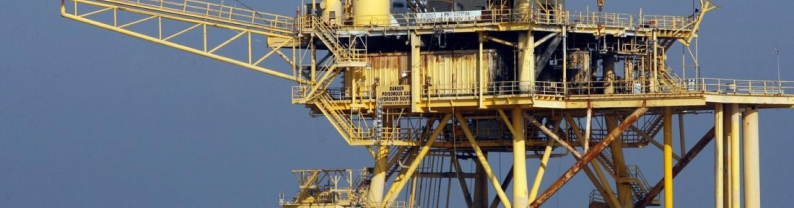
Oil prices stabilized on Thursday (February 12th), as the market reassigned a risk premium to US-Iran tensions despite US inventory data showing swelling domestic supplies. This movement confirms one thing: geopolitical headlines are still more "noise" than signals of a short-term surplus. As of 3:50 PM WIB, Brent was at $69.60/barrel (+0.29%) and WTI was at $64.83/barrel (+0.31%). The gains were moderate, but enough to keep prices near the psychological $70 level for Brent. From a geopolitical perspective, market focus is on the potential for escalation in the Middle East. Recent reports...
US stocks plunged on Thursday as investors reacted to President Trump's latest tariff announcement. The S&P 500 tumbled 3.2%, the Nasdaq plummeted 4.1%, and the Dow Jones sank about 1,060 points. On Wednesday, Trump unveiled a baseline 10% tariff on all imports, set to take effect on April 5, with around 60 countries facing even higher levies—54% for China, 20% for the EU, and 46% for Vietnam. Both China and the EU have already pledged retaliatory measures, stoking fears of a prolonged trade war, a potential US recession, and mounting inflationary pressures. Consumer discretionary,...
The Hang Seng dipped 352 points or 1.5% to end at a one-month low of 22,850 on Thursday, pressured by broad-based sector losses. Concerns over a deepening trade dispute with the U.S. intensified, with China vowing "resolute" retaliation against bigger-than-expected Trump latest tariffs. The U.S. imposed an additional 34% levy on Chinese imports on top of a 20% tariff introduced earlier this year. Meanwhile, U.S. futures plunged sharply, fueled by fears that escalating trade tensions could complicate central banks' efforts to cut interest rates. Tech stocks led the decline, falling around...
Europe's major bourses fell on Thursday, with the STOXX 50 and STOXX 600 down more than 2%, amid a global selloff in stocks following President Trump's latest tariff announcement. The move sparked a broad flight to safety and deepened concerns about its impact on the global economy. The European Union faces tariffs of up to 20%, prompting European Commission President Ursula von der Leyen to warn that the move would deal a "huge blow" to the global economy. She also confirmed that the EU was preparing retaliatory measures. Losses were broad-based, with basic resources and banks among the...
Japanese stocks ended in the red on Thursday after U.S. President Donald Trump announced larger-than-expected tariffs, disrupting trade and supply chains. The Nikkei 225 fell 2.78%, or 992.53 points, to close at 34,733.34. The U.S. imposed 24% tariffs on Japanese imports as President Donald Trump unveiled a sweeping trade policy, setting a base rate of 10% and hitting key Asian partners with higher tariffs. China faces 34%, Vietnam 46% and South Korea 25%, while the EU gets 20% duties. Trump also closed a loophole that allowed low-value Chinese goods to pass through without being taxed,...
Japan's stocks plunged after President Donald Trump slapped the nation with a 24% levy as part of tariffs on trading partners worldwide. A stronger yen also dragged exporter shares lower. The Topix Index fell 4% to 2,544.41 as of 9:12 a.m. Tokyo time, while the blue-chip Nikkei declined 4.1% to 34,281.76. Contracts traded in Singapore initially spiked, then fell as details of the tariffs rolled out, suggesting the market will face volatility Thursday as investors digest the news. "Overall I think this was on the harder side of expectations," said Nick Twidale, chief analyst...
US equities advanced on Wednesday as investors awaited President Donald Trump's tariff announcement. The S&P 500 rose 0.7%, the Nasdaq 100 gained 0.8%, and the Dow Jones climbed 235 points. Tesla shares surged 5.3%, reversing earlier losses tied to weak quarterly deliveries, following reports that Elon Musk might step down from his advisory role in the administration. Uncertainty over the tariffs kept investors on edge, with speculation that Trump was considering broad 20% levies on imports, raising fears of a potential trade war. The White House confirmed the tariffs would take effect...
European markets closed lower Wednesday as investors braced for new U.S. trade tariffs. The Stoxx 50 fell 0.4%, and the Stoxx 600 lost 0.6%, reversing Tuesday's rebound. Most sectors declined, with healthcare stocks hit hardest—down nearly 2%—amid fading hopes for tariff exemptions. Bayer dropped almost 4%, leading losses. Concerns grew after Trump reiterated that his "reciprocal tariffs" would apply to "all countries." Reports suggest a 20% tariff on most imports, but final details remain uncertain. The White House confirmed the measures would take effect immediately after their...
Stocks in the US were lower on Wednesday, with the S&P 500 falling 0.9%, the Nasdaq tumbling 1.4% and the Dow Jones falling more than 240 points. Investors remained on edge ahead of President Trump's upcoming tariff announcement. Reports suggested he is considering a universal 20% tariff on most imports, though uncertainty persists regarding the scale and scope of the levies. The White House has stated that the tariffs would take immediate effect but noted that Trump remains open to further negotiations. Meanwhile, the ADP report showed a surprise 155K gain in private sector employment...
 Gold rises in the early Asian trade. There's a broad commodities uptrend, driven by macro uncertainty, a weaker dollar, and persistent demand for "hard" assets, says Fawad Razaqzada, market analyst...
 Oil extended declines after OPEC+ agreed to a bigger-than-expected production increase next month, raising concerns about oversupply just as US tariffs fan fears about the demand outlook.
Brent...
Oil extended declines after OPEC+ agreed to a bigger-than-expected production increase next month, raising concerns about oversupply just as US tariffs fan fears about the demand outlook.
Brent...
 The Japanese Yen (JPY) weakened against its US counterpart and reversed part of Friday's recovery from the lowest level since July 23 following Bank of Japan (BOJ) Governor Kazuo Ueda's remarks....