


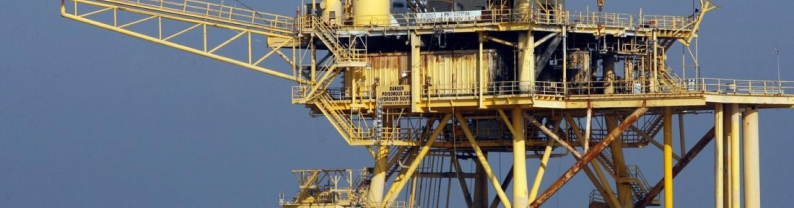
Oil prices stabilized on Thursday (February 12th), as the market reassigned a risk premium to US-Iran tensions despite US inventory data showing swelling domestic supplies. This movement confirms one thing: geopolitical headlines are still more "noise" than signals of a short-term surplus. As of 3:50 PM WIB, Brent was at $69.60/barrel (+0.29%) and WTI was at $64.83/barrel (+0.31%). The gains were moderate, but enough to keep prices near the psychological $70 level for Brent. From a geopolitical perspective, market focus is on the potential for escalation in the Middle East. Recent reports...
The Nikkei 225 Index surged 8% to above 34,000 on Thursday, erasing losses from earlier this week after US President Donald Trump unexpectedly lowered new tariff rates on imports from most US trade partners to 10% for 90 days to allow for trade negotiations. This marks a significant reduction from the previous 24% levy applied to Japanese imports. The Trump administration confirmed earlier this week that they will hold trade talks with Japanese officials following a phone call between President Trump and Prime Minister Shigeru Ishiba. However, Trump still raised the tariffs imposed on...
Asia-Pacific markets rose Thursday, following Wall Street's biggest burst of buying since 2008 after U.S. President Donald Trump announced a 90-day pause on higher tariffs on all nations bar China. Japanese markets led gains in the region. The benchmark Nikkei 225 rose 8.19%, while the broader Topix index advanced 7.44%. South Korea's Kospi index surged 5.36%, while the small-cap Kosdaq gained 5.32%. Australia's S&P/ASX 200 rose 4.69%. Investors will be keeping a close watch on Chinese stocks, as the U.S. raised duties on imports from the Mainland to 125% after Beijing announced...
Hang Seng Index opened sharply higher on 10th April , climbing by 545 points to reach 20,810. The index later rose by 561 points, or 2.77%, settling at 20,825. The Hang Seng China Enterprises Index advanced by 196 points, or 2.61%, to 7,732, while the Technology Index increased by 152 points, or 3.25%, to 4,841. The main board reported a trading volume of HK$46.2 billion. At 10.18am, the Hang Seng Index surged by over 800 points, rising by 868.04 points or 4.28%.Technology stocks led the rally, with Tencent rising 2.4%, Alibaba gaining 3.1%, Meituan up 2.1%, Xiaomi increasing by 4.1%, and...
US stocks surged on Wednesday after President Donald Trump announced a 90-day halt to many of his new tariffs, sparking a huge market rally. The S&P 500 surged 9.5%, its biggest gain in five years, the Dow Jones jumped 2,960 points, or 7.9%, its biggest gain since 2020, while the Nasdaq jumped 12.1%, its biggest one-day jump since 2001. The move extends the momentum of the administration's shifting economic policies, and will temporarily halt tariffs on major U.S. suppliers that were initially aggressively taxed, such as Vietnam and Cambodia. However, Trump has escalated his trade war...
European stocks closed sharply lower on Wednesday, with Tuesday's market recovery proving short-lived as U.S. country-specific tariffs kicked in. The pan-European Stoxx 600 ended the session down 3.5% at its lowest close since January 2024, with all sectors and major bourses in negative territory. Regional health care and oil and gas indexes were among the biggest losers, dropping 5.9% and 5%, respectively. Europe's main indexes extended losses after China announced it would impose retaliatory tariffs of 84% on U.S. imports from April 10, up from 34%, and the European Union agreed to a...
The S&P 500 inched higher Wednesday, as traders looked for a market bottom after days of volatility, even as China and the European Union announced retaliatory tariffs on U.S. goods in the latest escalation of global trade tensions. The S&P 500 added 0.7%, while the Nasdaq Composite climbed 1.5%. The Dow Jones Industrial Average inched up 182 points, or 0.5%. China announced it will impose an 84% levy on U.S. goods starting Thursday. This comes after U.S. tariffs of 104% on Chinese imports took effect shortly after midnight. The EU also approved its first set of tariffs on the U.S....
The Hang Seng rose 137 points or 0.7% to close at 20,264 on Wednesday, snapping a two-day losing streak. The rebound came after early-session losses, driven by gains in tech, consumers, and property. Sentiment improved following Premier Li Qiang's remarks that Beijing is "fully capable of hedging against adverse external influences," including the newly imposed 104% U.S. import tariffs. A rally in mainland stocks also lifted the mood, as state-owned firms stepped in to support markets. Top Chinese brokerages pledged to stabilize share prices, and some listed companies launched stock buyback...
European stocks opened lower on Wednesday, with markets struggling to maintain the positive momentum of the previous session as the U.S.′ country-specific tariffs started taking effect. The pan-European Stoxx 600 index was 2.55% lower shortly after the opening bell, with all sectors and major bourses firmly in negative territory. Regional banking, mining and oil and gas indexes led the losses, plummeting 3%, 3.9% and 3.6% respectively. Among Europe's major indexes, the French CAC 40 crashed 2.6%, while Germany's DAX was 2.1% lower during early morning trade, and the FTSE 100 lost...
 Gold rises in the early Asian trade. There's a broad commodities uptrend, driven by macro uncertainty, a weaker dollar, and persistent demand for "hard" assets, says Fawad Razaqzada, market analyst...
 Oil extended declines after OPEC+ agreed to a bigger-than-expected production increase next month, raising concerns about oversupply just as US tariffs fan fears about the demand outlook.
Brent...
Oil extended declines after OPEC+ agreed to a bigger-than-expected production increase next month, raising concerns about oversupply just as US tariffs fan fears about the demand outlook.
Brent...
 The Japanese Yen (JPY) weakened against its US counterpart and reversed part of Friday's recovery from the lowest level since July 23 following Bank of Japan (BOJ) Governor Kazuo Ueda's remarks....