


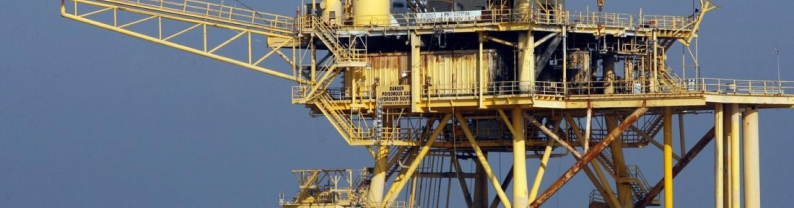
Oil prices stabilized on Thursday (February 12th), as the market reassigned a risk premium to US-Iran tensions despite US inventory data showing swelling domestic supplies. This movement confirms one thing: geopolitical headlines are still more "noise" than signals of a short-term surplus. As of 3:50 PM WIB, Brent was at $69.60/barrel (+0.29%) and WTI was at $64.83/barrel (+0.31%). The gains were moderate, but enough to keep prices near the psychological $70 level for Brent. From a geopolitical perspective, market focus is on the potential for escalation in the Middle East. Recent reports...
Japanese stocks tumbled on Friday, tracking sharp losses on Wall Street as trade tensions between the U.S. and China reignited market volatility. The Nikkei 225 plunged 5% to fall below 33,000, while the broader Topix Index sank 4.7% to 2,420, erasing much of the previous session's gains. The downturn followed confirmation from the White House that cumulative tariffs on Chinese imports have climbed to 145%, deepening fears of a prolonged trade war. Uncertainty also lingers around the outcome of ongoing negotiations, despite President Trump's 90-day tariff reprieve meant to create space for...
Markets in Asia tumbled during morning trading Friday, a day after U.S. markets retreated in the wake of a White House announcement saying tariffs on Chinese exports to the United States would rise to 145 percent, up from 125 percent. Japan's Nikkei 225 and Topix indexes dropped by more than 4 percent. South Korea's Kospi and Australia's ASX 200 fell by almost 2 percent, while Taiwan's bourse kicked off the day with a fall of under 1 percent before logging a tiny gain of under 0.5 percent. Hong Kong's Hang Seng Index and China's Shanghai composite index netted losses of under 1 percent in...
U.S. stocks plunged on Thursday, reversing some of the previous day's historic rally as fresh concerns over escalating trade tensions between the U.S. and China rattled investor confidence. President Trump's announcement of a 90-day tariff pause for some countries had sparked optimism, but confirmation that total tariffs on Chinese goods had jumped to 145% reignited market concerns. The S&P 500 and Nasdaq fell 3.5% and 4.3%, respectively, while the Dow plunged 1,015 points. Tech giants such as Apple (-4.2%), Tesla (-7.3%), Nvidia (-5.9%), and MetaTrader (-6.7%) led the losses, as...
European stocks rallied by the most since March 2022, a day after US President Donald Trump paused plans to implement higher reciprocal tariffs on dozens of trade partners, easing concerns for the moment about potential damages from a global trade war. The Stoxx Europe 600 Index rose 3.7%, trimming earlier gains of as much as 7.3%. All sectors were in the green, with financial services and banks leading gains. France's CAC 40 advanced 3.8% and Germany's DAX added 4.5%. Trump announced a 90-day tariff reprieve Wednesday, providing relief for European...
Stocks fell on Thursday after a massive rally on Wall Street spurred by President Donald Trump announcing a 90-day reprieve on some of his "reciprocal" tariffs. The Dow Jones Industrial Average dropped 744 points, or 1.8%. The S&P 500 shed 2.2%, while the Nasdaq Composite slid 2.8%. The major averages are still down sharply since the tariffs were announced on April 2. The S&P 500 is lower by more than 6% in that time, along with the Dow and Nasdaq. Leading the declines were Apple and Tesla, which pulled back more than 3 and 5%, respectively. Nvidia lost 4.9%, while Meta Platforms...
The Hang Seng jumped 417 points or 2.1% to end at 20,682 on Thursday, marking its third straight gain as traders shrugged off Washington's latest tariff hike on Chinese goods—from 104% to 125%- on bets Beijing will do more to shield the economy from levies. China also released a White Paper showing a willingness to engage with the U.S. to ease a trade war while vowing to take firm measures to defend its interests. Sentiment was further lifted by reports that top Chinese leaders were meeting to discuss new support measures, with regulators exploring fresh steps to calm markets. Adding to...
Japan's Nikkei share average jumped 9% on Thursday as investors scooped up beaten-down stocks after U.S. President Donald Trump declared an immediate 90-day tariff pause for many countries. The Nikkei rose 9.13% to 34,609 in its biggest daily gain since August 6, the day after the index fell in its biggest single-day rout since the 1987 Black Monday crash. The broader Topix climbed 8.09% to 2,539.4. "Investors bought back stocks today, wishing that they had not dumped stocks in the previous session," said Seiichi Suzuki, chief equity market analyst at Tokai Tokyo Intelligence...
European markets rose sharply at the open on Thursday, after U.S. President Donald Trump temporarily reversed course on tariffs. The regional Stoxx 600 index was 7.04% higher shortly after the opening bell, with stocks across the board surging to place all individual sectors firmly in positive territory. Banking, tech and industrials stocks notched the biggest gains, surging 10%, 9.9% and 9.1%, respectively. In a volatile week for markets that has been marked by sharp moves higher and lower, the pan-European Stoxx 600 ended the prior session down 3.5% at its lowest closing level since...
 Gold rises in the early Asian trade. There's a broad commodities uptrend, driven by macro uncertainty, a weaker dollar, and persistent demand for "hard" assets, says Fawad Razaqzada, market analyst...
 Oil extended declines after OPEC+ agreed to a bigger-than-expected production increase next month, raising concerns about oversupply just as US tariffs fan fears about the demand outlook.
Brent...
Oil extended declines after OPEC+ agreed to a bigger-than-expected production increase next month, raising concerns about oversupply just as US tariffs fan fears about the demand outlook.
Brent...
 The Japanese Yen (JPY) weakened against its US counterpart and reversed part of Friday's recovery from the lowest level since July 23 following Bank of Japan (BOJ) Governor Kazuo Ueda's remarks....