


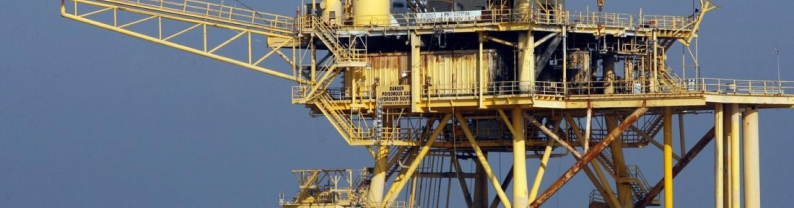
Oil prices stabilized on Thursday (February 12th), as the market reassigned a risk premium to US-Iran tensions despite US inventory data showing swelling domestic supplies. This movement confirms one thing: geopolitical headlines are still more "noise" than signals of a short-term surplus. As of 3:50 PM WIB, Brent was at $69.60/barrel (+0.29%) and WTI was at $64.83/barrel (+0.31%). The gains were moderate, but enough to keep prices near the psychological $70 level for Brent. From a geopolitical perspective, market focus is on the potential for escalation in the Middle East. Recent reports...
Asia-Pacific markets rose on Monday as U.S. President Donald Trump halted tariffs on some consumer electronics, boosting risk sentiment. Japan's benchmark Nikkei 225 index rose 1.37% while the broader Topix index gained 1.41%. In South Korea, the Kospi index rose 0.88% while the small-cap Kosdaq index gained 1.46%. Mainland China's CSI 300 index rose 0.57% at the open while Hong Kong's Hang Seng Index gained 1.93%. Australia's S&P/ASX 200, meanwhile, rose 1%. Indian markets were closed for a public holiday. Trump exempted smartphones and computers as well as other devices and...
US stocks rose on Friday, ending a turbulent week on a positive note, as optimism grew over a potential U.S.-China trade deal. The S&P 500 rose 1.8%, the Nasdaq gained 2%, while the Dow gained 618 points. Sentiment improved after comments from the White House that President Trump was "optimistic" China would work toward a deal with the U.S. Trade tensions escalated when President Trump raised tariffs on Chinese goods to 145%, prompting retaliatory measures from China, which raised its duties on U.S. imports to 125%. On the data front, a University of Michigan survey showed consumer...
European stock markets reversed early gains to close lower, capping a turbulent week dominated by escalating trade tensions between the US and China, which reignited fears of a global recession and triggered an aggressive pivot away from US assets. The STOXX 50 fell 0.6% and the broader STOXX 600 slipped 0.2%. China's finance ministry announced additional tariffs of 125% on U.S. goods, in response to President Trump's decision a day earlier to raise levies on Chinese imports to 145%. In Europe, the EU temporarily suspended its planned retaliatory tariffs for a 90-day period, mirroring...
Stocks slipped Friday as traders weighed the latest developments on the tariff front as they wrap up a wild week. The Dow Jones Industrial Average traded 140 points lower, or 0.4%. The S&P 500 shed 0.4%, and the Nasdaq Composite pulled back by 0.2%. This week has been one of the most volatile periods on record for Wall Street. The major averages tumbled Thursday as traders went into risk-off mode, with trade policy uncertainty weighing on sentiment, losing a chunk of the historic gains seen on Wednesday after Trump announced a 90-day reprieve on some of his high "reciprocal"...
The Hang Seng climbed 233 points or 1.1% to close at 20,915 on Friday, rebounding from morning losses as US futures rose sharply after President Biden said the first phase of trade talks was "very close," fueling optimism that China may return to the negotiating table. The index closed in the green for the fourth day, tracking mainland markets, buoyed by Beijing's efforts to stabilize financial markets this week, including stock purchases by a state fund and state-owned firms. Several listed companies also launched share buybacks. Gains were broad-based, led by tech, financials, and...
The Nikkei 225 Index dropped 2.96% to close at 33,585, while the broader Topix Index fell 2.85% to 2,467 on Friday, giving back gains from the previous session as Japanese stocks tracked Wall Street's steep losses. The decline came amid growing concerns over the economic fallout from the escalating U.S.-China trade war. The White House confirmed that cumulative tariffs on Chinese imports have surged to 145%, intensifying fears of a prolonged trade conflict. Despite President Trump's 90-day tariff reprieve aimed at opening space for negotiations, uncertainty remains high over the outcome of...
European stock markets opened slightly higher in early trade on Friday as a volatile week for shares nears its end and concerns about a trade war between the U.S. and China persist. The pan-European Stoxx 600 opened up 0.4%, with the U.K.'s FTSE 100 inching up by 0.5%, while Germany's Dax and France's CAC 40 were higher by 0.4% at 8.10 am London time. All sectors of the stock market, except energy, were trading in positive territory. It has been a choppy week for European, and global, markets as investors have been reacting to the frequent developments in global trade policy that were set...
(Hong Kong) The Hang Seng Index started weak, down by 124 points or 0.6%, standing at 20,557 points. Concurrently, the mainland enterprises index dropped by 30 points or 0.39%, reaching 7,638 points, while the technology index saw a decline of 25 points or 0.53%, settling at 4,787 points. Tech stocks faced a downturn with Tencent falling by 1%, Alibaba by 1.7%, Meituan by 0.3%, Xiaomi Group by 0.7%, and Kuaishou by 0.4%.In the financial sector, there was a softness observed with HSBC Holdings declining by 2.1%, Prudential by 1.3%, China Ping An by 1.5%, and Hong Kong Exchanges by 0.2%. The...
 Gold rises in the early Asian trade. There's a broad commodities uptrend, driven by macro uncertainty, a weaker dollar, and persistent demand for "hard" assets, says Fawad Razaqzada, market analyst...
 Oil extended declines after OPEC+ agreed to a bigger-than-expected production increase next month, raising concerns about oversupply just as US tariffs fan fears about the demand outlook.
Brent...
Oil extended declines after OPEC+ agreed to a bigger-than-expected production increase next month, raising concerns about oversupply just as US tariffs fan fears about the demand outlook.
Brent...
 The Japanese Yen (JPY) weakened against its US counterpart and reversed part of Friday's recovery from the lowest level since July 23 following Bank of Japan (BOJ) Governor Kazuo Ueda's remarks....