


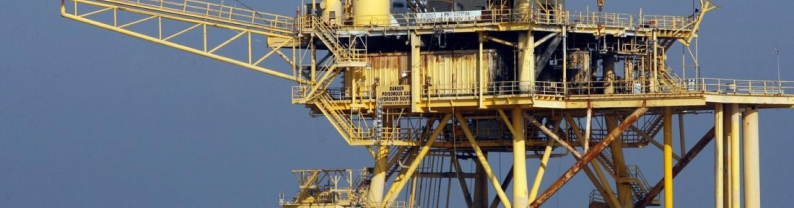
Oil prices stabilized on Thursday (February 12th), as the market reassigned a risk premium to US-Iran tensions despite US inventory data showing swelling domestic supplies. This movement confirms one thing: geopolitical headlines are still more "noise" than signals of a short-term surplus. As of 3:50 PM WIB, Brent was at $69.60/barrel (+0.29%) and WTI was at $64.83/barrel (+0.31%). The gains were moderate, but enough to keep prices near the psychological $70 level for Brent. From a geopolitical perspective, market focus is on the potential for escalation in the Middle East. Recent reports...
European stock markets traded lower on Friday, as global investors digested this week's tariff announcements from the Trump administration and weighed fresh economic data out of the United States. The pan-European Stoxx 600 closed 0.77% lower, its third straight negative close. The U.K.'s FTSE 100 closed just below the flatline, while France's CAC 40 and the German Dax both lost around 1%.Investors were reacting to the U.S. core personal consumption expenditures price index — the Federal Reserve's preferred inflation measure — which rose more than expected on Friday, according to an update...
US stocks traded sharply lower on Friday, with the S&P 500 down 1.4%, the Nasdaq falling 1.9%, and the Dow Jones sinking 500 points, as investors continue to weigh the impact of new tariffs while digesting the latest PCE report. Core PCE prices rose 0.4% on the month, above forecasts, pushing the annual rate higher to 2.8%, in a sign of rising price pressures. Also, personal spending increased less than expected. Meanwhile, fresh reciprocal tariffs are set to take effect next week. Consumer discretionary was by far the worst performer while the utilities sector outperformed. Megacaps...
The STOXX 50 fell 0.5% and the STOXX 600 dropped 0.4% on Friday, extending losses for a third straight session to levels not seen in nearly two weeks. Investor sentiment remained subdued, weighed down by tariffs imposed by the Trump administration, which have continued to raise concerns about the economic outlook.New reciprocal tariffs on U.S. imports, including a 25% levy on cars, are due to take effect on April 2. On the data front, inflation in France and Spain came in below expectations in March, while consumer sentiment in Germany failed to improve as anticipated. Shares of SAP, ASML...
The Hang Seng fell 152 points or 0.65% to close at 23,427 on Friday, snapping two-day gains amid broad-based losses. The index lost 1.1% for the week, marking its third straight weekly fall as investors fled riskier assets over mounting concerns that new U.S. tariffs could hurt global growth. President Trump plans to introduce a 25% tariff on auto imports and new reciprocal tariffs on key trading partners from April 2. Caution also prevailed ahead of U.S. PCE inflation data later today and China's March PMI figures next week. However, declines were cushioned by Chinese President Xi...
Japanese stocks fell after the close on Friday (3/28), as losses in the Shipbuilding, Manufacturing and Services sectors led shares lower. At the close in Tokyo, the Nikkei 225 was down 1.99%. The best performers of the session on the Nikkei 225 were Keio Corp. (TYO:9008), which rose 2.79% or 110.00 points to trade at 4,047.00 at the close. Meanwhile, Nexon Co Ltd (TYO:3659) rose 2.44% or 50.50 points to close at 2,123.00 and DeNA Co Ltd (TYO:2432) gained 1.83% or 67.00 points to 3,730.00 in late trade. The worst performers on the session were CyberAgent Inc (TYO:4751), which fell 5.54%...
Hong Kong stocks fell 76 points, or 0.3%, to 23,500 in early trade on Friday (3/28), reversing gains from the previous two sessions as declines spread across sectors. The Hang Seng is on track for a third straight weekly decline, down about 0.8% so far, amid concerns over tit-for-tat tariffs and upcoming auto levies from the US, along with the growing global trade dispute. Investors remain cautious ahead of China's March PMI data next week from official and private sources. Capping further losses, Morgan Stanley raised its year-end targets for MSCI China, the Hang Seng and other China...
Asia-Pacific stocks traded mixed on Thursday, tracking losses on Wall Street as investors weighed U.S. President Donald Trump's 25 percent tariffs on auto imports. Japan's benchmark Nikkei 225 index ended the day 0.6 percent lower at 37,799.97, while the broader Topix index was flat at 2,815.47. In South Korea, the Kospi index fell 1.39 percent to 2,607.15 while the small-cap Kosdaq index dropped 1.25 percent to 707.49. Mainland China's CSI 300 index ended the day 0.33 percent higher at 3,932.42 while Hong Kong's Hang Seng Index closed up 0.41 percent at 23,578.80. India's benchmark...
The Nikkei 225 Index tumbled 1.7% to below 37,200, while the broader Topix Index dropped 1.6% to 2,770 on Friday, hitting a two-week low as automakers continued to reel from US President Donald Trump's auto tariffs. Earlier this week, Trump announced a 25% tariff on all car imports starting next week, dealing a blow to Japan's export-driven economy, which relies heavily on auto shipments to the US. Major automakers suffered steep losses, including Toyota (-4.7%), Honda (-4.5%), Mazda (-3.4%), Subaru (-2.7%), and Suzuki (-2.2%). Japanese technology stocks also followed their US counterparts...
 Gold rises in the early Asian trade. There's a broad commodities uptrend, driven by macro uncertainty, a weaker dollar, and persistent demand for "hard" assets, says Fawad Razaqzada, market analyst...
 Oil extended declines after OPEC+ agreed to a bigger-than-expected production increase next month, raising concerns about oversupply just as US tariffs fan fears about the demand outlook.
Brent...
Oil extended declines after OPEC+ agreed to a bigger-than-expected production increase next month, raising concerns about oversupply just as US tariffs fan fears about the demand outlook.
Brent...
 The Japanese Yen (JPY) weakened against its US counterpart and reversed part of Friday's recovery from the lowest level since July 23 following Bank of Japan (BOJ) Governor Kazuo Ueda's remarks....