


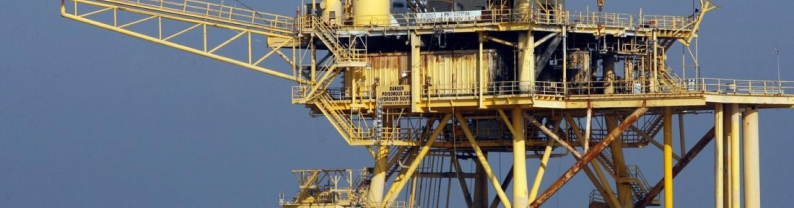
Oil prices stabilized on Thursday (February 12th), as the market reassigned a risk premium to US-Iran tensions despite US inventory data showing swelling domestic supplies. This movement confirms one thing: geopolitical headlines are still more "noise" than signals of a short-term surplus. As of 3:50 PM WIB, Brent was at $69.60/barrel (+0.29%) and WTI was at $64.83/barrel (+0.31%). The gains were moderate, but enough to keep prices near the psychological $70 level for Brent. From a geopolitical perspective, market focus is on the potential for escalation in the Middle East. Recent reports...
European markets opened sharply lower on Monday as global investors braced for U.S. President Donald Trump's trade tariffs to come into force. The regional Stoxx 600 index was 1% lower shortly after the opening bell, with all sectors and major bourses firmly in negative territory. Germany's DAX index led losses, shedding 1.2% during early trade. The sell-off comes ahead of a raft of Trump tariffs set to come into effect on Wednesday, including a 25% levy on "all cars that are not made in the United States." By 8:18 a.m. in London on Monday, Europe's Stoxx Automobiles and Parts index was...
Hong Kong stocks shed over 1% to close at 23,120 on Monday, extending losses for a second session amid broad sector declines. Sentiment remained weak as investors braced for US reciprocal tariffs set for Wednesday. Meanwhile, an upbeat Chinese PMI failed to offer support despite data showing factory activity at a one-year high and service growth at a three-month high. On the corporate front, CK Hutchison dropped more than 3% after Chinese state media condemned its port sale near the Panama Canal to BlackRock's group. Other notable laggards included Sands China (-5%), Lenovo (-3.5%), Xiaomi...
Stocks in Europe started the week in negative territory, with both the STOXX 50 and the STOXX 600 dropping around 1% to near two-month lows as concerns over the ongoing trade war continued to weigh on investor sentiment. New reciprocal tariffs on US imports are set to take effect on Wednesday, fuelling uncertainty regarding their scope and impact. Reports also indicate that President Trump has recently urged his advisors to adopt a more aggressive stance on tariffs. The basic resources sector saw sharp losses, hitting its lowest level since September, while banks, chemicals, and...
Japan's Nikkei 225 share average tumbled to its lowest point in more than six months on Monday. The benchmark plunged 4.05% to end the day at 35,617.56, its lowest since September. The worst-performing stocks on Monday include Renesas Electronics, which plunged 10.97%, Socionext Inc which lost 8.66% and Disco Corp which was down 8.35%. The broader Topix index fell 3.57% to 2,658.73. Source: CNBC
Hong Kong stocks fell 0.8% to 23,260 in early Monday trade, extending losses for a second session amid broad sector declines. Sentiment remained weak as investors braced for US reciprocal tariffs set for Wednesday. Meanwhile, an upbeat Chinese PMI failed to offer support despite data showing factory activity at a one-year high and service growth at a three-month high. On the corporate front, CK Hutchison dropped nearly 3% after Chinese state media condemned its port sale near the Panama Canal to BlackRock's group. Other notable laggards included Lenovo (-2.2%), Xiaomi (-2%), Tencent...
The Shanghai Composite fell 0.2% to below 3,345, while the Shenzhen Component dropped 0.9% to 10,510 on Monday, extending losses from the previous session as investors braced for new US tariffs set to take effect this week. Over the weekend, President Donald Trump stated he "couldn't care less" if foreign automakers raise prices in response to the tariffs, while The Wall Street Journal reported that he is pressuring advisors to take a more aggressive stance on trade policies. Meanwhile, data showed that China's manufacturing activity expanded at its fastest pace in a year in March, while...
Tokyo's key Nikkei index fell three percent in early trade on Monday, ahead of the imposition this week of tariffs announced by US President Donald Trump. The benchmark Nikkei 225 index shed 3.02 percent, or 1,122.77 points, to 35,997.56, while the broader Topix index was down 2.86 percent, or 78.85 points, to 2,678.40.
Stocks sold off Friday, pressured by growing uncertainty on U.S. trade policy as well as a more grim outlook on inflation. The Dow Jones Industrial Average closed down 715.80 points, or 1.69%, at 41,583.90. The S&P 500 shed 1.97% to 5,580.94, ending the week down for the fifth time in the last six weeks. The Nasdaq Composite plunged 2.7% to settle at 17,322.99. Shares of several technology giants dropped, putting pressure on the broader market. Google-parent Alphabet lost 4.9%, while Meta and Amazon each shed 4.3%. This week, the S&P 500 lost 1.53%, while the 30-stock Dow shed...
 Gold rises in the early Asian trade. There's a broad commodities uptrend, driven by macro uncertainty, a weaker dollar, and persistent demand for "hard" assets, says Fawad Razaqzada, market analyst...
 Oil extended declines after OPEC+ agreed to a bigger-than-expected production increase next month, raising concerns about oversupply just as US tariffs fan fears about the demand outlook.
Brent...
Oil extended declines after OPEC+ agreed to a bigger-than-expected production increase next month, raising concerns about oversupply just as US tariffs fan fears about the demand outlook.
Brent...
 The Japanese Yen (JPY) weakened against its US counterpart and reversed part of Friday's recovery from the lowest level since July 23 following Bank of Japan (BOJ) Governor Kazuo Ueda's remarks....