


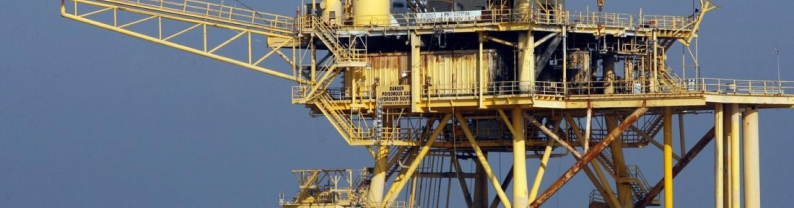
Oil prices stabilized on Thursday (February 12th), as the market reassigned a risk premium to US-Iran tensions despite US inventory data showing swelling domestic supplies. This movement confirms one thing: geopolitical headlines are still more "noise" than signals of a short-term surplus. As of 3:50 PM WIB, Brent was at $69.60/barrel (+0.29%) and WTI was at $64.83/barrel (+0.31%). The gains were moderate, but enough to keep prices near the psychological $70 level for Brent. From a geopolitical perspective, market focus is on the potential for escalation in the Middle East. Recent reports...
Oil fell for the first time in five sessions, as traders focused on the prospect of cooling tensions in the Middle East and higher US inventories. West Texas Intermediate fell below $62 a barrel, with Brent crude closing above $66. US President Donald Trump said both Israel and Hamas had agreed to terms for the release of all hostages still held by the militant group in Gaza in a breakthrough in the push to end the two-year war. Elsewhere, US nationwide crude stockpiles expanded for a second week, although they remained near seasonal lows, according to official...
Oil prices edged up about 1% to a one-week high on Wednesday as traders expected a lack of progress on a Ukraine peace deal to keep sanctions in place against Moscow, while a weekly report showed growing U.S. oil consumption. Brent crude futures rose 80 cents, or 1.2%, to settle at $66.25 a barrel. U.S. West Texas Intermediate (WTI) crude rose 82 cents, or 1.3%, to settle at $62.55. That was the highest close for Brent since September 30 and for WTI since September 29. A top Russian diplomat said the impetus to reach a peace deal with Ukraine was largely exhausted. Analysts have said a...
Gold (XAU/USD) marks another milestone on Wednesday, smashing through the $4,000 level for the first time as investors flock to the precious metal amid global economic and political uncertainty, coupled with a dovish Federal Reserve (Fed) outlook. At the time of writing, XAU/USD is trading around $4,039, hovering below record territory after hitting an all-time high of $4,049 earlier in the day, with prices up more than 4% so far this week. The latest leg higher comes despite a stronger US Dollar (USD) as political turmoil in France and Japan fuels safe haven demand, driving flows into...
The dollar extended its gains for a third day on Wednesday, its longest winning streak since September 19. Most G-10 currencies weakened on the day, with the Canadian dollar outperforming the rest. The Bloomberg Dollar Spot Index rose less than 0.1%, up nearly 0.8% in three days. USD/JPY jumped 0.4% to 152.56, rising for the fifth straight day and posting its longest winning streak since December. EUR/USD fell for a third day to 1.1634, its lowest level in a month. GBP/USD fell for a second day to 1.3409. USD/CAD retreated to 1.3945, falling for the third time in four days. US data on...
Oil prices rose more than 1% on Wednesday (October 8th), boosted by a smaller-than-expected production increase from the OPEC+ producer group next month, although concerns about oversupply limited further gains. Brent crude futures rose 82 cents, or 1.3%, to $66.27 a barrel at 09:45 GMT. U.S. West Texas Intermediate crude rose 85 cents, or 1.4%, to $62.58. Benchmark crude prices were relatively stagnant in the previous session as investors weighed signs of oversupply against a smaller-than-expected November production increase from the Organization of the Petroleum Exporting Countries...
Gold surged above $4,000 an ounce for the first time on Wednesday (October 8th) as investors flocked to the safe haven asset's historic rally to protect themselves from global economic and geopolitical uncertainty, while also betting on a US interest rate cut. Spot gold rose 1.3% to $4,034.59 an ounce at 09:31 GMT. US gold futures for December delivery rose 1.3% to $4,056.80. Silver also followed gold's rally, rising 2.2% to $48.85 an ounce, just above its all-time high of $49.51. The rally was driven by a combination of factors, including expectations of interest rate cuts, continued...
Silver prices (XAG/USD) rose to around $48.65 in early European trading on Wednesday (October 8th). The metal strengthened slightly, approaching a 14-year high amid growing expectations of a Fed rate cut and the ongoing US government shutdown. The US government shutdown entered its eighth day on Wednesday. The increased level of uncertainty could drive safe-haven inflows, supporting silver prices. US President Donald Trump said on Tuesday that his administration plans to lay off federal employees if the shutdown continues beyond Monday, adding that he would provide details on the layoffs in...
Wednesday, October 8, 2025 - The Australian dollar weakened to around US$0.656, extending its decline as the US dollar continued to strengthen. Safe-haven demand for the greenback increased as the US government shutdown entered its second week, while President Trump's threat of mass layoffs further diminished hopes for a resolution. Global risk sentiment also declined, pressuring high-beta currencies like the Aussie. On the policy front, markets reduced expectations for near-term RBA easing after last week's hawkish tone. Futures prices now price in a 35% chance of a 25 bps cut in November...
 Gold rises in the early Asian trade. There's a broad commodities uptrend, driven by macro uncertainty, a weaker dollar, and persistent demand for "hard" assets, says Fawad Razaqzada, market analyst...
 Oil extended declines after OPEC+ agreed to a bigger-than-expected production increase next month, raising concerns about oversupply just as US tariffs fan fears about the demand outlook.
Brent...
Oil extended declines after OPEC+ agreed to a bigger-than-expected production increase next month, raising concerns about oversupply just as US tariffs fan fears about the demand outlook.
Brent...
 The Japanese Yen (JPY) weakened against its US counterpart and reversed part of Friday's recovery from the lowest level since July 23 following Bank of Japan (BOJ) Governor Kazuo Ueda's remarks....