


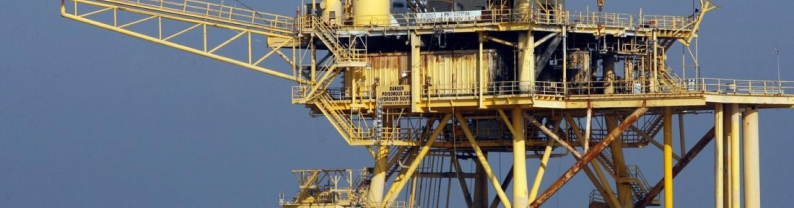
Oil prices stabilized on Thursday (February 12th), as the market reassigned a risk premium to US-Iran tensions despite US inventory data showing swelling domestic supplies. This movement confirms one thing: geopolitical headlines are still more "noise" than signals of a short-term surplus. As of 3:50 PM WIB, Brent was at $69.60/barrel (+0.29%) and WTI was at $64.83/barrel (+0.31%). The gains were moderate, but enough to keep prices near the psychological $70 level for Brent. From a geopolitical perspective, market focus is on the potential for escalation in the Middle East. Recent reports...
WTI crude prices settled above $73 a barrel on Thursday, paring earlier losses as investors weighed a sharp rise in U.S. fuel inventories against concerns about tighter supplies. The latest EIA report showed a nearly 1 million-barrel drop in U.S. crude inventories last week, the seventh straight decline, but also a significant increase of 6.3 million barrels in gasoline and 6.1 million in distillates. Meanwhile, OPEC production fell in December after two months of growth, as UAE field maintenance offset gains, including an increase in Nigerian output. Russian oil production also fell...
The EUR/USD pair trades in negative territory for the third consecutive day around 1.0310 during the early European session on Thursday. The downbeat German November Factory Orders and the expectation of aggressive rate cuts by the European Central Bank (ECB) this year weigh on the Euro (EUR) against the Greenback. Later on Thursday, the Eurozone Retail Sales for November and the Fedspeak will be in focus. German Factory Orders sank lower unexpectedly in November, with the figure falling by 5.4% MoM in November, compared to a decline of 1.5% in the previous reading, the Federal Statistics...
Gold price (XAU/USD) drifts lower during the Asian session on Thursday and moves away from a four-week top, around the $2,670 area touched the previous day. The US Dollar (USD) stands firm near a two-year peak touched last week in the wake of the Federal Reserve's (Fed) hawkish shift, which, in turn, is seen as a key factor undermining the non-yielding yellow metal. In fact, the Fed indicated that it would slow the pace of interest rate cuts in 2025 amid a still resilient US economy, signs that the US labor market remained robust and sticky inflation. That said, concerns about US...
Silver price (XAG/USD) continues its upward momentum, rising for the sixth consecutive day to trade near $30.10 per troy ounce, close to three-week highs during Thursday's Asian session. The precious metal, often considered a safe-haven asset, gains support amid uncertainty surrounding inflation and potential tariffs under President-elect Trump's administration, as highlighted by the US Federal Reserve (Fed).In addition, robust growth in 2024 has boosted industrial demand for Silver, which is on track to surpass 700 million ounces (Moz) for the first time. This surge is driven by its...
The Japanese Yen (JPY) gains some positive traction following the release of stronger wage growth data from Japan earlier this Thursday and for now, seems to have snapped a three-day losing streak against its American counterpart. Moreover, talks that large Japanese firms are likely to increase wages by about 5% on average in 2025 and broadening inflationary pressures back the case for another rate hike by the Bank of Japan (BoJ). Apart from this, the cautious market mood, persistent geopolitical risks and concerns about US President-elect Donald Trump's tariff plans underpin the safe-haven...
The Australian Dollar (AUD) extends its losses for the third consecutive day against the US Dollar (USD), with the AUD/USD pair holding losses following mixed economic data released on Thursday. Traders are now focused on Friday's US Nonfarm Payroll (NFP) report, for additional policy direction insights. Australia's trade surplus rose to 7,079 million in November, surpassing the expected 5,750 million and the previous reading of 5,670 million (revised from 5,953 million). Exports increased by 4.8% month-on-month (MoM) in November, up from 3.5% (revised from 3.6%) in October. Meanwhile,...
Gold drifted lower to around $2,650 per ounce on Thursday, halting two days of gains as investors continued to assess the Fed's policy outlook ahead of key jobs data. The latest FOMC minutes indicated inflation is likely to slow this year, but policymakers noted the risk of persistent price pressures, partly due to Trump's policies. The central bank also signaled that it may be nearing a point to slow the pace of policy easing, reducing the appeal of the non-yielding metal. Meanwhile, gold found support after a weaker-than-expected private employment report for December, reinforced the...
West Texas Intermediate (WTI), the US crude oil benchmark, is trading around $72.40 on Thursday. The WTI price edges lower amid the stronger US Dollar (USD). However, the concerns over supply disruptions might cap the downside for the WTI price. A strengthening of the Greenback exerts some selling pressure on the black gold as it makes oil more expensive for holders of other currencies. "The dollar's safe haven status is appreciated as fears of renewed U.S. inflationary pressure grow," said Tamas Varga, an analyst with oil broker PVM. US crude oil inventories fell for a seventh consecutive...
 Gold rises in the early Asian trade. There's a broad commodities uptrend, driven by macro uncertainty, a weaker dollar, and persistent demand for "hard" assets, says Fawad Razaqzada, market analyst...
 Oil extended declines after OPEC+ agreed to a bigger-than-expected production increase next month, raising concerns about oversupply just as US tariffs fan fears about the demand outlook.
Brent...
Oil extended declines after OPEC+ agreed to a bigger-than-expected production increase next month, raising concerns about oversupply just as US tariffs fan fears about the demand outlook.
Brent...
 The Japanese Yen (JPY) weakened against its US counterpart and reversed part of Friday's recovery from the lowest level since July 23 following Bank of Japan (BOJ) Governor Kazuo Ueda's remarks....