


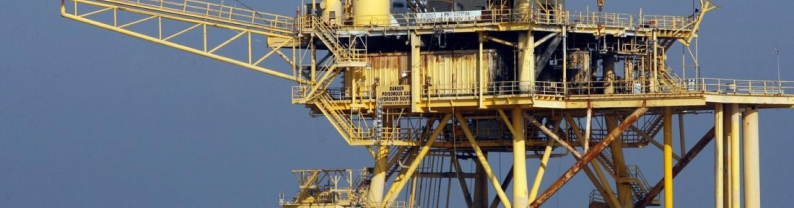
Oil prices stabilized on Thursday (February 12th), as the market reassigned a risk premium to US-Iran tensions despite US inventory data showing swelling domestic supplies. This movement confirms one thing: geopolitical headlines are still more "noise" than signals of a short-term surplus. As of 3:50 PM WIB, Brent was at $69.60/barrel (+0.29%) and WTI was at $64.83/barrel (+0.31%). The gains were moderate, but enough to keep prices near the psychological $70 level for Brent. From a geopolitical perspective, market focus is on the potential for escalation in the Middle East. Recent reports...
Gold's price surged for the third straight day and edged up 0.35% due to safe-haven demand spurred by concerns over Donald Trump's proposed policies, while the United Kingdom (UK) dealt with a budget crisis. The XAU/USD trades at $2,671 at the time of writing. On Wednesday, CNN revealed that United States (US) President-elect Donald Trump might consider declaring a national economic emergency, which would provide him with a legal justification to impose tariffs on adversaries and US allies. Earlier during Thursday's overnight session, UK Gilt yields at the long end of the curve skyrocketed...
The U.S. dollar strengthened for a third straight session on Thursday as Treasury yields dipped but held at elevated levels on concerns over tariffs under the incoming Trump administration, while sterling's recent weakness persisted. U.S. Treasury yields have been on an uptrend, with the benchmark 10-year note hitting an 8-1/2 month high of 4.73% on Wednesday as a resilient economy and likely tariffs have rekindled inflation concerns and heightened expectations the Federal Reserve will take a slower path of interest rate cuts. Recent economic data has shown a labor market on a solid...
Oil advanced, with traders weighing short-term supply risks against further signs of Chinese economic weakness. West Texas Intermediate rose 0.8% to settle near $74 a barrel, tacking on its seventh gain in the last nine sessions. Oil prices fell more than 1% on Wednesday after futures failed to breach a key technical level. Crude's strong start to 2025 has been supported by continued US inventory drawdowns and potential risks to Iranian supply in a second Donald Trump presidency. Cold weather is expected to boost demand for heating fuels this month, and Russia's seaborne crude exports...
Oil prices rose slightly on Thursday as investors factored in firm winter fuel demand expectations despite large U.S. fuel inventories and macroeconomic concerns. Brent crude futures were up 35 cents, or 0.5%, at $76.51 a barrel by 1246 GMT. U.S. West Texas Intermediate crude futures gained 30 cents, or 0.4%, to $73.62. Both benchmarks fell more than 1% on Wednesday as a stronger dollar and a bigger than expected rise in U.S. fuel stockpiles pressured prices. Nevertheless, official Energy Information Administration (EIA) data showed rising gasoline and distillates stockpiles in the United...
Gold's price (XAU/USD) turns higher again and enters into a third straight day of gains, after breaking and closing above the 55-day Simple Moving Average (SMA) at $2,654 the previous day. The move comes as yields across the globe start to surge due to inflation concerns. Traders are getting worried that inflation could peak again with all the stimulus plans, fiscal reforms, and tariff levies that President-elect Donald Trump has announced in the past few days and weeks. On the economic data front, this Thursday, all eyes are on the Federal Reserve (Fed), which has a slew of policymakers...
EUR/USD moved lower below 1.0300 but remained within Wednesday's trading range in the European session on Thursday. The major currency pair faced pressure as the US Dollar (USD) moved higher, with the US Dollar Index (DXY), which tracks the Greenback against a basket of six major currencies, aiming to revisit a two-year high of 109.53. The US Dollar strengthened as the Federal Open Market Committee (FOMC) minutes for its December policy meeting suggested that policymakers were cautious about further policy easing as progress in the disinflationary trend has stalled. Source: FXStreet
Silver (XAG/USD) price continues its uptrend, extending the winning streak that began on January 1. The grey metal was trading around $30.20 per troy ounce during European hours on Thursday (9/1). A closer look at the daily chart shows a developing bullish bias, with the XAG/USD pair pushing higher along the nine- and 14-day Exponential Moving Averages (EMAs), indicating strong near-term price momentum. The 14-day Relative Strength Index (RSI) has also risen above the 50 level, strengthening the bullish sentiment. Further upside in Silver price could indicate developing bullish momentum....
Gold (XAU/USD) attracted some dip buyers near $2,655 levels on Thursday and re-emerged near four-week highs touched the previous day. Cautious market sentiment, geopolitical risks, and concerns over US President-elect Donald Trump's tariff plans turned out to be key factors supporting the safe-haven commodity. Further, the flight to safety triggered a modest pullback in the US Treasury bond yields and drove some flows towards the precious metal for the third straight day. Meanwhile, the Federal Reserve's (Fed) hawkish signal that it will slow the pace of interest rate cuts in 2025 helped...
 Gold rises in the early Asian trade. There's a broad commodities uptrend, driven by macro uncertainty, a weaker dollar, and persistent demand for "hard" assets, says Fawad Razaqzada, market analyst...
 Oil extended declines after OPEC+ agreed to a bigger-than-expected production increase next month, raising concerns about oversupply just as US tariffs fan fears about the demand outlook.
Brent...
Oil extended declines after OPEC+ agreed to a bigger-than-expected production increase next month, raising concerns about oversupply just as US tariffs fan fears about the demand outlook.
Brent...
 The Japanese Yen (JPY) weakened against its US counterpart and reversed part of Friday's recovery from the lowest level since July 23 following Bank of Japan (BOJ) Governor Kazuo Ueda's remarks....