


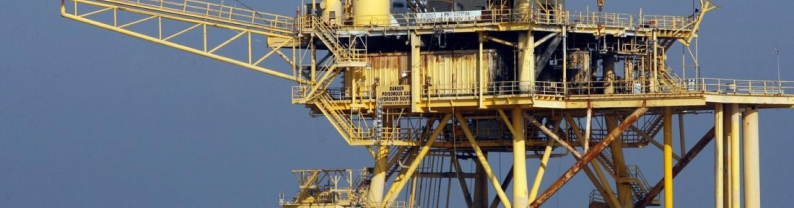
Oil prices stabilized on Thursday (February 12th), as the market reassigned a risk premium to US-Iran tensions despite US inventory data showing swelling domestic supplies. This movement confirms one thing: geopolitical headlines are still more "noise" than signals of a short-term surplus. As of 3:50 PM WIB, Brent was at $69.60/barrel (+0.29%) and WTI was at $64.83/barrel (+0.31%). The gains were moderate, but enough to keep prices near the psychological $70 level for Brent. From a geopolitical perspective, market focus is on the potential for escalation in the Middle East. Recent reports...
Brent crude rose more than 2% to $81.50 a barrel on Monday (13/1), its highest in more than four months, as new U.S. sanctions on Russia's energy sector raised concerns about supply disruptions. The sanctions, the most extensive yet, target major exporters, insurers and more than 150 tankers, sending major buyers such as India and China scrambling for alternatives. The move has caused confusion, with Chinese refiners holding emergency meetings and Indian refiners bracing for months of potential disruptions. Early signs of disruptions include sanctioned tankers stuck off the coast of China,...
Silver prices fell to around $30.2 an ounce on Monday, reversing some of last week's gains, as the dollar strengthened following stronger-than-expected U.S. jobs data. The data dampened expectations for further interest rate cuts by the Federal Reserve this year, and a stronger dollar makes dollar-denominated commodities like silver more expensive for buyers holding other currencies, dampening demand. Looking ahead, investors are focused on U.S. inflation data this week for further insight into the Fed's policy direction. Despite the recent pullback, silver jumped nearly 3% last week,...
The Japanese Yen (JPY) remained firmer against its peers for the third straight day, despite the lack of follow-through amid faltering expectations for a Bank of Japan (BOJ) rate hike. Widespread inflationary pressures in Japan keep the case for the next BOJ rate hike in January or March open. That said, some investors expect the BOJ to wait until April to seek confirmation that the strong wage momentum will continue into spring negotiations. This, in turn, is holding back JPY investors from placing aggressive bets. Further, the recent widening in the US-Japan yield differential,...
Gold (XAU/USD) prices reversed a modest Asian session decline to the $2,679 area and is currently trading just below a one-month high touched on Friday, though the upside seems limited. The upbeat US Nonfarm Payrolls (NFP) report reinforced market expectations that the Federal Reserve (Fed) will pause its interest rate-cutting cycle later this month. This, coupled with persistent geopolitical risks, dampened investors' appetite for riskier assets, which was evident from a softer tone around equity markets and acted as a tailwind for the safe-haven precious metal. Meanwhile, hawkish Fed...
Gold price (XAU/USD) attracts some sellers during the Asian session on Monday and for now, seems to have snapped a four-day winning streak to the $2,700 neighborhood, or a one-month high touched on Friday. The upbeat US Nonfarm Payrolls (NFP) report reinforced market expectations that the Federal Reserve (Fed) will pause its rate-cutting cycle later this month. This keeps the US Treasury bond yields elevated near their highest level in over a year and the US Dollar (USD) near a two-year peak, which, in turn, exerts some pressure on the non-yielding yellow metal. Meanwhile, hawkish Fed...
Oil prices jumped on Friday as the U.S. Treasury Department announced sweeping sanctions against Russia's oil industry. Brent gained $2.84, or 3.69%, to close at $79.76 per barrel, while U.S. crude oil advanced $2.65, or 3.58%, to settle at $76.57 per barrel. The benchmarks closed at their highest levels since October. The sanctions target Russian oil companies Gazprom Neft and Surgutneftegas and their subsidiaries, more than 180 tankers, and more than a dozen Russian energy officials and executives. The sanctioned executives include Gazprom Neft CEO Aleksandr Valeryevich Dyukov. The...
Gold (XAU/USD) price traded with slight losses near $2,690 against the broadly stronger US Dollar (USD) during the early Asian session on Monday (13/1). However, safe-haven demand due to uncertainty surrounding the policies of President-elect Donald Trump's administration could help limit Gold's decline. A stronger-than-expected US employment data on Friday reinforced expectations that the US Federal Reserve (Fed) may not cut interest rates aggressively this year. This, in turn, weighed on non-yielding assets. Traders expect the Fed to cut interest rates by only 30 basis points (bps) this...
The AUD/USD pair held steady around 0.6145 during the early Asian session on Monday. The US jobs growth came in stronger than expected in December, supporting the US Dollar (USD) across the board. The data released by the US Bureau of Labor Statistics (BLS) on Friday showed that Nonfarm Payrolls (NFP) rose by 256K in December, compared to an increase of 212K (revised from 227K) seen in November. This reading beat the market expectation of 160K by a wide margin. Meanwhile, the Unemployment Rate fell to 4.1% in December from 4.2% in November. Lastly, annual wage inflation, as measured by the...
 Gold rises in the early Asian trade. There's a broad commodities uptrend, driven by macro uncertainty, a weaker dollar, and persistent demand for "hard" assets, says Fawad Razaqzada, market analyst...
 Oil extended declines after OPEC+ agreed to a bigger-than-expected production increase next month, raising concerns about oversupply just as US tariffs fan fears about the demand outlook.
Brent...
Oil extended declines after OPEC+ agreed to a bigger-than-expected production increase next month, raising concerns about oversupply just as US tariffs fan fears about the demand outlook.
Brent...
 The Japanese Yen (JPY) weakened against its US counterpart and reversed part of Friday's recovery from the lowest level since July 23 following Bank of Japan (BOJ) Governor Kazuo Ueda's remarks....