


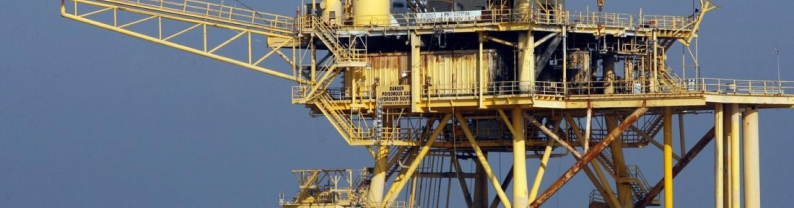
Oil prices stabilized on Thursday (February 12th), as the market reassigned a risk premium to US-Iran tensions despite US inventory data showing swelling domestic supplies. This movement confirms one thing: geopolitical headlines are still more "noise" than signals of a short-term surplus. As of 3:50 PM WIB, Brent was at $69.60/barrel (+0.29%) and WTI was at $64.83/barrel (+0.31%). The gains were moderate, but enough to keep prices near the psychological $70 level for Brent. From a geopolitical perspective, market focus is on the potential for escalation in the Middle East. Recent reports...
Bank of Japan (BOJ) board member Naoki Tamura's remarks on Thursday (Feb. 6) have boosted the yen, as he suggested interest rates should reach at least 1% in the second half of the fiscal year starting in April 2025. Tamura, known for his hawkish stance, indicated that the BOJ should act in response to rising inflationary pressures from rising raw material and labor costs. Tamura's remarks have fueled market expectations of a near-term rate hike, with the yen strengthening against the dollar, which fell to a two-month low of 151.81 yen. Furthermore, the yield on the two-year Japanese...
The dollar edged up on Thursday, but stayed close to recent lows, as traders weighed receding trade war risks and looked ahead to Friday's key U.S. data, while sterling dipped ahead of the Bank of England's policy decision. The yen touched an eight-week top versus the U.S. dollar after a Bank of Japan policy board member advocated continued interest rate hikes, but pared the gains and was broadly flat in European trade. The dollar rose against a basket of peers to 108, but still hovered near the lowest level since the start of last week, with investors beginning to entertain prospects that...
Oil prices edged up on Thursday after Saudi Arabia's state oil company raised its March crude prices sharply, but the gains barely dented the previous day's slide in benchmark Brent crude. Brent crude futures rose 28 cents, or 0.4%, to $74.89 a barrel by 0952 GMT. U.S. West Texas Intermediate crude was up 35 cents, or 0.5%, at $71.38. Oil prices had plunged by more than 2% on Wednesday as a large build in U.S. crude and gasoline stockpiles signalled weaker demand while investors also weighed up the implications of a new round of U.S.-China trade tariffs, including duties on energy...
Silver prices (XAG/USD) fell on Thursday, according to FXStreet data. Silver trades at $32.08 per troy ounce, down 0.53% from the $32.25 it cost on Wednesday. Silver prices have increased by 11.03% since the beginning of the year. The Gold/Silver ratio, which shows the number of ounces of Silver needed to equal the value of one ounce of Gold, stood at 89.05 on Thursday, up from 88.76 on Wednesday. Sumber : Fxstreet
Gold futures tick lower, but keep near record highs. Futures slide 0.4% to $2,881.30 a troy ounce, after hitting a fresh record of $2,906 in the prior session. Gold's bull market looks set to continue under the Trump administration, with trade wars and geopolitical tensions reinforcing trends toward central bank reserve diversification and de-dollarization, Citi analysts say. Support from emerging market central bank gold demand and global growth concerns should raise both ETF and physical gold demand, they say in a note. A Russia-Ukraine peace deal, and clarity around whether gold will be...
Oil prices edged up in Asian trade on Thursday after Saudi Arabia's state oil company sharply raised March crude prices, but the gains were small compared with the biggest drop in benchmark Brent crude in nearly three months the previous day. Brent crude was up 8 cents at $74.69 a barrel by 0422 GMT. U.S. West Texas Intermediate crude was up 15 cents at $71.18 a barrel. Oil prices had fallen more than 2% on Wednesday as a big build in U.S. crude and gasoline inventories signaled weaker demand, and as investors weighed the implications of a new round of U.S.-China trade tariffs, including...
Silver (XAG/USD) price continued its uptrend for the fourth straight session, trading near $32.30 per troy ounce during the Asian trading hours on Thursday (February 6). Technical analysis on the daily chart highlights a strong bullish bias, with the price maintaining its upward trajectory within an ascending channel. The XAG/USD pair remains above the nine-day and 14-day Exponential Moving Averages (EMA), indicating solid near-term momentum. Moreover, the 14-day Relative Strength Index (RSI) is nearing the 70 level, which reinforces the bullish sentiment. A break above the 70 level could...
Gold (XAU/USD) prices traded with a mild positive bias during the Asian session on Thursday (6/2) and remained close to the all-time highs hit the previous day. Investors continued to seek refuge in the traditional safe-haven bullion amid growing concerns about the US-China trade war and the potential economic impact of US President Donald Trump's trade tariffs. Further, expectations that the Federal Reserve (Fed) will continue to cut interest rates in 2025 and the recent decline in US Treasury bond yields further supported the non-yielding yellow metal. However, investors took a breather...
 Gold rises in the early Asian trade. There's a broad commodities uptrend, driven by macro uncertainty, a weaker dollar, and persistent demand for "hard" assets, says Fawad Razaqzada, market analyst...
 Oil extended declines after OPEC+ agreed to a bigger-than-expected production increase next month, raising concerns about oversupply just as US tariffs fan fears about the demand outlook.
Brent...
Oil extended declines after OPEC+ agreed to a bigger-than-expected production increase next month, raising concerns about oversupply just as US tariffs fan fears about the demand outlook.
Brent...
 The Japanese Yen (JPY) weakened against its US counterpart and reversed part of Friday's recovery from the lowest level since July 23 following Bank of Japan (BOJ) Governor Kazuo Ueda's remarks....