


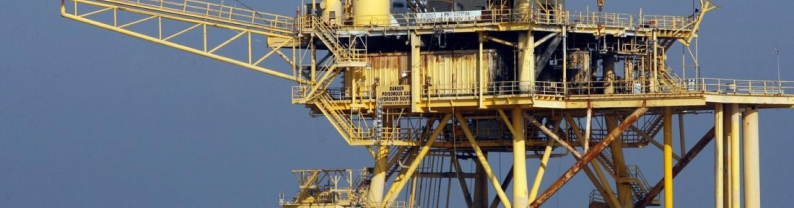
Oil prices stabilized on Thursday (February 12th), as the market reassigned a risk premium to US-Iran tensions despite US inventory data showing swelling domestic supplies. This movement confirms one thing: geopolitical headlines are still more "noise" than signals of a short-term surplus. As of 3:50 PM WIB, Brent was at $69.60/barrel (+0.29%) and WTI was at $64.83/barrel (+0.31%). The gains were moderate, but enough to keep prices near the psychological $70 level for Brent. From a geopolitical perspective, market focus is on the potential for escalation in the Middle East. Recent reports...
Gold's price (XAU/USD) has no limit and rallies for a fifth consecutive day in a row on Wednesday, accounting for more than 2% of gains this week and hitting fresh all-time highs near $2,870. Softer economic data from the United States (US), which further supports the case for another rate cut from the Federal Reserve (Fed), together with quickly fading tariff fears, is lifting Gold to higher levels day by day. On the economic data front, the calendar could become an additional tailwind for Gold to stretch even higher. This Wednesday, US Purchasing Managers Index (PMI) data for January will...
The dollar fell versus all Group-of-10 peers as tariff risks remain in the background, while the yen led gains following data pointing to more interest rate increases by the Bank of Japan. The Bloomberg Dollar Spot Index drops 0.3% to its lowest since Jan. 27; the yield on 10-year Treasuries slips 3bps to 4.48%. The move reflects unwinds of longs built on tariff risks and meets spillover of yen strength. USD/JPY drops 1.1% to 152.65, its lowest since Dec. 13; one-week risk reversals are little changed at 140bps, puts over calls Japan nominal wages rose 4.8% in December from a year...
Silver surged above $32 per ounce on Wednesday, hitting a three-month high as global trade and economic uncertainties fueled safe-haven demand for precious metals. The metal also benefited from a sharp pullback in the dollar. Earlier this week, the US delayed its planned 25% tariffs on Mexico and Canada for one month but proceeded with the imposition of 10% tariffs on China. Beijing retaliated with its own tariffs on select US exports and targeted several US firms for potential sanctions. On the supply side, the Silver Institute recently forecasted a fifth consecutive year of significant...
After weakening against its major peers on improving risk sentiment and disappointing US data on Tuesday, the US Dollar (USD) struggled to maintain its position on Wednesday morning. Later in the session, the US economic calendar will feature the ADP Employment Change and ISM Services Purchasing Managers' Index (PMI) data for January. Investors will also continue to watch comments from central bank officials throughout the day. The USD index fell about 0.4% on Tuesday after the US Bureau of Labor Statistics reported that JOLTS Job Openings fell to 7.6 million in December, below market...
Oil prices fell on Wednesday as rising US inventories and market concerns about a renewed China-US trade war offset President Donald Trump's renewed push to eliminate Iranian crude exports. Brent crude fell 21 cents, or 0.28%, to $75.99 a barrel by 0701 GMT. US West Texas Intermediate (WTI) crude fell 11 cents, or 0.15%, to $72.59. Crude prices traded in a wide range on Tuesday, with WTI down at one point as much as 3%, the lowest since December 31, after China announced tariffs on US oil, liquefied natural gas and coal imports in retaliation for US levies on Chinese exports. But prices...
The Japanese Yen (JPY) maintained its bullish bias through the early European session on Wednesday (February 5), with the USD/JPY pair holding just above the 153.00 mark, its lowest level since December 13. A rise in Japanese real wages reaffirmed bets that the Bank of Japan (BOJ) will raise interest rates again, which in turn, provided a strong boost to the JPY. Moreover, prospects for further policy easing by the Federal Reserve (Fed) would result in a further narrowing of the interest rate differential between the US and Japan. This turned out to be another factor driving flows towards...
The Australian dollar (AUD) weakened against the US dollar (USD) amid rising risk aversion amid growing concerns over US-China trade tensions. The AUD/USD pair failed to gain support from the Judo Bank Purchasing Managers' Index (PMI) released on Wednesday. The Judo Bank Australia Composite PMI rose to 51.1 in January from 50.2 in December, reflecting modest growth in private sector activity. Meanwhile, the Judo Bank Services PMI rose to 51.2 from 50.8, marking the twelfth straight month of expansion in the services sector. Despite the modest growth, it was the strongest since August. The...
Gold prices (XAU/USD) continued to rise throughout the Asian session on Wednesday (5/2) and climbed to an all-time high, around the $2,858 region in the last hour. Concerns about the economic impact of US President Donald Trump's trade tariffs continued to support demand for the safe-haven bullion. Further, expectations that the Federal Reserve (Fed) will maintain its easing cycle, supported by signs of slowing momentum in the US labor market, contributed to driving flows towards the non-yielding yellow metal. Meanwhile, the US Dollar (USD) languished near weekly lows amid prospects of...
 Gold rises in the early Asian trade. There's a broad commodities uptrend, driven by macro uncertainty, a weaker dollar, and persistent demand for "hard" assets, says Fawad Razaqzada, market analyst...
 Oil extended declines after OPEC+ agreed to a bigger-than-expected production increase next month, raising concerns about oversupply just as US tariffs fan fears about the demand outlook.
Brent...
Oil extended declines after OPEC+ agreed to a bigger-than-expected production increase next month, raising concerns about oversupply just as US tariffs fan fears about the demand outlook.
Brent...
 The Japanese Yen (JPY) weakened against its US counterpart and reversed part of Friday's recovery from the lowest level since July 23 following Bank of Japan (BOJ) Governor Kazuo Ueda's remarks....