


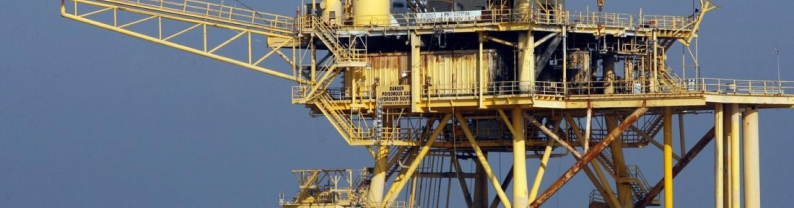
Oil prices stabilized on Thursday (February 12th), as the market reassigned a risk premium to US-Iran tensions despite US inventory data showing swelling domestic supplies. This movement confirms one thing: geopolitical headlines are still more "noise" than signals of a short-term surplus. As of 3:50 PM WIB, Brent was at $69.60/barrel (+0.29%) and WTI was at $64.83/barrel (+0.31%). The gains were moderate, but enough to keep prices near the psychological $70 level for Brent. From a geopolitical perspective, market focus is on the potential for escalation in the Middle East. Recent reports...
Oil prices rose as a major pipeline connecting Kazakhstan's fields to Russia's Black Sea coast halted loading after one of its three berths was damaged by a Ukrainian attack in the region over the weekend, while traders assessed the potential for a U.S. military operation in Venezuela alongside expectations of oversupply. West Texas Intermediate oil prices traded above $59 on Monday and had previously risen as much as 2.4%. The Caspian Pipeline Consortium carries the bulk of Kazakhstan's crude exports, which have averaged 1.6 million barrels per day so far this year. The berth was severely...
Oil rose as a key pipeline linking Kazakh fields to Russia's Black Sea coast halted loading after one of its three moorings was damaged in an attack over the weekend. Brent traded near $63 and earlier rose as much as 2.3%. The Caspian Pipeline Consortium carries most of Kazakhstan's crude exports, which have averaged 1.6 million barrels a day so far this year. Following the explosion, the mooring is severely damaged, a person with knowledge of the matter said. CPC said in response to questions about the damage that "any further operations are impossible" at the mooring,...
Gold prices traded near a six-week high on Monday, supported by a weaker dollar and expectations that the Federal Reserve could cut interest rates at its meeting later this month. Spot gold was up 0.5% at $4,249.05 an ounce by 07:49 ET, after reaching a six-week high of $4,256.2 earlier in the day. U.S. gold futures for February rose 0.7% to $4,283.25 an ounce. Gold prices jumped more than 4% last week. The U.S. dollar index, which tracks the greenback against a basket of currency pairs, briefly slipped to a two-week low on Monday. This has helped make bullion more attractive for foreign...
The yen headed for its biggest one-day rally in almost two months on Monday after Bank of Japan Governor Kazuo Ueda gave the clearest hint so far that a December rate hike may be on the table. Meanwhile the dollar struggled as investors ramped up bets of a U.S. rate cut this month. Ueda said on Monday the BOJ would consider the "pros and cons" of raising interest rates at its next policy meeting in December, offering the strongest hint so far that a hike may materialise this month. He subsequently told a press conference that he would elaborate on the central bank's future rate hike path...
Oil prices rose 2% on Monday as the Caspian Pipeline Consortium halted exports after a major drone attack and U.S.-Venezuela tensions raised concerns about supply, while OPEC+ agreed to leave oil output levels unchanged for the first quarter of 2026. Brent crude futures advanced $1.26, or 2.02%, to $63.64 a barrel by 0953 GMT. U.S. West Texas Intermediate crude gained $1.27, or 2.17%, to $59.82. The Caspian Pipeline Consortium, which carries 1% of global oil, on Saturday said it halted operations after a mooring at its Russian terminal on the Black Sea was damaged by a Ukrainian drone....
The euro rebounded above $1.16, reaching its strongest level since mid-November, as investors adopted a cautious stance ahead of key Eurozone and US economic data that could influence interest rate expectations. Recent inflation reports showed Germany's EU-harmonized rate accelerating to 2.6%, its highest since February, while Spain's HICP remained well above the ECB's 2% target. In contrast, inflation in France and Italy stayed below target. The data, combined with ECB meeting minutes indicating policymakers see little urgency to cut rates, left market expectations largely unchanged, with...
Gold prices traded near a six-week high on Monday, supported by a weaker dollar and firm expectations that the Federal Reserve could cut interest rates at its meeting later this month. Spot gold was last up 0.2% at $4,240.55 an ounce by 02:32 ET (06:32 GMT), after reaching a six-week high of $4,256.2 earlier in the day. U.S. Gold Futures for February rose 0.5% to $4,274.55. Gold prices had jumped more than 4% last week. Gold supported by weaker dollar, Fed cut bets The US Dollar Index traded at a two-week low on Monday, making bullion more attractive for non-U.S. buyers, while risk-off...
The Japanese yen (JPY) continued to strengthen throughout the Asian session on Monday (December 1st) after Bank of Japan Governor Kazuo Ueda again signaled that an interest rate hike could be imminent. These hawkish comments sent Japanese government bond yields to their highest level in years, narrowing the interest rate spread between Japan and other major economies. Coupled with a cautious market sentiment, the yen has increasingly been viewed as a safe haven currency, further strengthening its position. Meanwhile, the US dollar (USD) weakened, hitting its lowest point in nearly two...
 Gold rises in the early Asian trade. There's a broad commodities uptrend, driven by macro uncertainty, a weaker dollar, and persistent demand for "hard" assets, says Fawad Razaqzada, market analyst...
 Oil extended declines after OPEC+ agreed to a bigger-than-expected production increase next month, raising concerns about oversupply just as US tariffs fan fears about the demand outlook.
Brent...
Oil extended declines after OPEC+ agreed to a bigger-than-expected production increase next month, raising concerns about oversupply just as US tariffs fan fears about the demand outlook.
Brent...
 The Japanese Yen (JPY) weakened against its US counterpart and reversed part of Friday's recovery from the lowest level since July 23 following Bank of Japan (BOJ) Governor Kazuo Ueda's remarks....