


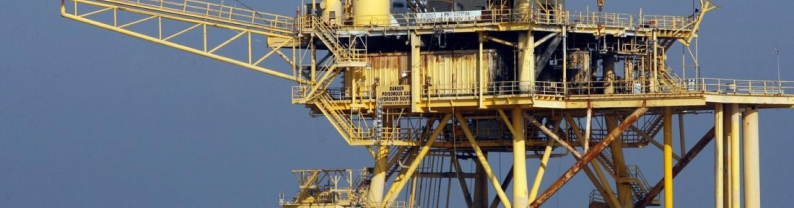
Oil prices stabilized on Thursday (February 12th), as the market reassigned a risk premium to US-Iran tensions despite US inventory data showing swelling domestic supplies. This movement confirms one thing: geopolitical headlines are still more "noise" than signals of a short-term surplus. As of 3:50 PM WIB, Brent was at $69.60/barrel (+0.29%) and WTI was at $64.83/barrel (+0.31%). The gains were moderate, but enough to keep prices near the psychological $70 level for Brent. From a geopolitical perspective, market focus is on the potential for escalation in the Middle East. Recent reports...
Oil prices are expected to end four consecutive days of gains as traders weigh the US crackdown on Venezuelan shipments amid weak demand. West Texas Intermediate (WTI) prices fluctuated near $58 per barrel, while Brent neared $62. The US has boarded one tanker, seized another, and recently pursued a third near Venezuela, as Washington increases pressure on the government of Nicolas Maduro. However, more than a dozen vessels have loaded oil off the country's coast since the Trump administration stepped up efforts to curb Caracas's crude revenues. Trading volumes tend to decrease ahead of...
Global gold prices recorded a slight decline in today's US trading session after the release of the latest economic data showing stronger-than-expected US economic growth. Third-quarter US GDP data showed solid expansion, triggering a strong response in financial markets and putting pressure on the precious metal as a safe-haven asset. A strengthening US economy tends to reduce expectations of further monetary easing by the Fed, as high growth often reduces the likelihood of an imminent interest rate cut. This strong data also supported a strengthening US dollar and rising Treasury bond...
The US dollar weakened against a number of major global currencies as market expectations for the Federal Reserve's (Fed) monetary policy easing increased. Market participants believe inflationary pressures in the United States are beginning to ease, opening room for the central bank to lower interest rates in the near future. These expectations of interest rate cuts are the main factor pressuring the dollar. Lower interest rates make the yields on dollar-denominated assets less attractive, prompting some investors to shift funds to other assets, including emerging market currencies and...
Oil prices were mostly flat in European trade on Tuesday, cooling after sharp gains in the prior session as heightened tensions between the U.S. and Venezuela and attacks on Russian oil infrastructure pointed to disruptions in global supplies. Trading volumes were thin ahead of the year-end holidays, while oil prices were still nursing deep losses this year on concerns over slowing demand and a looming supply glut. Brent oil futures for February rose 0.1% to $62.12 a barrel, while West Texas Intermediate crude futures were unchanged at $58.01 a barrel US-Venezuela tensions in focus; Trump...
Gold prices hit a record high in early Asian trade on Tuesday, extending recent gains as safe-haven demand was buoyed by heightened geopolitical tensions between the U.S. and Venezuela. Thin trading volumes, on account of the year-end holidays, magnified moves across gold and other precious metals. Gold and silver prices hit record highs on Monday, while platinum and palladium hit multi-year peaks. Spot gold last traded 1% higher at $4,484.02 an ounce by 22:50 ET (03:50 GMT), after touching a record high of $4,497.82/oz earlier in the day. Gold futures for February jumped 1.3% to a peak...
Silver prices surged to an all-time high on Tuesday, hitting $69.5 per ounce, breaking the previous record. This rise was driven by escalating geopolitical tensions, with the US continuing to tighten its blockade of Venezuelan tankers and PDVSA facing difficulties following a recent cyberattack. This heightened global uncertainty strengthens silver's position as a safe-haven asset. Market sentiment toward silver has become increasingly positive, particularly due to tensions in Venezuela. The US crackdown on Venezuela's oil sector has increased the risk of supply disruptions and worsened the...
The US dollar weakened again on Tuesday, extending its decline for two consecutive days. Improving risk sentiment ahead of the year-end period was the main factor driving the dollar's weakness. The Bloomberg Dollar Spot Index fell 0.1%, after plunging 0.4% on Monday. Investors began to show optimism ahead of the year-end holidays, which impacted major currency movements. The yen strengthened significantly, breaking through 157 against the dollar, supporting the previously depressed Japanese currency. USD/JPY fell 0.3% to 156.58 after Japanese Finance Minister Satsuki Katayama stated that...
Gold prices hit a new record on Monday, rallying sharply amid rising geopolitical tensions and speculation that the Federal Reserve (The Fed) will cut interest rates further next year. Gold surged to $4,459.60 per ounce, registering a 2.4% gain on the day—its biggest gain in more than a month. The surge in gold prices was driven by market expectations that the Fed will lower borrowing costs again in 2026, a policy that would benefit the precious metal. Gold, as a non-interest-bearing asset, often benefits in a lower interest rate environment. Geopolitical tensions, particularly those in...
 Gold rises in the early Asian trade. There's a broad commodities uptrend, driven by macro uncertainty, a weaker dollar, and persistent demand for "hard" assets, says Fawad Razaqzada, market analyst...
 Oil extended declines after OPEC+ agreed to a bigger-than-expected production increase next month, raising concerns about oversupply just as US tariffs fan fears about the demand outlook.
Brent...
Oil extended declines after OPEC+ agreed to a bigger-than-expected production increase next month, raising concerns about oversupply just as US tariffs fan fears about the demand outlook.
Brent...
 The Japanese Yen (JPY) weakened against its US counterpart and reversed part of Friday's recovery from the lowest level since July 23 following Bank of Japan (BOJ) Governor Kazuo Ueda's remarks....