


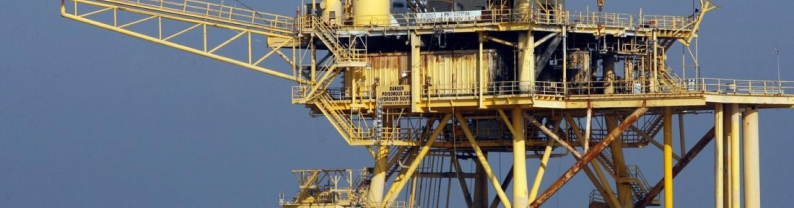
Oil prices stabilized on Thursday (February 12th), as the market reassigned a risk premium to US-Iran tensions despite US inventory data showing swelling domestic supplies. This movement confirms one thing: geopolitical headlines are still more "noise" than signals of a short-term surplus. As of 3:50 PM WIB, Brent was at $69.60/barrel (+0.29%) and WTI was at $64.83/barrel (+0.31%). The gains were moderate, but enough to keep prices near the psychological $70 level for Brent. From a geopolitical perspective, market focus is on the potential for escalation in the Middle East. Recent reports...
U.S. tariffs take center stage but China and the EU are quietly clashiThe U.S. tariff saga has stolen global spotlight from trade tensions between China and the European Union, which are now heating up. Accusations and investigations over each other's trade practices have long been a staple of EU-China trade relations, underpinned by concerns over how domestic economies are likely to be impacted by competing imports. In recent weeks, EU restrictions on Chinese companies taking part in public tenders for medical devices were quickly met with China imposing import curbs on such products....
The pharmaceutical industry is scrambling with scenario planning as U.S. President Donald Trump's 200% tariff proposal threatens to drive up drug prices and rip out corporate profit margins. The president once again warned on Tuesday that long-awaited industry-wide tariffs would be announced "very soon" after the administration launched a so-called 232 investigation into the sector in April. Trump suggested that those levies would not go into effect immediately, but get a grace period of "about a year, year and a half to come in." Analysts nevertheless warn that such a rate — even with a...
U.S. President Donald Trump announced on Thursday that he will impose a 35% tariff on imports from Canada starting August 1, warning that it could rise further if Canada retaliates. In a letter to Canadian Prime Minister Mark Carney, released on his social media platform, Trump also signaled plans to apply blanket tariffs of 15% to 20% on most other trade partners. The move is part of a broader escalation in his trade war, with new tariffs already targeting allies such as Japan and South Korea, as well as a 50% levy on copper. In an interview with NBC News, Trump said not all countries...
Federal Reserve Board of Governors (Fed) member Christopher Waller reiterated his argument for why the Fed should cut interest rates earlier in July. In a speech at the Dallas Fed, Waller noted that the inflationary impact of tariffs would likely be short-lived and stated that a rate cut would not be politically motivated. Fed Governor Waller is one of the favorites to replace Fed Chairman Jerome Powell in 2026. Key Highlights Tariffs raise prices once, and the central bank can anticipate that. The impact of tariffs is not zero, but it is also not large. Waller argued that a moderately...
Initial jobless claims in the US fell by 5,000 from the previous week to 227,000 on the first period of July, below market expectations of a 2,000 increase to 235,000. It was the fourth consecutive decline in initial claims to the lowest count in seven weeks, consolidating the view that the US labor market remains relatively robust to high interest rates and economic uncertainty. Still, outstanding unemployment claims rose by 10,000 to 1,965,000, the most since 2021, to solidify concerns that hiring is slowing. Initial claims filed by federal government employees, which have been under...
The impact of U.S. President Donald Trump's sweeping tariff agenda is likely to be seen in the upcoming second-quarter corporate earnings season, according to analysts at Capital Economics. Despite having largely delayed the implementation of his punishing "reciprocal" levies first unveiled in April, Trump has left a baseline 10% tariff in place, as well as heightened duties on items like steel, aluminum and autos. The effective U.S. tariff has in turn increased compared to its level at the beginning of Trump's second term earlier this year, analysts have suggested. This week, Trump has...
US President Donald Trump has threatened Latin America's largest economy, Brazil, with a 50% tariff on exports to the US. He also ordered an investigation into alleged unfair trade practices, which could lead to even higher duties. Trump set the August 1 tariff rate, far higher than the 10% duty imposed on Brazil on April 2. Brazil is the United States' 15th-largest trading partner, with total two-way trade amounting to USD 92 billion in 2024, and a rare US trade surplus of USD 7.4 billion. Brazil was one of eight countries mentioned in letters Trump posted on Wednesday, which outlined...
The minutes of the United States Federal Reserve's (Fed) monetary policy meeting on June 17-18 will be released on Wednesday at 6:00 PM GMT. Policymakers decided to keep the benchmark interest rate in the 4.25%-4.5% range, but the revised Summary of Projections (SEP) shows that policymakers project two 25 basis point (bps) rate cuts in 2025. Jerome Powell and co. decided to leave the policy setting unchanged after the June meeting. The Federal Open Market Committee (FOMC) decided to keep the benchmark interest rate unchanged at its June meeting. In its policy statement, the US central bank...
 Gold rises in the early Asian trade. There's a broad commodities uptrend, driven by macro uncertainty, a weaker dollar, and persistent demand for "hard" assets, says Fawad Razaqzada, market analyst...
 Oil extended declines after OPEC+ agreed to a bigger-than-expected production increase next month, raising concerns about oversupply just as US tariffs fan fears about the demand outlook.
Brent...
Oil extended declines after OPEC+ agreed to a bigger-than-expected production increase next month, raising concerns about oversupply just as US tariffs fan fears about the demand outlook.
Brent...
 The Japanese Yen (JPY) weakened against its US counterpart and reversed part of Friday's recovery from the lowest level since July 23 following Bank of Japan (BOJ) Governor Kazuo Ueda's remarks....