


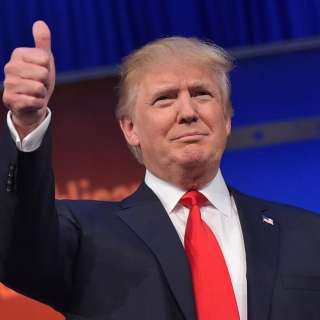
US President Donald Trump has threatened Latin America's largest economy, Brazil, with a 50% tariff on exports to the US. He also ordered an investigation into alleged unfair trade practices, which could lead to even higher duties.
Trump set the August 1 tariff rate, far higher than the 10% duty imposed on Brazil on April 2. Brazil is the United States' 15th-largest trading partner, with total two-way trade amounting to USD 92 billion in 2024, and a rare US trade surplus of USD 7.4 billion.
Brazil was one of eight countries mentioned in letters Trump posted on Wednesday, which outlined potential tariff increases ranging from 20% to 30%.
These included a 20% tariff on the Philippines; 25% on Brunei and Moldova; and 30% on Algeria, Iraq, Libya, and Sri Lanka. Earlier, Trump also announced plans to impose additional levies on 14 other countries, with tariff rates ranging from 25% to 40%, including Japan (25%), South Korea (25%), South Africa (30%), Indonesia (32%), and Thailand (36%).
Source: Trading Economics
The upcoming Supreme Court ruling on the legality of President Donald Trump's massive tariffs, which rocked markets in April, is one of the next major tests for US stocks and bonds. Equity markets ha...
The US seized two Venezuela-linked oil tankers in the Atlantic Ocean on Wednesday, one of which was sailing under a Russian flag, as part of President Donald Trump's aggressive efforts to regulate oil...
France is working with partners on a plan on how to respond should the United States act on its threat to take over Greenland, a minister said on Wednesday, as Europe sought to address U.S. President ...
The world community must make clear that U.S. intervention in Venezuela is a violation of international law that makes the world less safe, the Office of the United Nations High Commissioner for Human...
US President Donald Trump threatened on Friday to come to the aid of protesters in Iran if security forces open fire on them, days after unrest that has killed several people and posed the biggest int...
Oil prices stabilized on Thursday (February 12th), as the market reassigned a risk premium to US-Iran tensions despite US inventory data showing swelling domestic supplies. This movement confirms one thing: geopolitical headlines are still more...
Gold prices weakened slightly on Thursday (February 12th), as more solid US employment data reduced market confidence in an imminent Federal Reserve interest rate cut. The strong employment data prompted market participants to shift expectations of...
The Hang Seng Index reversed its downward trend in Hong Kong on Thursday (February 12th), weakening by around 0.9% to around 27,000 after a strong session earlier. This decline halted the momentum of the short term rally, as investors began to...