


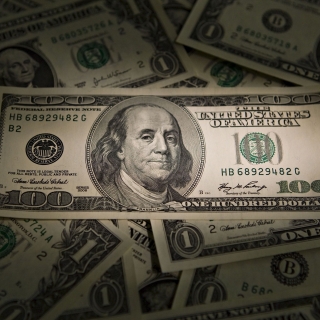
The U.S. dollar lost its footing against major peers on Thursday ahead of retail sales later in the day that could offer clues on U.S. consumer strength in the face of tariff risks, while excitement over a Sino-US trade deal faded.
The greenback has given up most of its gains from Monday after the United States and China announced a 90-day pause on most of the tariffs imposed on each other's goods since early April, easing fears of a global recession.
"Markets have exhausted the positivity from the U.S.-China trade talk," said Benjamin Ford, strategist at Macro Hive in London.
Safe-haven currencies gained with the Japanese yen strengthening 0.6% to 145.88 per dollar after having touched a one-month low of 148.65 earlier this week. The Swiss franc firmed 0.6% to 0.8376 versus the dollar.
The euro tacked on 0.2% to $1.12.
Most Asian currencies advanced versus the dollar too, led by a surge in the South Korean won for the second day after news on Wednesday that officials from South Korea and the U.S. met last week to discuss the dollar/won exchange rate led to a bout of dollar selling.
The won surged 0.7% at 1,397.68 per dollar. The sudden lurch in the won was reminiscent of an unprecedented two-day surge in Taiwan's currency at the start of May, which also coincided with the end of U.S.-Taiwan trade talks in Washington.
The Taiwan dollar was 0.5% stronger to the dollar on Thursday.
A Bloomberg report on Wednesday, however, said the U.S. is not negotiating for a weaker dollar as part of tariff talks, which has helped calm some of the nervousness in the markets.
The dollar index , which measures the U.S. unit against six other currencies, was 0.2% lower at 100.81, but on course to eke out a 0.4% gain for the week. Even so, the index is down nearly 7% in 2025.
U.S. President Donald Trump's aggressive and erratic trade policies have rattled investors' confidence in the dollar, leading to a sharp fall in U.S. assets. While stock markets have recouped April losses, the dollar remains under pressure.
A major market focus on Thursday will be U.S. retail sales data, and investors are also going to be looking out for more details on possible trade deals after the U.S.-China tariff truce.
"Hard data on US personal consumption have so far shown resilience despite weakness in consumer sentiment," said UniCredit investment strategist Thomas Strobel in a note, adding that U.S. data later in the day will test whether this resilience continued after sweeping U.S. tariffs last month.
U.S. Treasury yields were elevated and the benchmark 10-year yield rose to a one-month top, in part due to worries over Trump's budget package that would add trillions of dollars to the U.S. debt.
Sterling firmed 0.2% to $1.329 against the U.S. dollar after data showed the UK economy unexpectedly grew in March, giving a boost to the government and finance minister Rachel Reeves.
Source: Reuters
The USD/CHF pair weakened for the third consecutive day and traded around 0.7960 in early European trading on Tuesday. The Swiss franc strengthened on increased demand for safe haven assets, following...
The US Dollar Index (DXY) trended sluggishly around 99.06 on Monday (January 19th), as liquidity thinned as US markets were closed for Martin Luther King Jr. Day. Despite limited movement, global sent...
The US dollar is expected to rise for a third straight day on Thursday (January 8), but trading remains cautious as investors position themselves ahead of Friday's Nonfarm Payrolls (NFP) report. Recen...
The dollar index edged up to 98.5 on Tuesday, its strongest level in more than two weeks, as investors focused on a slate of key economic data for the US. Recent indicators have pointed to some soften...
The US dollar opened 2026 weakly on Friday. Throughout last year, the dollar was pressured by many major currencies due to narrowing interest rate differentials between the US and other countries. Con...
Oil prices stabilized on Thursday (February 12th), as the market reassigned a risk premium to US-Iran tensions despite US inventory data showing swelling domestic supplies. This movement confirms one thing: geopolitical headlines are still more...
Gold prices weakened slightly on Thursday (February 12th), as more solid US employment data reduced market confidence in an imminent Federal Reserve interest rate cut. The strong employment data prompted market participants to shift expectations of...
The Hang Seng Index reversed its downward trend in Hong Kong on Thursday (February 12th), weakening by around 0.9% to around 27,000 after a strong session earlier. This decline halted the momentum of the short term rally, as investors began to...