


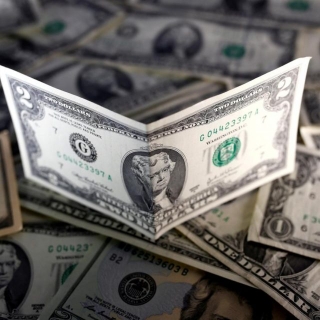
The US dollar held near a three-month high on Tuesday (November 4th) as a divided Federal Reserve prompted traders to reduce their bets on a rate cut, while the Japanese yen strengthened after a verbal warning from Tokyo officials.
The pound approached its lowest level since April after British Finance Minister Rachel Reeves, in a rare speech ahead of her November budget, said the budget would contain "tough choices," signaling the possibility of extensive tax increases.
The Australian dollar weakened after the Reserve Bank of Australia kept its benchmark interest rate unchanged at 3.60%, as expected, but warned against further easing given higher core inflation, stronger consumer demand, and a rebound in the housing market.
Overall market sentiment was noticeably more downbeat on Tuesday, with stocks falling and government bonds attracting demand, while safe-haven currencies like the yen and Swiss franc remained strong.
Data Gap Leaves Investors and the Fed in the Dark
Fed officials continue to offer differing views on the state of the economy and the risks it faces due to the lack of economic data delayed by the government shutdown.
The Fed cut interest rates last week, but Chairman Jerome Powell indicated that it could be the last cut of the year. Traders now price in a 65% chance of a rate cut in December, compared with a 94% chance the previous week, according to CME FedWatch.
The shift in near-term expectations has boosted the dollar. The euro weakened 0.1% to $1.151, near a three-month low. The pound weakened 0.45% to $1.3081 after Reeves outlined the difficult economic conditions he faces, citing high debt levels, low productivity, and stubborn inflation.
The dollar index, which measures the US currency against six other currencies, broke through 100 for the first time since early August and was last at 99.822.
Carol Kong, a currency strategist at Commonwealth Bank of Australia, said the divergence of opinion among Fed officials suggests a December rate cut is not guaranteed. "Without the release of official US economic data, it is difficult to see a further sharp reduction in rate cut expectations and a material gain in the dollar." With broader risk sentiment fragile, the Australian dollar weakened 0.5% to $0.6504 after the RBA decision. (alg)
Source: Reuters
The USD/CHF pair weakened for the third consecutive day and traded around 0.7960 in early European trading on Tuesday. The Swiss franc strengthened on increased demand for safe haven assets, following...
The US Dollar Index (DXY) trended sluggishly around 99.06 on Monday (January 19th), as liquidity thinned as US markets were closed for Martin Luther King Jr. Day. Despite limited movement, global sent...
The US dollar is expected to rise for a third straight day on Thursday (January 8), but trading remains cautious as investors position themselves ahead of Friday's Nonfarm Payrolls (NFP) report. Recen...
The dollar index edged up to 98.5 on Tuesday, its strongest level in more than two weeks, as investors focused on a slate of key economic data for the US. Recent indicators have pointed to some soften...
The US dollar opened 2026 weakly on Friday. Throughout last year, the dollar was pressured by many major currencies due to narrowing interest rate differentials between the US and other countries. Con...
Gold prices briefly caused a stir after hitting a new record, but then slowed. The main trigger: US President Donald Trump withheld the threat of tariffs on Europe and claimed there was a "framework" for a future agreement on Greenland. This calmer...
Oil prices were little changed in Asian trading on Thursday after US President Donald Trump backed down from a threat to impose tariffs on European countries over Greenland. This decision helped ease geopolitical tensions and improve market...
The Nikkei 225 Index climbed 1.73% to close at 53,689, while the broader Topix Index rose 0.74% to 3,616 on Thursday, snapping a five-day losing streak as Japanese shares were lifted by a strong rally in chip and artificial intelligence related...