


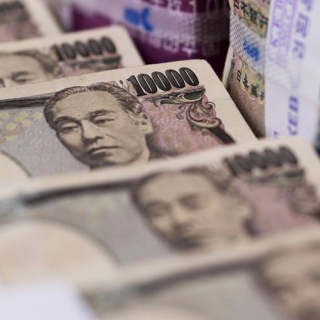
Politics dominated currency markets on Monday as the Japanese yen weakened by the most against the dollar in five months as Sanae Takaichi looked set to become Japan's next prime minister, while the euro slid on news that France's new prime minister had quit.
Takaichi is a former economic security and internal affairs minister with an expansionary fiscal agenda for the world's fourth-largest economy, and won the ruling Liberal Democratic Party's leadership election at the weekend.
Her victory traders caused to reduce bets that the Bank of Japan will increase interest rates this month and reassess their view on the direction of the yen.
The dollar rose 1.8% to 150.1 yen, its highest since August. If sustained, that would be its biggest daily gain since May 12.
In Asian trade the euro hit 176.22 yen, its highest ever against the yen, but later pared those gains to be up 1.2% at 175.3 yen.
Long-dated Japanese government bonds sold off, with the 40-year JGB yield jumping 15.2 basis points to 3.538%. The yen swaps market on Monday now indicates a 41% likelihood of a rate hike by December, down from 68% on Friday.
Meanwhile, the euro slid after France's new prime minister, Sebastien Lecornu, resigned, pushing politics in debt-laden France further into difficulty.
The euro dropped 0.7% to $1.16635 and also slid 0.3% against the pound to its lowest in nearly a month.
Sterling was down 0.2% against the dollar at $1.3445.
Elsewhere, this week traders will have to grapple with the absence of important pieces of U.S. economic data as the government shutdown continues.
That could make it hard to shake current market pricing signaling that easing at the Fed's October meeting is a near certainty. Fed funds futures implied a 96.7% probability of a 25-basis-point rate cut, according to the CME Group's FedWatch tool.
The lack of U.S. data also leaves scope for markets to react more than they normally would to other inputs such as remarks from policymakers, said Francesco Pesole, currency analyst at ING.(az)
Source: Newsmaker.id
The Japanese yen weakened to near 158.5 per dollar on Thursday, amid market concerns over the worsening fiscal outlook. The Bank of Japan (BOJ) began a two-day policy meeting, and traders remained war...
The USD/JPY pair weakened in Asian trading on Monday, hovering around 156.20 and briefly approaching 156.00. This weakening occurred after the Japanese Yen (JPY) strengthened, following signals from t...
The Japanese yen is the worst-performing major currency against the US dollar throughout 2025, despite the Bank of Japan (BOJ) raising interest rates. Even with further tightening measures, the yen co...
The Japanese yen weakened slightly during the Asian session on Wednesday, as investors remained cautious while awaiting the Bank of Japan (BoJ) policy update. Market focus now turns to the two-day BoJ...
The USD/JPY pair weakened to around 155.10 at the start of the Asian session on Tuesday. The yen strengthened slowly as markets became increasingly confident that the Bank of Japan (BoJ) would raise i...
Oil prices stabilized on Thursday (February 12th), as the market reassigned a risk premium to US-Iran tensions despite US inventory data showing swelling domestic supplies. This movement confirms one thing: geopolitical headlines are still more...
Gold prices weakened slightly on Thursday (February 12th), as more solid US employment data reduced market confidence in an imminent Federal Reserve interest rate cut. The strong employment data prompted market participants to shift expectations of...
The Hang Seng Index reversed its downward trend in Hong Kong on Thursday (February 12th), weakening by around 0.9% to around 27,000 after a strong session earlier. This decline halted the momentum of the short term rally, as investors began to...