


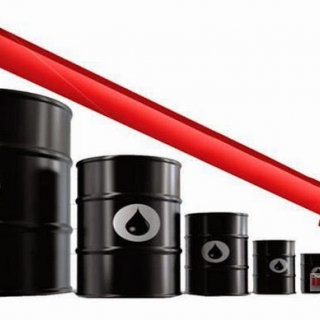
Oil prices plunged by 8% on Friday, heading for their lowest close since the middle of the pandemic in 2021, as China hit back in an escalating global trade war with the U.S. after President Donald Trump's barrage of levies this week.
China announced it will impose additional tariffs of 34% on all U.S. goods from April 10. Nations around the world have readied retaliation after Trump raised tariff barriers to their highest in more than a century, leading to a plunge in world financial markets.
Brent futures dived $4.70, or 6.7%, to $65.44 a barrel by 1314 GMT. U.S. West Texas Intermediate crude futures lost $5, or 7.5%, to $61.95. Brent and WTI fell to $64.15 $60.81 a barrel, respectively, earlier in the session, a four-year low.
Both benchmarks were on course for their biggest weekly losses in percentage terms in more than two years.
"China's aggressive countermove to U.S. tariffs all but confirms we are heading towards a global trade war; a war that has no winners and which will hurt economic growth and demand for key commodities such as crude oil and refined products," said Ole Hansen, head of commodity strategy at Saxo Bank.
Fuelling the oil sell-off was a decision by the Organization of the Petroleum Exporting Countries and its allies, known collectively as OPEC+, to advance plans for output increases, with the group now aiming to return 411,000 barrels per day (bpd) to the market in May, up from the previously planned 135,000 bpd.
Source: Investing.com
Oil prices stabilized on Thursday (February 12th), as the market reassigned a risk premium to US-Iran tensions despite US inventory data showing swelling domestic supplies. This movement confirms one ...
Oil prices rose on Wednesday (February 11th), supported by a combination of geopolitical risk premiums from US-Iran tensions and more solid Asian demand signals particularly from India which helped ea...
Oil remained in the green zone on Tuesday (February 10th), as the market refused to abandon the Middle East risk premium. As of 13:07 GMT (20:07 WIB), Brent rose +0.4% to $69.32/barrel, while WTI rose...
Oil prices fell about 1% on Monday as concerns about conflict in the Middle East eased slightly. The market calmed after the US and Iran agreed to resume talks on Tehran's nuclear program, reducing fe...
Oil prices moved slightly higher in a volatile session on Friday, as investors assessed the direction of nuclear negotiations between the United States and Iran. Price movements appeared sensitive to ...
Oil prices stabilized on Thursday (February 12th), as the market reassigned a risk premium to US-Iran tensions despite US inventory data showing swelling domestic supplies. This movement confirms one thing: geopolitical headlines are still more...
Gold prices weakened slightly on Thursday (February 12th), as more solid US employment data reduced market confidence in an imminent Federal Reserve interest rate cut. The strong employment data prompted market participants to shift expectations of...
The Hang Seng Index reversed its downward trend in Hong Kong on Thursday (February 12th), weakening by around 0.9% to around 27,000 after a strong session earlier. This decline halted the momentum of the short term rally, as investors began to...