


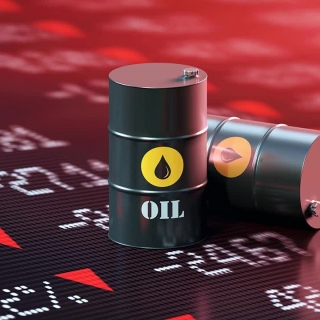
Oil prices plunged on Thursday (03/4) and closed with their biggest percentage drop since 2022, after OPEC+ agreed to a surprise output increase a day after U.S. President Donald Trump announced sweeping new import tariffs
Brent crude futures settled at $70.14 a barrel, down $4.81, or 6.42%. U.S. West Texas Intermediate crude <CLc1> settled at $66.95 a barrel, down $4.76, or 6.64%.
Brent was on track for its biggest percentage drop since Aug. 1, 2022, and WTI was on track for its biggest drop since July 11, 2022.
At a ministerial meeting on Thursday, OPEC+ nations agreed to advance their plan to raise oil output, now aiming to bring 411,000 barrels per day back to the market in May, up from the 135,000 barrels per day previously planned.
"The economy and oil demand are inextricably linked," said Angie Gildea, KPMG's U.S. energy leader.
"The market is still digesting the tariffs, but the combination of rising oil production and a weaker global economic outlook is putting downward pressure on oil prices — potentially marking a new chapter in a volatile market."
Oil prices had been trading about 4% lower before the meeting, with investors worried that Trump's tariffs would escalate the global trade war, curb economic growth and curb fuel demand.
Trump on Wednesday announced a minimum 10% tariff on most goods imported into the U.S., the world's largest oil consumer, with much higher duties on products from dozens of countries.
Imports of oil, gas and refined products are exempt from the new tariffs, the White House said Wednesday.
UBS analysts on Wednesday cut their oil price forecast by $3 a barrel for 2025-26 to $72 a barrel.
Traders and analysts now expect more price volatility in the near term, given that tariffs could change as countries try to negotiate lower rates or impose retaliatory levies.
"Retaliation is imminent and judging by the initial market reaction, recession and stagflation have become a dire possibility," said PVM analyst Tamas Varga.
"Since tariffs are ultimately paid by domestic consumers and businesses, the costs will inevitably increase, hampering economic growth," Varga said. Further weighing on market sentiment, U.S. Energy Information Administration data on Wednesday showed U.S. crude inventories rose by a surprising 6.2 million barrels last week, against analysts' forecasts for a 2.1 million-barrel drop. (Newsmaker23)
Source: Reuters
Oil prices stabilized on Thursday (February 12th), as the market reassigned a risk premium to US-Iran tensions despite US inventory data showing swelling domestic supplies. This movement confirms one ...
Oil prices rose on Wednesday (February 11th), supported by a combination of geopolitical risk premiums from US-Iran tensions and more solid Asian demand signals particularly from India which helped ea...
Oil remained in the green zone on Tuesday (February 10th), as the market refused to abandon the Middle East risk premium. As of 13:07 GMT (20:07 WIB), Brent rose +0.4% to $69.32/barrel, while WTI rose...
Oil prices fell about 1% on Monday as concerns about conflict in the Middle East eased slightly. The market calmed after the US and Iran agreed to resume talks on Tehran's nuclear program, reducing fe...
Oil prices moved slightly higher in a volatile session on Friday, as investors assessed the direction of nuclear negotiations between the United States and Iran. Price movements appeared sensitive to ...
Oil prices stabilized on Thursday (February 12th), as the market reassigned a risk premium to US-Iran tensions despite US inventory data showing swelling domestic supplies. This movement confirms one thing: geopolitical headlines are still more...
Gold prices weakened slightly on Thursday (February 12th), as more solid US employment data reduced market confidence in an imminent Federal Reserve interest rate cut. The strong employment data prompted market participants to shift expectations of...
The Hang Seng Index reversed its downward trend in Hong Kong on Thursday (February 12th), weakening by around 0.9% to around 27,000 after a strong session earlier. This decline halted the momentum of the short term rally, as investors began to...