


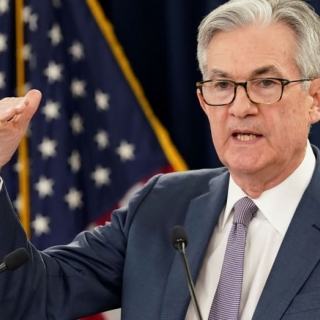
Federal Reserve (Fed) officials are expected to cut interest rates again on Wednesday, marking the third consecutive rate cut. However, many analysts believe that after this move, the Fed will likely pause and not rush to cut rates again early next year. This is because some officials are starting to worry that excessive cuts could trigger an overheated economy.
Within the Fed itself, there are sharp differences of opinion. Some believe that interest rates are currently at a "neutral" level, meaning they are neither slowing nor accelerating economic growth. On the other hand, others believe that policy is still too tight or too loose. These differences could lead to a lack of consensus in the upcoming decision, and some dissent is expected.
The situation is further complicated by the delay in the release of the latest economic data due to the government shutdown that lasted from October to part of November. Official labor market data will not be released until December 16th, followed by inflation data two days later. This means that when making a decision this week, the Fed will be forced to operate with a dim light. Economist Diane Swonk said the Fed now has to walk a fine line: it doesn't want to be too loose, but it also doesn't want to put too much pressure on the economy.
On Wednesday, the Fed will announce its interest rate decision at 2:00 PM Washington time, accompanied by an official statement and updated economic projections. Following that, Fed Chairman Jerome Powell will hold a press conference. Here, Powell is not expected to make any firm promises about the next steps, as he must represent a very diverse spectrum of views within the Fed, from those who favor further cuts to those who prefer to pause.
Meanwhile, the market is also watching the White House's decision regarding who will replace Powell when his term as chairman ends in May. Kevin Hassett, Director of the National Economic Council under President Donald Trump, has been mentioned as the leading candidate. However, an official announcement is likely to come early next year. So, while the market is busy guessing the direction of interest rates, they are also waiting to see who will be the new leader of the Fed going forward. (azf)
Source: Bloomberg
Stephen Miran, a Federal Reserve governor whose term ends at the end of January, said Thursday that he is looking for 150 basis points of interest-rate cuts this year to boost the U.S. labor market. ...
Federal Reserve Vice Chair for Supervision Michelle Bowman outlined significant changes to bank supervision and regulation during a speech at the California Bankers Association Bank Presidents Seminar...
Further changes to the Federal Reserve's short-term interest rate will need to be "finely tuned" to incoming data given the risks to both the U.S. central bank's employment and inflation goals, Richmo...
Richmond Federal Reserve Bank President Tom Barkin said the monetary policy outlook remains in a fragile balance given the conflicting pressures of rising unemployment and persistently high inflation....
The US Federal Reserve agreed to cut interest rates at its December meeting only after a highly nuanced debate about the current risks facing the US economy, according to minutes from the two-day meet...
Oil prices stabilized on Thursday (February 12th), as the market reassigned a risk premium to US-Iran tensions despite US inventory data showing swelling domestic supplies. This movement confirms one thing: geopolitical headlines are still more...
Gold prices weakened slightly on Thursday (February 12th), as more solid US employment data reduced market confidence in an imminent Federal Reserve interest rate cut. The strong employment data prompted market participants to shift expectations of...
The Hang Seng Index reversed its downward trend in Hong Kong on Thursday (February 12th), weakening by around 0.9% to around 27,000 after a strong session earlier. This decline halted the momentum of the short term rally, as investors began to...