


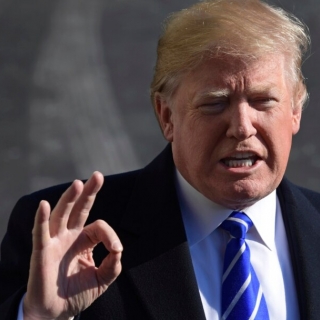
President Donald Trump announced an $11 billion aid package for American farmers, particularly soybean farmers, who have been hit by the trade war and falling crop prices. Tariffs against many countries, particularly China, have caused US soybean exports to plummet because China stopped purchasing American soybeans. China is the largest buyer, typically absorbing about half of US soybean exports. Many farmers are now being pressured by low crop prices and rising production costs.
Most of the funds will be distributed through the US Department of Agriculture's new Farmer Bridge Assistance program, designed to help crop farmers cope with debt and financial pressures from the 2025 planting season. Trump said the aid will come from tariff revenues, claiming that without tariffs, such assistance would not be possible. He also promised to lower the cost of farm equipment by eliminating "environmental restrictions" that he said were driving up production costs. Previously, during his first term, Trump had already allocated $16 billion in aid to farmers amidst retaliatory Chinese tariffs.
Reactions from farmers and agricultural organizations were mixed. Groups like the American Soybean Association (ASA) and the American Farm Bureau Federation have called the package a short-term "lifeline" that could help farmers breathe and plan for the 2026 planting season. A Purdue University survey also showed a slight improvement in farmer sentiment following the US-China trade deal and China's pledge to resume soybean purchases in 2026. However, on the ground, many farmers are already being hit hard: bankruptcies have risen sharply and pressures in rural areas are growing.
On the other hand, strong criticism has come from Democrats in Congress. They believe the root of the problem is Trump's tariff policies themselves, not the lack of cash assistance. Democrats like Senator Amy Klobuchar and Representative Jonathan L. Jackson have asserted that farmers "need trade, not aid." They argue that the lump sum payment only temporarily covers the wounds, while the "poorly designed" tariff policies have made US products too expensive to export and created further chaos. Jackson even estimates that farmers could face hundreds of billions of dollars in the long term if trade policies are not improved. (az)
Source: Newsmaker.id
The upcoming Supreme Court ruling on the legality of President Donald Trump's massive tariffs, which rocked markets in April, is one of the next major tests for US stocks and bonds. Equity markets ha...
The US seized two Venezuela-linked oil tankers in the Atlantic Ocean on Wednesday, one of which was sailing under a Russian flag, as part of President Donald Trump's aggressive efforts to regulate oil...
France is working with partners on a plan on how to respond should the United States act on its threat to take over Greenland, a minister said on Wednesday, as Europe sought to address U.S. President ...
The world community must make clear that U.S. intervention in Venezuela is a violation of international law that makes the world less safe, the Office of the United Nations High Commissioner for Human...
US President Donald Trump threatened on Friday to come to the aid of protesters in Iran if security forces open fire on them, days after unrest that has killed several people and posed the biggest int...
Oil prices stabilized on Thursday (February 12th), as the market reassigned a risk premium to US-Iran tensions despite US inventory data showing swelling domestic supplies. This movement confirms one thing: geopolitical headlines are still more...
Gold prices weakened slightly on Thursday (February 12th), as more solid US employment data reduced market confidence in an imminent Federal Reserve interest rate cut. The strong employment data prompted market participants to shift expectations of...
The Hang Seng Index reversed its downward trend in Hong Kong on Thursday (February 12th), weakening by around 0.9% to around 27,000 after a strong session earlier. This decline halted the momentum of the short term rally, as investors began to...