


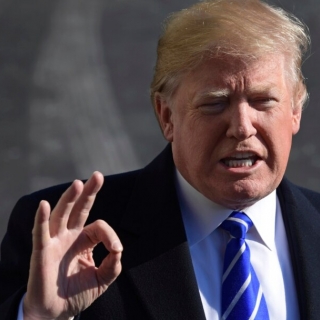
President Donald Trump announced a new peace pact between Rwanda and the Democratic Republic of Congo, which he linked to US access to critical minerals. At a meeting in Washington, Trump claimed his administration had "succeeded where many others have failed," calling this the eighth war he has ended in less than a year. However, the reality on the ground is far more complicated, as fighting in eastern Congo continues despite the signing of the previous peace agreement.
The agreement is not just about a ceasefire; it also concerns the mineral trade. The agreement grants US companies access to the region's copper and cobalt reserves—essential materials for making cell phone batteries and electric vehicles. The US is also investing in a railway project connecting the Atlantic Ocean to the Angola-Congo border to facilitate the flow of minerals. This move is clearly part of the US's efforts to compete with China for the world's strategic minerals.
While promising on paper, analysts warn that implementing this deal in a highly unstable region will be challenging. The armed group M23 still controls much of eastern Congo and has established a "parallel government" that controls almost everything, including the mineral supply chain. Peace talks in Doha between Congo and M23 have not yet produced an agreement on the return of territory, disarmament, and justice for victims. As long as the armed group refuses to relinquish power, the promised peace will be elusive.
At the political elite level, the mood is stark. Rwandan President Paul Kagame praised Trump, saying the deal provides everything needed to end the conflict "forever," while asserting that if it fails, the blame will not be Trump's but African leaders' own. Congolese officials, on the other hand, accuse Rwanda of not being serious about peace, while some opposition politicians in Congo say their president is only pursuing business deals with the US and is "mocking Congolese corpses" by signing the deal.
The voices on the ground are far more somber. Activists and residents in eastern Congo say bullets are still flying and people are unsafe, with hundreds of civilians killed in the past month alone. Some community leaders and researchers worry that this agreement will remain merely a "paper announcement" with no real intention of being implemented in good faith. Residents like Pathy Musa believe that if Rwanda fails to honor the agreement, the conflict could escalate into a never-ending war, claiming even more lives. Amid claims of peace and promises of major investments, people in eastern Congo still wonder: is this truly for peace, or simply for minerals? (az)
Source: Newsmaker.id
The upcoming Supreme Court ruling on the legality of President Donald Trump's massive tariffs, which rocked markets in April, is one of the next major tests for US stocks and bonds. Equity markets ha...
The US seized two Venezuela-linked oil tankers in the Atlantic Ocean on Wednesday, one of which was sailing under a Russian flag, as part of President Donald Trump's aggressive efforts to regulate oil...
France is working with partners on a plan on how to respond should the United States act on its threat to take over Greenland, a minister said on Wednesday, as Europe sought to address U.S. President ...
The world community must make clear that U.S. intervention in Venezuela is a violation of international law that makes the world less safe, the Office of the United Nations High Commissioner for Human...
US President Donald Trump threatened on Friday to come to the aid of protesters in Iran if security forces open fire on them, days after unrest that has killed several people and posed the biggest int...
Oil prices stabilized on Thursday (February 12th), as the market reassigned a risk premium to US-Iran tensions despite US inventory data showing swelling domestic supplies. This movement confirms one thing: geopolitical headlines are still more...
Gold prices weakened slightly on Thursday (February 12th), as more solid US employment data reduced market confidence in an imminent Federal Reserve interest rate cut. The strong employment data prompted market participants to shift expectations of...
The Hang Seng Index reversed its downward trend in Hong Kong on Thursday (February 12th), weakening by around 0.9% to around 27,000 after a strong session earlier. This decline halted the momentum of the short term rally, as investors began to...