


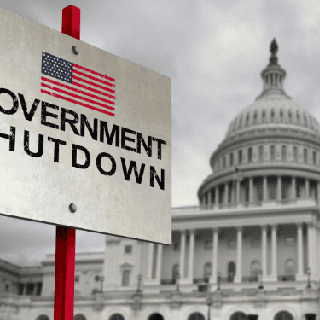
The longest government shutdown in U.S. history could end this week after a compromise that would restore federal funding cleared an initial Senate hurdle late on Sunday, though it was unclear when Congress would give its final approval.
The deal would restore funding for federal agencies that lawmakers allowed to expire on October 1, bringing welcome relief to low-income families that have seen food subsidies disrupted, hundreds of thousands of federal workers who have gone unpaid for more than a month and travelers who have faced thousands of canceled flights.
It would extend funding through January 30, leaving the federal government for now on a path to keep adding about $1.8 trillion a year to its $38 trillion in debt.
President Donald Trump's Republicans hold majorities in both chambers of Congress. But Democrats used rules that require 60 of the 100 senators to agree on most legislation, in a push for an extension of health insurance subsidies for 24 million Americans that are due to expire at the end of the year. The Senate compromise would set up a December vote on that measure.
Coming a week after Democrats won high-profile elections in New Jersey and Virginia and elected a democratic socialist as the next mayor of New York City, the decision by eight moderate Democrats to advance the deal provoked anger among many in the party who noted there was no guarantee that the healthcare vote would pass the Senate or House of Representatives.
"We wish we could do more," said Senator Dick Durbin of Illinois, the chamber's No. 2 Democrat. "The government shutting down seemed to be an opportunity to lead us to better policy. It didn't work."
A late October Reuters/Ipsos poll found that 50% of Americans blamed Republicans for the shutdown, while 43% blamed Democrats.
U.S. stocks rose on Monday, buoyed by news of progress on a deal to reopen the government.
MODERATE DEMOCRATS BROKER DEAL
Sunday's deal was brokered by Democratic Senators Maggie Hassan and Jeanne Shaheen, both from New Hampshire, and Senator Angus King, an independent from Maine, said a person familiar with the talks.
Trump has unilaterally cancelled billions of dollars in spending and trimmed federal payrolls by hundreds of thousands of workers, intruding on Congress' constitutional authority over fiscal matters. Those actions have violated past spending laws passed by Congress, and some Democrats have questioned why they would vote for any such spending deals going forward.
The deal does not appear to include any specific guardrails to prevent Trump from enacting further spending cuts.
However, it would stall his campaign to downsize the federal workforce, prohibiting him from firing employees until January 30.
It also would fund the SNAP food-subsidy program through September 30 of next year, heading off any possible disruptions if Congress were to shut down the government again during that time.
Many steps remain before the deal can become law.
The Senate must first reach a bipartisan agreement to move quickly towards a final vote. Otherwise, the chamber would require much of the coming week to move through procedural actions before voting on final passage, possibly extending the shutdown into next weekend.
HOUSE COULD ACT QUICKLY
House of Representatives Speaker Mike Johnson said his chamber could pass the bill as soon as Wednesday and send it on to Trump to sign into law, if the Senate acts quickly.
"I think we'll get it passed off the House floor and get it to the president's desk," he said on Fox Business.
Should the government remain closed for much longer, economic growth could turn negative in the fourth quarter, especially if air travel does not return to normal levels by the Thanksgiving holiday on November 27, according to White House economic adviser Kevin Hassett.
Source: Investing
The upcoming Supreme Court ruling on the legality of President Donald Trump's massive tariffs, which rocked markets in April, is one of the next major tests for US stocks and bonds. Equity markets ha...
The US seized two Venezuela-linked oil tankers in the Atlantic Ocean on Wednesday, one of which was sailing under a Russian flag, as part of President Donald Trump's aggressive efforts to regulate oil...
France is working with partners on a plan on how to respond should the United States act on its threat to take over Greenland, a minister said on Wednesday, as Europe sought to address U.S. President ...
The world community must make clear that U.S. intervention in Venezuela is a violation of international law that makes the world less safe, the Office of the United Nations High Commissioner for Human...
US President Donald Trump threatened on Friday to come to the aid of protesters in Iran if security forces open fire on them, days after unrest that has killed several people and posed the biggest int...
Oil prices stabilized on Thursday (February 12th), as the market reassigned a risk premium to US-Iran tensions despite US inventory data showing swelling domestic supplies. This movement confirms one thing: geopolitical headlines are still more...
Gold prices weakened slightly on Thursday (February 12th), as more solid US employment data reduced market confidence in an imminent Federal Reserve interest rate cut. The strong employment data prompted market participants to shift expectations of...
The Hang Seng Index reversed its downward trend in Hong Kong on Thursday (February 12th), weakening by around 0.9% to around 27,000 after a strong session earlier. This decline halted the momentum of the short term rally, as investors began to...