


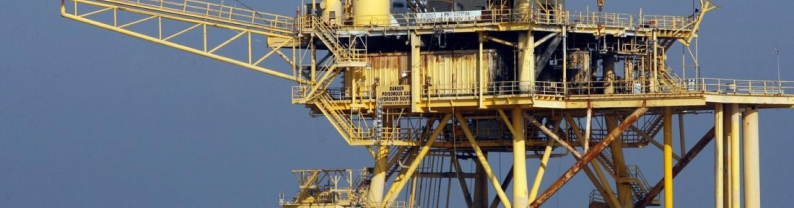
Oil prices stabilized on Thursday (February 12th), as the market reassigned a risk premium to US-Iran tensions despite US inventory data showing swelling domestic supplies. This movement confirms one thing: geopolitical headlines are still more "noise" than signals of a short-term surplus. As of 3:50 PM WIB, Brent was at $69.60/barrel (+0.29%) and WTI was at $64.83/barrel (+0.31%). The gains were moderate, but enough to keep prices near the psychological $70 level for Brent. From a geopolitical perspective, market focus is on the potential for escalation in the Middle East. Recent reports...
Rapid drop in Pound Sterling (GBP) could extend vs US Dollar (USD); oversold conditions suggest any decline is part of a lower 1.2570/12640 range. In the longer run, two-week GBP strength has ended; for the time being, it is likely to trade between 1.2520 and 1.2670, UOB Group's FX analysts Quek Ser Leang and Peter Chia note. Source: FXStreet
Crude oil prices fell on Friday as they headed for their first monthly decline since November, driven by uncertainty over global economic growth and fuel demand amid Washington's tariff threats and signs of a slowing U.S. economy. The more active May Brent crude was down 59 cents, or 0.8%, at $72.98 a barrel by 0747 GMT. U.S. West Texas Intermediate crude was at $69.70 a barrel, down 65 cents, or 0.9%. Front-month Brent, which expires on Friday, was trading at $73.42, down 62 cents, or 0.8%. Both benchmarks were on track for their first monthly decline in three months. Factors including...
USD/CHF pair trades in positive territory near 0.8995 during the early European session on Friday. The Greenback jumps after US President Donald Trump's latest tariff comments. The US Personal Consumption Expenditures (PCE) Price Index for January will be the highlight on Friday. The US Dollar jumps after Trump said that 25% tariffs on Mexican and Canadian goods will go into effect on March 4 as scheduled because drugs are still pouring into the United States from those countries. Trump added that goods from China will be subject to an extra 10% duty. The path of interest rate cuts by the...
Silver remained around $31.20 per ounce on Friday and was on track to lose nearly 4% for the week, pressured by demand uncertainties, strong supply, and some profit-taking. A stronger dollar also weighed on silver prices after US President Donald Trump confirmed on Thursday that his proposed 25% tariffs on Mexico and Canada would take effect on March 4, alongside an additional 10% duty on Chinese imports. Hecla Mining Company, the largest silver producer in the US, reported a 13% increase in silver output for 2024, mining 16.2 million ounces (moz), marking the second-highest production level...
Gold price (XAU/USD) maintains its offered tone through the early European session on Friday and is currently trading around the $2,864-2,863 region, just above a two-week low. The US Dollar (USD) is prolonging this week's recovery move from over a two-month low amid bets that the Federal Reserve (Fed) would stick to its hawkish stance amid still-elevated inflation. This, in turn, is seen as a key factor exerting pressure on the commodity for the second successive day. The down leg could further be attributed to repositioning trade ahead of the US Personal Consumption Expenditure (PCE)...
GBP/USD pair extends its downside to near 1.2580 during the early European session on Friday. Tariff uncertainty from US President Donald Trump undermines the Pound Sterling (GBP) against the US Dollar (USD). The US Personal Consumption Expenditures (PCE) Price Index for January will be the highlight later on Friday. Trump met with UK Prime Minister Keir Starmer late Thursday, and President Trump was quick to announce that there might be trade tariffs imposed on the UK as well unless ambiguous terms of a trade deal with the US are agreed upon within an undetermined deadline. Investors will...
Gold price (XAU/USD) attracts some follow-through selling for the second successive day and drops to over a two-week trough, around the $2,860 region during the Asian session on Friday. Bets that the Federal Reserve (Fed) would stick to its hawkish stance on the back of still-elevated inflation assist the US Dollar (USD) to prolong this week's recovery move from the lowest level since December 10. This turns out to be a key factor driving flows away from the non-yielding yellow metal. Apart from this, the intraday slide could further be attributed to some repositioning trade ahead of the...
Oil prices eased on Friday, heading for their first monthly drop since November, as uncertainty over global economic growth and fuel demand from Washington's tariff threats and further signs of a U.S. economic slowdown outweighed supply concerns. The more active May Brent crude futures slipped 31 cents, or 0.4%, to $73.26 a barrel by 0348 GMT, while U.S. West Texas Intermediate crude futures were at $70.04 a barrel, down 31 cents, or 0.4%. Front-month Brent that expires later on Friday traded at $73.69, down 35 cents, or 0.5%. Both benchmarks are on track to post their first monthly...
 Gold rises in the early Asian trade. There's a broad commodities uptrend, driven by macro uncertainty, a weaker dollar, and persistent demand for "hard" assets, says Fawad Razaqzada, market analyst...
 Oil extended declines after OPEC+ agreed to a bigger-than-expected production increase next month, raising concerns about oversupply just as US tariffs fan fears about the demand outlook.
Brent...
Oil extended declines after OPEC+ agreed to a bigger-than-expected production increase next month, raising concerns about oversupply just as US tariffs fan fears about the demand outlook.
Brent...
 The Japanese Yen (JPY) weakened against its US counterpart and reversed part of Friday's recovery from the lowest level since July 23 following Bank of Japan (BOJ) Governor Kazuo Ueda's remarks....