


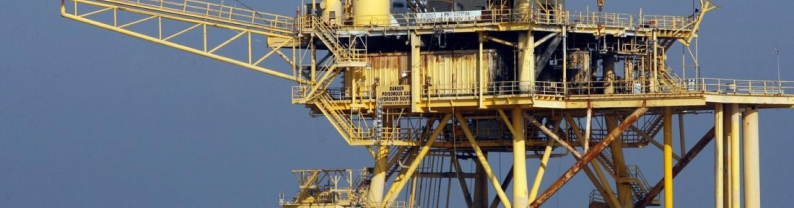
Oil prices stabilized on Thursday (February 12th), as the market reassigned a risk premium to US-Iran tensions despite US inventory data showing swelling domestic supplies. This movement confirms one thing: geopolitical headlines are still more "noise" than signals of a short-term surplus. As of 3:50 PM WIB, Brent was at $69.60/barrel (+0.29%) and WTI was at $64.83/barrel (+0.31%). The gains were moderate, but enough to keep prices near the psychological $70 level for Brent. From a geopolitical perspective, market focus is on the potential for escalation in the Middle East. Recent reports...
Silver price (XAG/USD) rebounds after two consecutive days of losses, trading around $31.30 per troy ounce during Asian market hours on Monday. The precious metal benefits from safe-haven demand amid concerns over US President Donald Trump's tariff policies. Over the weekend, Trump announced an additional 10% tariff on Chinese imports, effective Tuesday, following a similar 10% tariff imposed last month. Additionally, on Thursday, he stated via Truth Social that 25% tariffs on Canadian and Mexican goods will take effect on March 4. In response, China is considering countermeasures,...
The EUR/USD pair attracts fresh buyers at the start of a new week and for now, seems to have snapped a three-day losing streak to over a two-week low, around the 1.0360 area touched on Friday. The momentum lifts spot prices further beyond the 1.0400 mark during the Asian session and is sponsored by a weaker US Dollar (USD). From a technical perspective, the EUR/USD pair showed some resilience below the 50% Fibonacci retracement level of the rally witnessed in February. The subsequent move above the 38.2% Fibo. level suggests that the pullback from the 1.0525-1.0530 area, or a one-month...
WTI crude oil futures rose to around $70.3 per barrel on Monday, buoyed by strong manufacturing data from China, the world's largest crude importer, as well as lingering U.S.-Ukraine tensions that could sustain supply disruptions. Data released on Saturday showed that China's manufacturing activity rose to a three-month high in February, fueling optimism about increased fuel demand. Additionally, the recent clash between Ukrainian President Volodymyr Zelenskyy and U.S. President Donald Trump added uncertainty on the prospects of a Russia-Ukraine peace deal. This raises the likelihood that...
The Japanese Yen (JPY) touches a one-week low, around the 151.00 mark against its American counterpart during the Asian session on Monday, though the downside remains limited amid hawkish Bank of Japan (BoJ) expectations. In fact, investors have been pricing in the possibility of more interest rate hikes by the BoJ, which pushed the yield on the benchmark 10-year Japanese government bond (JGB) to its highest level since November 2009. Apart from this, the emergence of some US Dollar (USD) selling acts as a headwind for the USD/JPY pair. Meanwhile, BoJ Governor Kazuo Ueda warned last week...
The dollar index slipped to around 107.2 on Monday, ending a three-day winning streak, as the euro strengthened following renewed optimism about a potential resolution to the Ukraine conflict. Ukrainian President Volodymyr Zelenskyy announced on Sunday that European leaders had agreed to draft a peace plan to present to Washington, just days after he was unable to reach a deal with US President Donald Trump in the Oval Office. The dollar also lost some ground after US Commerce Secretary Howard Lutnick stated on Sunday that tariffs against Mexico and Canada remain "fluid," suggesting they...
Gold rose to around $2,870 per ounce on Monday, as concerns over U.S. President Donald Trump tariff policies prompted safe-haven flows into bullion. Trump's proposed tariffs on Mexican and Canadian goods, set to take effect on March 4, alongside an additional 10% duty on Chinese goods, have fueled concerns over potential retaliatory measures and broader trade tensions. The inflationary impact of these actions also supports gold, which is often seen as a hedge against rising prices. Adding to its appeal, the U.S. dollar retreated from a two-week high, making the metal less expensive for...
The Australian Dollar (AUD) halted its six-day losing streak on Monday, buoyed by a weaker US Dollar (USD) following the release of January's Personal Consumption Expenditures (PCE) inflation data on Friday. The report aligned with expectations, easing fears of unexpected inflation spikes in the US. Australia's TD-MI Inflation Gauge fell by 0.2% month-over-month in February, reversing a 0.1% rise in January. This marked the first decline since last August and followed the Reserve Bank of Australia's (RBA) decision to cut its cash rate by 25 basis points to 4.1% during its first monetary...
TariffsOil gained at the start of the week ahead of planned tariffs by the Trump administration on major US trading partners including China, which raises the prospect of retaliatory measures and market volatility. Brent climbed above $73 a barrel after posting the biggest monthly loss since September, while West Texas Intermediate futures traded near $70. The levies on China, Mexico and Canada, which are scheduled to start on Tuesday, may yet be delayed, but any reprieve would likely be temporary. President Donald Trump's threats to implement sweeping tariffs on a number of...
 Gold rises in the early Asian trade. There's a broad commodities uptrend, driven by macro uncertainty, a weaker dollar, and persistent demand for "hard" assets, says Fawad Razaqzada, market analyst...
 Oil extended declines after OPEC+ agreed to a bigger-than-expected production increase next month, raising concerns about oversupply just as US tariffs fan fears about the demand outlook.
Brent...
Oil extended declines after OPEC+ agreed to a bigger-than-expected production increase next month, raising concerns about oversupply just as US tariffs fan fears about the demand outlook.
Brent...
 The Japanese Yen (JPY) weakened against its US counterpart and reversed part of Friday's recovery from the lowest level since July 23 following Bank of Japan (BOJ) Governor Kazuo Ueda's remarks....