


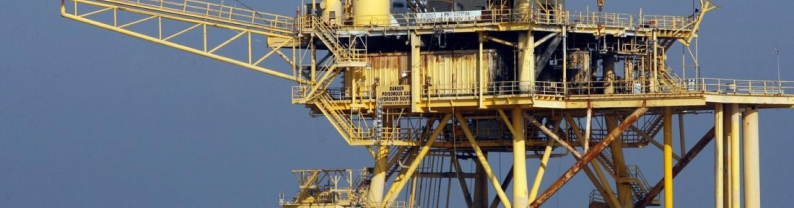
Oil prices stabilized on Thursday (February 12th), as the market reassigned a risk premium to US-Iran tensions despite US inventory data showing swelling domestic supplies. This movement confirms one thing: geopolitical headlines are still more "noise" than signals of a short-term surplus. As of 3:50 PM WIB, Brent was at $69.60/barrel (+0.29%) and WTI was at $64.83/barrel (+0.31%). The gains were moderate, but enough to keep prices near the psychological $70 level for Brent. From a geopolitical perspective, market focus is on the potential for escalation in the Middle East. Recent reports...
The Australian Dollar (AUD) remains under pressure against the US Dollar (USD) for the fourth consecutive session on Tuesday. Despite a stronger Westpac Consumer Confidence reading—rising 4% to 95.9 in March from 92.2 in February, marking its highest level in three years—the AUD/USD pair continues to struggle. The uptick in sentiment was driven by the Reserve Bank of Australia's (RBA) interest rate cut in February and easing cost-of-living pressures. Australia's 10-year government bond yield declined to around 4.39% as escalating global trade tensions dampened investor risk appetite....
Oil fell a second day, tracking a plunge across wider equity markets and other risk assets. West Texas Intermediate dropped below $66 a barrel after sliding 1.5% on Monday, with Brent crude closing near $69. Investors retreated from every type of risk on Monday with economic fear racing across markets as US President Donald Trump presses on with tariff measures and geopolitical shakeups. Oil has fallen almost a fifth from a high in mid-January as Trump's chaotic rollout of tariff hikes and push to slash federal spending darken the economic outlook in the biggest producer and consumer of...
Gold (XAU) price retreats as the week begins, down 0.70% and falls below the $2,900 figure as investors' fears of a recession in the United States (US) grow amid controversial trade policies implemented by the US President Donald Trump. At the time of writing, the XAU/USD pair trades at $2,890 after hitting a daily high of $2,918. Wall Street continued to edge lower, depicting a dismal market sentiment due to the ongoing economic slowdown. On Friday, Trump appeared in an interview and said, "There is a period of transition, because what we're doing is very big. …We're bringing wealth back...
AUD/USD fell by 0.40% on Monday as risk-off sentiment weighed on the pair. Concerns over a slowdown in the United States (US) economy initially supported the Australian Dollar (AUD), but weak Chinese inflation data and trade tensions pressured the pair lower. President Donald Trump's comments about a "transition period" raised uncertainty over the US outlook, while a sharper-than-expected drop in China's Consumer Price Index (CPI) signaled weakening demand, reinforcing downside risks for AUD/USD.Australian Dollar pressured as global risks intensifyUS economic concerns deepened after...
Gold (XAU) price retreats as the week begins, down 0.70% and falls below the $2,900 figure as investors' fears of a recession in the United States (US) grow amid controversial trade policies implemented by the US President Donald Trump. At the time of writing, the XAU/USD pair trades at $2,890 after hitting a daily high of $2,918. Wall Street continued to edge lower, depicting a dismal market sentiment due to the ongoing economic slowdown. On Friday, Trump appeared in an interview and said, "There is a period of transition, because what we're doing is very big. …We're bringing wealth back...
The US Dollar (USD) remains under pressure on Monday, with DXY hovering around 103.95, struggling to find traction after last week's steep decline. Federal Reserve (Fed) Chair Jerome Powell's latest remarks on Friday reassured markets that the central bank sees no urgent need to adjust policy at the moment, though economic uncertainties are growing. Meanwhile, the Nasdaq is facing heavy market losses, down 3.3%, as investors remain cautious ahead of key United States (US) inflation data due midweek.Fed in focus as CPI loomsMarket participants are bracing for the release of February's...
Oil prices were down 1% on Monday on fears that U.S. tariffs on Canada, Mexico and China would slow economies around the world and slash energy demand while OPEC+ ramps up its supply. Brent crude oil futures futures settled at $69.28 a barrel, down $1.08, or 1.5%. U.S. West Texas Intermediate futures settled at $66.03 a barrel, shedding $1.01, 1.5%. Last week marked WTI's seventh consecutive weekly decline, the longest losing streak since November 2023, while Brent fell for a third consecutive week. U.S. President Donald Trump's protectionist policies have roiled markets across the world,...
WTI crude oil futures fell to the $66.5 per barrel mark on Monday, near the six-month low of $66.3 from two sessions prior amid the outlook of weaker demand and ample supply. US President Donald Trump and Treasury Secretary Scott Bessent signaled that the US could have a period of economic hardship in the medium term due the their unleashing of trade wars with Canada, China, and Mexico, in addition to pledges of aggressive cuts in public spending. In China, fresh data showed that both consumer and producer prices fell more than expected in February, raising concerns that consumption for...
 Gold rises in the early Asian trade. There's a broad commodities uptrend, driven by macro uncertainty, a weaker dollar, and persistent demand for "hard" assets, says Fawad Razaqzada, market analyst...
 Oil extended declines after OPEC+ agreed to a bigger-than-expected production increase next month, raising concerns about oversupply just as US tariffs fan fears about the demand outlook.
Brent...
Oil extended declines after OPEC+ agreed to a bigger-than-expected production increase next month, raising concerns about oversupply just as US tariffs fan fears about the demand outlook.
Brent...
 The Japanese Yen (JPY) weakened against its US counterpart and reversed part of Friday's recovery from the lowest level since July 23 following Bank of Japan (BOJ) Governor Kazuo Ueda's remarks....