


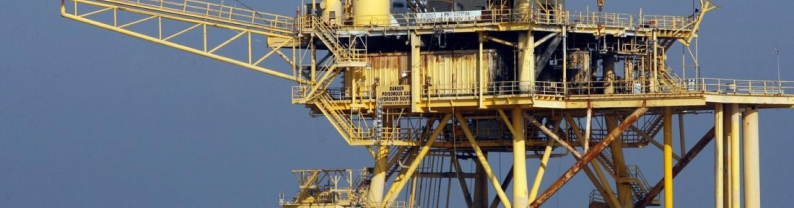
Oil prices stabilized on Thursday (February 12th), as the market reassigned a risk premium to US-Iran tensions despite US inventory data showing swelling domestic supplies. This movement confirms one thing: geopolitical headlines are still more "noise" than signals of a short-term surplus. As of 3:50 PM WIB, Brent was at $69.60/barrel (+0.29%) and WTI was at $64.83/barrel (+0.31%). The gains were moderate, but enough to keep prices near the psychological $70 level for Brent. From a geopolitical perspective, market focus is on the potential for escalation in the Middle East. Recent reports...
The US Dollar steadies on Wednesday, with DXY hovering around 103.50 as traders digest the latest Consumer Price Index (CPI) data. The February inflation report showed both headline and core figures cooling faster than anticipated, reinforcing expectations of softer price pressures ahead of recently imposed United States (US) tariffs. US President Donald Trump was also on the wires, and markets are assessing his words.The latest CPI report showed inflation decelerating in February, with both monthly and yearly figures coming in below expectations.Monthly headline inflation registered at...
Oil prices jumped on Wednesday, extending earlier gains that were powered by a weaker U.S. dollar, although persistent concerns over the impact of tariffs on global demand limited the uptick. By 11:00 ET (15:00 GMT), Brent futures had gained 1.8% to $70.83 per barrel, while U.S. West Texas Intermediate crude futures had climbed by 2.1% to $67.65 a barrel. The greenback hovered around a five-month low against several major currency pairs, with investors pouring through trade tensions and a possible Russia-Ukraine ceasefire deal. A weakening in the dollar can provide a lift for oil prices...
Oil prices rose as the U.S. cut its forecast for a global glut and slower-than-expected inflation supported riskier assets. Brent crude rose above $70 a barrel after a modest gain on Tuesday, while West Texas Intermediate topped $67. U.S. consumer prices rose at the slowest pace in four months in February, offering some relief after months of stalled progress in taming inflation. Meanwhile, the Energy Information Administration cut its forecast for a surplus this year and halved its outlook for a supply glut by 2026, citing the prospect of reduced flows from Iran and Venezuela....
Gold prices as a safe-haven asset held steady on Wednesday, helped by tariff uncertainty and a cooler inflation report that kept bets for a US interest rate cut intact. Spot gold rose 0.1% to $2,917.93 an ounce by 1258 GMT. US gold futures edged up 0.1% to $2,923.80. Data showed that the US consumer price index rose 0.2% last month after rising 0.5% in January. However, the increase was likely temporary against the backdrop of aggressive import tariffs that are expected to raise the cost of most goods in the coming months. "Gold has been resilient but stuck in a range in recent weeks;...
The dollar struggled to recover from a five-month low against major currencies on Wednesday, as traders digested U.S.-EU retaliatory tariffs and a potential Russia-Ukraine truce, while awaiting U.S. inflation data amid concerns about the economy. President Donald Trump's unpredictable trade policy announcements have rattled markets and prompted retaliatory tariffs from trading partners, escalating a global trade war. The European Union will impose retaliatory tariffs on 26 billion euros ($28.39 billion) worth of U.S. goods starting in April, the European Commission said on Wednesday, in...
The pound (GBP) traded subdued against the other major currencies on Wednesday (12/3) as investors looked for fresh cues on next week's Bank of England (BoE) monetary policy meeting. Traders are confident that the BoE will keep interest rates unchanged at 4.5% as a number of officials have been guiding a ‘gradual and cautious' approach to monetary easing. Last week, four BoE policymakers, including Governor Andrew Bailey, guided for a gradual path to "unwinding monetary policy restraint" as persistent inflation is unlikely to fade "on its own". Contrary to them, BoE member Catherine Mann...
Gold (XAU/USD) prices were flat at $2,915 at the time of writing on Wednesday (3/12) ahead of the release of the US Consumer Price Index (CPI) for February. Market consensus is for a slowdown in all inflation measures, both monthly and yearly. However, many analysts and economists have commented that the current US tariff approach will be inflationary for the US, which could be reflected in the numbers. Meanwhile, traders remain cautious about tariffs after Chinese Foreign Minister Wang Yi commented that if the US wants to hit China with its steel and aluminium tariffs. Meanwhile, Europe...
Gold (XAU/USD) prices extended its sideways consolidative price movement near weekly tops during the early European session on Wednesday (3/12) as traders remained on the sidelines ahead of the US consumer inflation figures. The crucial US Consumer Price Index (CPI) will be eyed for fresh cues on the Federal Reserve's (Fed) rate cut path, which in turn, will boost the US Dollar (USD) demand and provide a fresh directional impetus to the non-yielding yellow metal. Some repositioning trade ahead of the key data risk helped the USD gain some positive traction and reverse a part of its...
 Gold rises in the early Asian trade. There's a broad commodities uptrend, driven by macro uncertainty, a weaker dollar, and persistent demand for "hard" assets, says Fawad Razaqzada, market analyst...
 Oil extended declines after OPEC+ agreed to a bigger-than-expected production increase next month, raising concerns about oversupply just as US tariffs fan fears about the demand outlook.
Brent...
Oil extended declines after OPEC+ agreed to a bigger-than-expected production increase next month, raising concerns about oversupply just as US tariffs fan fears about the demand outlook.
Brent...
 The Japanese Yen (JPY) weakened against its US counterpart and reversed part of Friday's recovery from the lowest level since July 23 following Bank of Japan (BOJ) Governor Kazuo Ueda's remarks....