


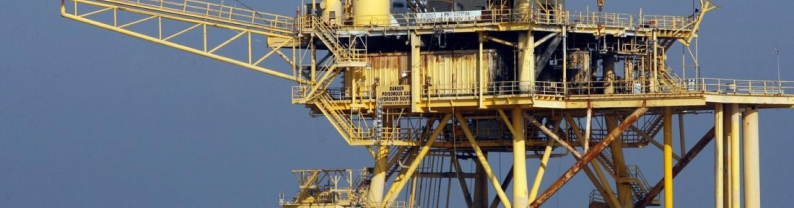
Oil prices stabilized on Thursday (February 12th), as the market reassigned a risk premium to US-Iran tensions despite US inventory data showing swelling domestic supplies. This movement confirms one thing: geopolitical headlines are still more "noise" than signals of a short-term surplus. As of 3:50 PM WIB, Brent was at $69.60/barrel (+0.29%) and WTI was at $64.83/barrel (+0.31%). The gains were moderate, but enough to keep prices near the psychological $70 level for Brent. From a geopolitical perspective, market focus is on the potential for escalation in the Middle East. Recent reports...
The Japanese Yen (JPY) kicks off the new week on a positive note as US President Donald Trump's sweeping reciprocal tariffs raise the risk of a global economic slowdown and continue to underpin traditional safe-haven assets. Meanwhile, concerns that harsher US reciprocal tariffs could negatively impact Japan's economy forced investors to scale back their bets that the Bank of Japan (BoJ) would raise the policy rate at a faster pace. This, in turn, acts as a headwind for the JPY and assists the USD/JPY pair to reverse an Asian session dip back closer to a six-month low – levels below the...
Oil prices fell sharply in Asian trade on Monday, extending recent declines after U.S. President Donald Trump largely doubled-down on his recent trade tariffs, ramping up concerns over slowing economic growth and weakening demand. China- the world's biggest oil importer- retaliated against Trump's tariffs over the weekend, while other majors such as the European Union outlined plans for retaliation, driving up concerns over a global trade war. This notion had battered oil prices through the last week, as traders feared worsening economic growth, which could in turn dent global oil...
Gold steadied around $3,030 per ounce on Monday after an earlier drop of more than 1% that sent prices to their lowest levels in over three weeks. The initial drop sparked speculation that some investors were liquidating positions to lock in profits, possibly to cover losses or margin calls from sharp declines in other assets, triggered by fears that an intensifying global trade war could push the economy into a recession. Adding to investor concerns, Federal Reserve Chairman Jerome Powell warned that tariffs raised the risks of higher inflation and slower economic growth, underscoring the...
Gold dropped more than 1% to below $3000 in the early Monday session in Asia as investors offloaded bullion to offset losses from a broader market downturn triggered by escalating trade tensions and growing fears of a global recession. Nasdaq futures sank more than 5% and Dow lost more than 1300 points while Nikkei was down more than 8% at the open, extending the market rout to a third consecutive session as the White House continued to push for aggressive tariffs on major trading partners. Source: Trading economi
Oil prices plunged nearly 8% on Friday to their lowest levels since 2021, while copper, soybeans and other commodities also fell as China retaliated against U.S. President Donald Trump's aggressive tariffs. Safe-haven gold prices fell for a second day, dragged down by a broader market selloff as major equity indexes plunged and recession fears mounted. Beijing proposed additional levies of 34% on all U.S. goods, retaliating after Trump announced a minimum 10% tariff on most U.S. imports, with much higher duties for dozens of countries including China. "This is the first very explicit...
Gold fell more than 3% on Friday, erasing gains from earlier in the week, as investors sold bullion to cover losses from a broader market rout as escalating trade tensions stoked fears of a global recession. Spot gold fell 2.9% to $3,024.2 an ounce, after hitting a session low of $3,015.29 earlier in the session. It hit a record high of $3,167.57 on Thursday. For the week, gold is down 1.9%. U.S. gold futures settled 2.8% lower at $3,035.40. On the technical front, spot gold managed to hold above its 21-day moving average of $3,023. "We tend to view gold as a liquid asset that is used to...
Gold prices plunged nearly 2% on Friday as traders liquidated their bullion positions amid a broad market sell-off, after China retaliated with new tariffs against U.S. President Trump's massive levies. Spot gold fell 1.9% to $3,053.98 an ounce by 10:05 a.m. EDT (1405 GMT). It hit a record high of $3,167.57 on Thursday. U.S. gold futures fell 1.6% to $3,072.10. Investors sold some of their gold holdings to cover losses in other asset classes, driven by margin calls, analysts said. "We still see room for further upside risk, given the current risk-off environment... we expect prices to...
The US Dollar Index (DXY), which tracks the performance of the US Dollar (USD) against six major currencies, rallied after some strong Nonfarm Payrolls numbers while markets look ahead for Federal Reserve (Fed) Chair Jerome Powell's speech up next. China meanwhile lashed out at the US tariffs by imposing a 34% tariff on all US goods from April 10th, a day after the US tariffs will be imposed. Question will be if other countries join China in retaliation while the 'deal-making' US President Donald Trump was referring to on Thursday, does not seem to be taking place right now. On the...
 Gold rises in the early Asian trade. There's a broad commodities uptrend, driven by macro uncertainty, a weaker dollar, and persistent demand for "hard" assets, says Fawad Razaqzada, market analyst...
 Oil extended declines after OPEC+ agreed to a bigger-than-expected production increase next month, raising concerns about oversupply just as US tariffs fan fears about the demand outlook.
Brent...
Oil extended declines after OPEC+ agreed to a bigger-than-expected production increase next month, raising concerns about oversupply just as US tariffs fan fears about the demand outlook.
Brent...
 The Japanese Yen (JPY) weakened against its US counterpart and reversed part of Friday's recovery from the lowest level since July 23 following Bank of Japan (BOJ) Governor Kazuo Ueda's remarks....