


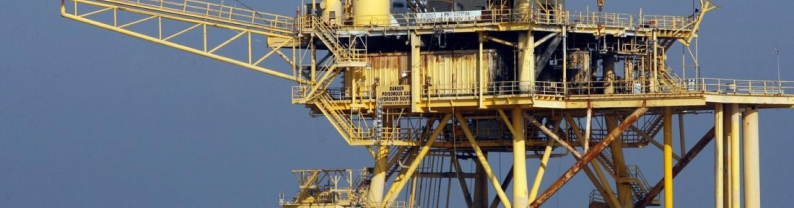
Oil prices stabilized on Thursday (February 12th), as the market reassigned a risk premium to US-Iran tensions despite US inventory data showing swelling domestic supplies. This movement confirms one thing: geopolitical headlines are still more "noise" than signals of a short-term surplus. As of 3:50 PM WIB, Brent was at $69.60/barrel (+0.29%) and WTI was at $64.83/barrel (+0.31%). The gains were moderate, but enough to keep prices near the psychological $70 level for Brent. From a geopolitical perspective, market focus is on the potential for escalation in the Middle East. Recent reports...
Oil prices fell on Friday, but remained on course for a third consecutive weekly rise, after the White House delayed a decision on U.S. involvement in the Israel-Iran conflict. Brent crude futures fell $1.89, or 2.4%, to $76.96 a barrel by 1000 GMT. They were still set to gain nearly 4% on the week. U.S. West Texas Intermediate crude for July - which did not settle on Thursday as it was a U.S. holiday and expires on Friday - was up 82 cents, or 1.1% to $75.96. The more liquid August contract was up around 0.4%, or 27 cents, to $73.77. On Thursday prices jumped almost 3% after Israel...
The EUR/USD pair is trading higher for the third consecutive day on Friday and has returned above the 1.1500 level, trading at 1.1520 at the moment of writing. US President Donald Trump's comments saying that he needs two weeks to decide on entering the Middle East conflict have eased investors' fears of an imminent attack and provided some support to the Euro. The pair, however, remains on track to a moderate weekly loss, as investors' concerns that the war between Iran and Israel might turn into a wider regional conflict have kept risk appetite subdued, boosting demand for the US Dollar...
Gold price (XAU/USD) is seen consolidating its intraday losses to over a one-week low and trades just below the $3,350 level during the first half of the European session. The US Federal Reserve (Fed) earlier this week trimmed the outlook for rate cuts in 2026 and 2027, which, in turn, is seen acting as a tailwind for the US Dollar (USD) and undermining demand for the non-yielding yellow metal. Apart from this, a generally positive tone around the European equity markets turns out to be another factor exerting pressure on the Gold price. However, rising geopolitical tensions in the Middle...
Brent crude oil prices pared gains from the previous session and fell nearly $2 on Friday after the White House delayed a decision on U.S. involvement in the Israel-Iran conflict, but prices were still poised for a third straight week of gains. Brent crude was down $1.89, or 2.4%, at $76.96 a barrel by 0255 GMT. For the week, it was up 3.8%. U.S. West Texas Intermediate crude for July - which did not close on Thursday because of a U.S. holiday and ends on Friday - rose 53 cents, or 0.7%, to $75.67. The more liquid WTI for August was up 0.2%, or 17 cents, to $73.67. Oil prices jumped...
Silver (XA/USD) is seen extending its retracement slide from the highest level since February 2012 touched earlier this week and weakened for the third straight day on Friday (6/20). The downward trajectory dragged the white metal to its lowest level in over one week, around the $35.65 area during the Asian session. From a technical perspective, XAG/USD's failure to extend this week's up-move beyond the $37.00 mark and a subsequent decline below the 23.6% Fibonacci retracement level of the May-June rally favors bearish traders. Moreover, oscillators on the 4-hourly chart have been gaining...
Gold prices fell on Friday and were on track for a weekly decline, as an overall stronger dollar and prospects for fewer U.S. interest rate cuts offset support from rising geopolitical risks in the Middle East. Spot gold was down 0.5% at $3,355.49 an ounce, by 0245 GMT, and down 2.2% so far this week. U.S. gold futures were down 1% at $3,371.80. "There's a lot of uncertainty in the Middle East right now that's keeping traders from taking aggressive positions on either the long or short side of the spectrum," said Kelvin Wong, senior market analyst, Asia Pacific at OANDA. Middle East...
The USD/CHF pair lost momentum to around 1.3690, ending three consecutive days of gains during Asian trading hours on Friday (6/20). Concerns about the US involvement in the Middle East conflict fueled demand for the Swiss Franc (CHF), a safe-haven currency. The US Philly Fed Manufacturing Index will be published later on Friday. The conflict between Israel and Iran has entered its seventh day. The White House said that US President Donald Trump will make a decision in the next two weeks on whether to join Israel in the war. Uncertainty about the war raging in the Middle East and fears that...
EUR/USD extends its winning streak for the third straight day, trading around 1.1520 during Asian hours on Friday (6/20). The currency pair strengthened as the US dollar (USD) weakened, possibly on technical pullback. The US dollar could recover on increased safe-haven demand, driven by growing concerns over potential US involvement in an Israel-Iran air war. Iran has not yet decided whether to build a nuclear weapon, despite having developed a large stockpile of enriched uranium needed to make a bomb, according to a senior US intelligence official quoted by The New York Times. Meanwhile,...
 Gold rises in the early Asian trade. There's a broad commodities uptrend, driven by macro uncertainty, a weaker dollar, and persistent demand for "hard" assets, says Fawad Razaqzada, market analyst...
 Oil extended declines after OPEC+ agreed to a bigger-than-expected production increase next month, raising concerns about oversupply just as US tariffs fan fears about the demand outlook.
Brent...
Oil extended declines after OPEC+ agreed to a bigger-than-expected production increase next month, raising concerns about oversupply just as US tariffs fan fears about the demand outlook.
Brent...
 The Japanese Yen (JPY) weakened against its US counterpart and reversed part of Friday's recovery from the lowest level since July 23 following Bank of Japan (BOJ) Governor Kazuo Ueda's remarks....