


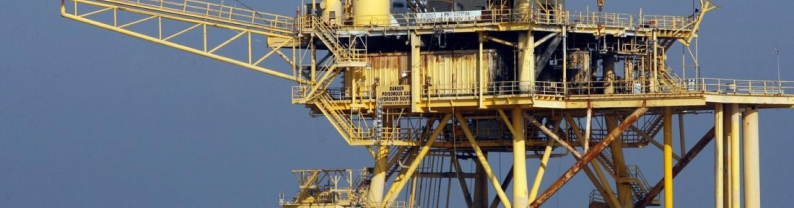
Oil prices stabilized on Thursday (February 12th), as the market reassigned a risk premium to US-Iran tensions despite US inventory data showing swelling domestic supplies. This movement confirms one thing: geopolitical headlines are still more "noise" than signals of a short-term surplus. As of 3:50 PM WIB, Brent was at $69.60/barrel (+0.29%) and WTI was at $64.83/barrel (+0.31%). The gains were moderate, but enough to keep prices near the psychological $70 level for Brent. From a geopolitical perspective, market focus is on the potential for escalation in the Middle East. Recent reports...
The Australian dollar (AUD) depreciated against the US dollar (USD) on Monday (6/23), extending its losses for the third straight session. The AUD/USD pair remained weaker amid weaker risk sentiment, driven by escalating Middle East tensions. US President Donald Trump announced late Saturday that he had "obliterated" three Iranian nuclear facilities, including Fordow, Natanz, and Isfahan, in overnight strikes, coordinated with Israeli strikes. Iran's parliament approved the move to close the strait. Iran has threatened to close the strait in the past but has never followed through,...
USD/CHF moved lower after posting gains in the previous session, trading around 0.8170 during Asian hours on Monday (6/23). The currency pair depreciated as the Swiss Franc (CHF) gained support from rising safe-haven demand, which was driven by the United States' (US) attack on three Iranian nuclear facilities over the weekend. US President Donald Trump announced late Saturday that he had "obliterated" Iran's key nuclear sites, including Fordow, Natanz and Isfahan, in overnight strikes, coordinated with Israeli strikes. The Middle East conflict is set to escalate as Tehran vows to defend...
The Japanese Yen (JPY) started the new week on a weaker note, dropping to its lowest level since May 15 against the broadly stronger US Dollar (USD) during the Asian session. The Bank of Japan (BOJ) last week signaled its preference to move cautiously in normalizing its still-loose monetary policy, forcing investors to scale back their expectations about the likely timing of the next interest rate hike. In addition, concerns that the US tariffs of 25% on Japanese vehicles and a reciprocal levies of 24% on other imports will impact the Japanese economy turned out to be another factor that...
The GBP/USD pair extended losses to around 1.3405 during Asian trading hours on Monday (6/23). Concerns that Iran will retaliate against the US attack on its nuclear sites boosted safe-haven flows, supporting the US Dollar (USD). Investors await preliminary readings of the Purchasing Managers' Indexes (PMIs) for June from the UK and the US, due on Monday. The United States carried out airstrikes on three nuclear sites in Iran early Sunday despite US President Donald Trump's long-standing vows to avoid a new foreign conflict, according to Bloomberg. Trump said Iran's main nuclear enrichment...
The EUR/USD pair weakened to around 1.1480 during the early Asian session on Monday (6/23). The greenback moved higher against the Euro (EUR) as US President Donald Trump's decision to join Israel's war against Iran sharply escalated the conflict. Traders will be closely monitoring developments surrounding the Middle East conflict. The United States (US) waded into the conflict between Israel and Iran over the weekend, with American warplanes and submarines targeting three Iranian facilities in Iran, Fordo, Natanz, and Isfahan. Trump said Iran's main nuclear enrichment facility had been...
Oil prices jumped on Monday to their highest since January as Washington's weekend move to join Israel in striking Iran's nuclear facilities stoked supply concerns. Brent crude futures were up $1.88, or 2.44%, at $78.89 a barrel by 1122 GMT. U.S. West Texas Intermediate crude was up $1.87, or 2.53%, at $75.71. Both contracts jumped more than 3% earlier in the session to $81.40 and $78.40, respectively, their highest in five months, before giving up some of the gains. The price surge came after U.S. President Donald Trump said he had "destroyed" Iran's main nuclear site in an attack over...
The dollar gained in early trading as investors sought to hedge against rising geopolitical risks following the U.S. attack on Iran. The U.S. currency gained slightly against the euro and most other major currencies as markets began the week in Asia. Crude oil futures rose and U.S. equity contracts fell as the bombings stoked demand for security and concerns about energy supplies. Government bonds edged higher. "We expect some risk relief, but not aggressively," said Diego Fernandez, chief investment officer at A&G Banco in Madrid. "The world may be a safer place without the Iranian...
Gold edges higher in the early Asian session amid worries over the Middle East conflict. "Recent escalation between the U.S. and Iran, marked by airstrikes on Iranian nuclear sites, has introduced a new layer of uncertainty into global markets," DHF Capital's Bas Kooijman says. "The fear of a broader regional conflict in the Middle East has driven a surge in demand for gold as investors seek to mitigate risk," the CEO and asset manager adds. Spot gold is 0.2% higher at $3,373.57/oz. (alg) Source: Dow Jones Newswires
 Gold rises in the early Asian trade. There's a broad commodities uptrend, driven by macro uncertainty, a weaker dollar, and persistent demand for "hard" assets, says Fawad Razaqzada, market analyst...
 Oil extended declines after OPEC+ agreed to a bigger-than-expected production increase next month, raising concerns about oversupply just as US tariffs fan fears about the demand outlook.
Brent...
Oil extended declines after OPEC+ agreed to a bigger-than-expected production increase next month, raising concerns about oversupply just as US tariffs fan fears about the demand outlook.
Brent...
 The Japanese Yen (JPY) weakened against its US counterpart and reversed part of Friday's recovery from the lowest level since July 23 following Bank of Japan (BOJ) Governor Kazuo Ueda's remarks....