


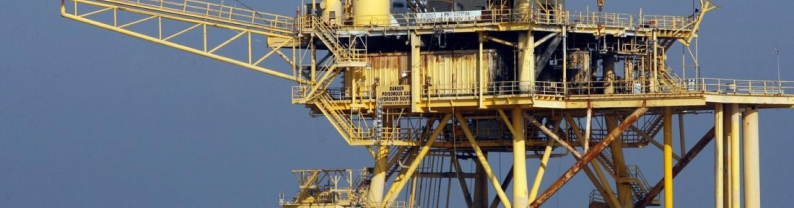
Oil prices stabilized on Thursday (February 12th), as the market reassigned a risk premium to US-Iran tensions despite US inventory data showing swelling domestic supplies. This movement confirms one thing: geopolitical headlines are still more "noise" than signals of a short-term surplus. As of 3:50 PM WIB, Brent was at $69.60/barrel (+0.29%) and WTI was at $64.83/barrel (+0.31%). The gains were moderate, but enough to keep prices near the psychological $70 level for Brent. From a geopolitical perspective, market focus is on the potential for escalation in the Middle East. Recent reports...
The dollar headed for its strongest weekly performance in nearly three years against major currencies, maintaining momentum on Friday (August 1st) after US President Donald Trump imposed new tariffs on dozens of trading partners. Some currencies of the hardest-hit countries, such as Switzerland, which now faces 39% tariffs, fell sharply. The Swiss franc hit its weakest level in six weeks, while the Canadian dollar headed for its seventh straight weekly decline. The dollar also strengthened against other currencies due to factors other than tariffs. The yen headed for its biggest weekly...
Oil prices were little changed on Friday (August 1st) and headed for weekly gains, as investors weighed the impact of further tariffs and sanctions from US President Donald Trump. Brent crude futures rose 19 cents, or 0.26%, to $71.89 per barrel at 08:23 GMT. US West Texas Intermediate crude futures rose 20 cents, or 0.29%, to $69.46 per barrel. Oil prices stabilized on Friday after falling more than 1% in the previous session. However, for the week, Brent is expected to rise 5%, and WTI around 6.6%. Investors have been focused on the potential impact of US tariffs on oil prices this week,...
Silver prices fell 0.5% to near $36.50 during the European trading session on Friday (August 1). The precious metal faced selling pressure as the confirmation of tariff agreements by the United States (US) with several of its major trading partners, such as Japan, the European Union (EU), South Korea, and others, as well as growing investor confidence that Washington will reach a deal with China, has reduced demand for safe-haven assets, such as silver. Safe-haven assets have performed strongly since US President Donald Trump's announcement of tariff policies, which aim to reduce the...
Silver prices hovered around $36.60 per ounce on Friday and were on track for a weekly loss of about 4%, pressured by a stronger US dollar. The dollar's strength was underpinned by renewed trade tensions after President Donald Trump reaffirmed a 10% global tariff and imposed reciprocal levies of up to 41% on countries without finalized trade deals. Investors also remained cautious ahead of the July US jobs report, which is expected to guide the Federal Reserve's next policy move. On Thursday, core PCE prices, the Fed's preferred inflation gauge, rose 0.3% in June and 2.8% year-on-year,...
Gold prices ticked higher on Friday, supported by uncertainty stemming from a slew of U.S. tariffs slapped on trading partners, although a stronger dollar kept bullion on track for a weekly loss. Spot gold was up 0.2% at $3,299.08 per ounce, as of 0553 GMT. Bullion is down 1.2% so far this week. U.S. gold futures edged up 0.1% to $3,351.60. "Gold has been in a $3,250 to $3,450 range for about two months now, and we see it heading towards the bottom end of the range and perhaps breaking it," said Marex analyst Edward Meir, adding that the dollar's strength was driven by the Federal...
The US Dollar Index (DXY), which measures the value of the US Dollar (USD) against six major currencies, remains stronger for the seventh successive day and is trading around 100.00 during the Asian hours on Friday. The Greenback surged as the US Personal Consumption Expenditure (PCE) Price Index report suggested that price pressures would increase in the second half of 2025 and delay the US Federal Reserve's (Fed) interest rate cuts until at least October. Traders await the United States (US) Nonfarm Payrolls (NFP), due later in the North American session, which is expected to hold in...
Gold prices were muted around $3,290 per ounce on Friday and were on track for its worst weekly performance since late June, pressured by a stronger US dollar following President Trump's introduction of higher tariffs on multiple countries. Trump reaffirmed a 10% global base tariff and imposed retaliatory duties of up to 41% on nations without trade agreements with the US. He also announced a 40% levy on goods suspected of being rerouted through third countries to bypass existing tariffs. Meanwhile, US data showed that both core and headline PCE prices exceeded expectations in June,...
The Australian dollar stabilized around $0.643 on Friday, halting a six-day losing streak as Australia avoided the latest US tariff hikes, with most imports remaining subject to the 10% rate. On Thursday, President Trump issued an executive order revising "reciprocal" tariffs on several countries—raising rates 10–41%—while countries not listed will face an automatic 10% duty and transshipped goods an additional 40%, taking effect seven days after the order. However, Australia avoided steeper tariffs, with its rate held at 10% despite earlier threats of a hike to 15–20%. The White House...
 Gold rises in the early Asian trade. There's a broad commodities uptrend, driven by macro uncertainty, a weaker dollar, and persistent demand for "hard" assets, says Fawad Razaqzada, market analyst...
 Oil extended declines after OPEC+ agreed to a bigger-than-expected production increase next month, raising concerns about oversupply just as US tariffs fan fears about the demand outlook.
Brent...
Oil extended declines after OPEC+ agreed to a bigger-than-expected production increase next month, raising concerns about oversupply just as US tariffs fan fears about the demand outlook.
Brent...
 The Japanese Yen (JPY) weakened against its US counterpart and reversed part of Friday's recovery from the lowest level since July 23 following Bank of Japan (BOJ) Governor Kazuo Ueda's remarks....