


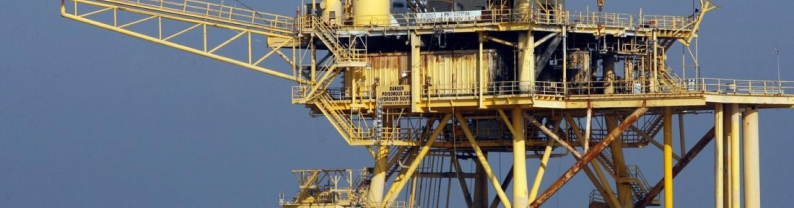
Oil prices stabilized on Thursday (February 12th), as the market reassigned a risk premium to US-Iran tensions despite US inventory data showing swelling domestic supplies. This movement confirms one thing: geopolitical headlines are still more "noise" than signals of a short-term surplus. As of 3:50 PM WIB, Brent was at $69.60/barrel (+0.29%) and WTI was at $64.83/barrel (+0.31%). The gains were moderate, but enough to keep prices near the psychological $70 level for Brent. From a geopolitical perspective, market focus is on the potential for escalation in the Middle East. Recent reports...
The Australian dollar weakened to around $0.654 on Tuesday, snapping a five-session winning streak, as investors paused amid a mix of domestic economic signals. Notably, Australia's current account deficit narrowed to over one-year low in Q2 2025, coming in better than market expectations. Moreover, manufacturing activity jumped to a near three-year high in August 2025, marking the eighth consecutive month above the 50-point expansion threshold. Meanwhile, business inventories saw their weakest expansion since the contraction in Q3 2024. In the housing sector, private house approvals...
The dollar index hovered around 97.8 on Tuesday as investors returned from the holiday weekend and awaited crucial labor market reports this week that could shape the Federal Reserve's policy path. Attention is on Friday's August payrolls release, alongside unemployment, job openings, and private hiring figures. The greenback has faced pressure recently as markets boosted bets on Fed rate cuts despite sticky inflation, with traders pricing in nearly a 90% chance of a 25 basis point reduction later this month. San Francisco Fed President Mary Daly said Friday the central bank is prepared to...
The spot gold price strengthened again and set a new record in trading on Tuesday (September 2nd) morning, reaching US$3,505 per ounce—its highest level ever. Market sentiment was driven by strong expectations that the Federal Reserve will cut interest rates by 25 basis points at its upcoming September meeting, with a probability of nearly 90 percent. The weakening US dollar also strengthened gold's position as a safe-haven asset, especially following dovish comments from Fed officials and a US court ruling that partially lifted Trump-era tariffs. Meanwhile, holdings of SPDR Gold Trust—the...
Gold prices rose to an over four-month high on Tuesday and were close to a record high as safe haven demand was boosted by heightened uncertainty over U.S. President Donald Trump's trade tariffs. Persistent bets that the Federal Reserve will cut interest rates in September kept gold underpinned, as did sustained weakness in the dollar, which hit a one-month low. Spot gold rose 0.2% to $3,483.02 an ounce, while gold futures for December rose 0.2% to $3,554.32/oz by 20:41 ET (00:41 GMT). Spot prices were trading less than $20 away from a late-April record high of $3,500/oz. US tariff...
West Texas Intermediate (WTI), the US crude oil benchmark, is trading around $64.50 during the early Asian trading hours on Tuesday. The WTI edges lower amid concerns about weaker global demand following US President Donald Trump's doubling of the existing 25% duty on Indian exports. Traders brace for the American Petroleum Institute (API) weekly crude oil stock, which will be published later on Tuesday. The Trump administration's decision to impose steep tariffs on Indian imports took effect, raising fears of slowing trade and weaker global demand, which undermines the WTI price. The Trump...
Global benchmark Brent crude oil settled 1% higher on Monday, as concerns mounted that intensifying airstrikes in Russia and Ukraine could lead to supply disruptions, and as a weaker dollar lent additional support. Brent crude futures settled up 67 cents, or 1%, at $68.15 a barrel. The U.S. benchmark, the West Texas Intermediate futures contract , was up 67 cents, or 1.1% at $64.68 by 2:15 p.m. ET. There will be no settlement for WTI futures on Monday due to Labor Day holiday in the U.S. Trading volume for both Brent and WTI was also muted due to that reason. Ukrainian President Volodymyr...
Silver (XAG/USD) kicks off the week on a strong footing, with spot prices extending their rally for a fifth consecutive session, breaking above the $40.00 mark to hit fresh 14-year highs — levels last seen in September 2011. At the time of writing, the metal is consolidating around $40.70, as thin trading conditions prevail due to the US Labor Day holiday. The sustained rally in Silver comes on the back of broad US Dollar (USD) weakness and firm expectations of a Federal Reserve (Fed) interest rate cut in September, which continues to support demand for non-yielding assets. Market sentiment...
Gold (XAU/USD) started the week on a stronger note, extending its five-day rally to reach its highest level in more than four months, last seen on April 22. A generally weaker US dollar and strong expectations for a Federal Reserve (Fed) interest rate cut in September continued to support gold's momentum. At the time of writing, XAU/USD was consolidating around $3,477 in the American session, after hitting an intraday high of $3,490 during Asian hours—just shy of its all-time peak of $3,500. Mild technical selling and stable US Treasury yields weighed on sentiment, while trading...
 Gold rises in the early Asian trade. There's a broad commodities uptrend, driven by macro uncertainty, a weaker dollar, and persistent demand for "hard" assets, says Fawad Razaqzada, market analyst...
 Oil extended declines after OPEC+ agreed to a bigger-than-expected production increase next month, raising concerns about oversupply just as US tariffs fan fears about the demand outlook.
Brent...
Oil extended declines after OPEC+ agreed to a bigger-than-expected production increase next month, raising concerns about oversupply just as US tariffs fan fears about the demand outlook.
Brent...
 The Japanese Yen (JPY) weakened against its US counterpart and reversed part of Friday's recovery from the lowest level since July 23 following Bank of Japan (BOJ) Governor Kazuo Ueda's remarks....