


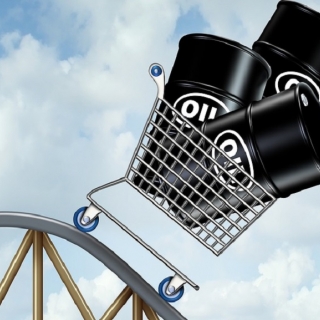
Oil prices edged higher on Thursday as investors remained cautious about the Iran-Israel ceasefire and shifted their attention to market fundamentals after a stockdraw in the United States.
Brent crude futures rose 34 cents, or 0.5%, to $68.02 a barrel by 1055 GMT. U.S. West Texas Intermediate crude gained 35 cents, or 0.5%, to $65.27 a barrel.
Both benchmarks climbed nearly 1% on Wednesday, recovering from losses earlier in the week after data showed resilient U.S. demand. Brent futures are trading below their close of $69.36 on June 12, the day before Israel started air strikes on Iran.
Investors are shifting their focus to macroeconomics and oil balances, while monitoring the Israel-Iran truce, said PVM analyst Tamas Varga.
UBS analyst Giovanni Staunovo said oil prices had tracked equity markets so far on Thursday, while ANZ analysts said the U.S. driving season had started slowly but was now stoking demand.
U.S. crude oil and fuel inventories fell in the week to June 20 as refining activity and demand rose, the Energy Information Administration said on Wednesday.
Crude inventories fell by 5.8 million barrels, the EIA said, exceeding analysts' expectations in a Reuters poll for a 797,000-barrel draw.
Gasoline stocks unexpectedly fell by 2.1 million barrels, compared with forecasts for a 381,000-barrel build as gasoline supplied, a proxy for demand, rose to its highest level since December 2021.
On Saturday, Igor Sechin, the head of Russia's largest oil producer Rosneft (ROSN.MM), opens new tab, said OPEC+, which groups the Organization of the Petroleum Exporting Countries and allies including Russia, could bring forward its output hikes by around a year from an initial plan.
Meanwhile, U.S. President Donald Trump hailed the swift end to war between Iran and Israel and said Washington would likely seek a commitment from Tehran to end its nuclear ambitions at talks with Iranian officials next week.
Trump also said on Wednesday that the U.S. was maintaining maximum pressure on Iran - including restrictions on sales of Iranian oil - but signalled a potential easing in enforcement to help the country rebuild.
Source: Reuters
Oil prices stabilized on Thursday (February 12th), as the market reassigned a risk premium to US-Iran tensions despite US inventory data showing swelling domestic supplies. This movement confirms one ...
Oil prices rose on Wednesday (February 11th), supported by a combination of geopolitical risk premiums from US-Iran tensions and more solid Asian demand signals particularly from India which helped ea...
Oil remained in the green zone on Tuesday (February 10th), as the market refused to abandon the Middle East risk premium. As of 13:07 GMT (20:07 WIB), Brent rose +0.4% to $69.32/barrel, while WTI rose...
Oil prices fell about 1% on Monday as concerns about conflict in the Middle East eased slightly. The market calmed after the US and Iran agreed to resume talks on Tehran's nuclear program, reducing fe...
Oil prices moved slightly higher in a volatile session on Friday, as investors assessed the direction of nuclear negotiations between the United States and Iran. Price movements appeared sensitive to ...
Oil prices stabilized on Thursday (February 12th), as the market reassigned a risk premium to US-Iran tensions despite US inventory data showing swelling domestic supplies. This movement confirms one thing: geopolitical headlines are still more...
Gold prices weakened slightly on Thursday (February 12th), as more solid US employment data reduced market confidence in an imminent Federal Reserve interest rate cut. The strong employment data prompted market participants to shift expectations of...
The Hang Seng Index reversed its downward trend in Hong Kong on Thursday (February 12th), weakening by around 0.9% to around 27,000 after a strong session earlier. This decline halted the momentum of the short term rally, as investors began to...