


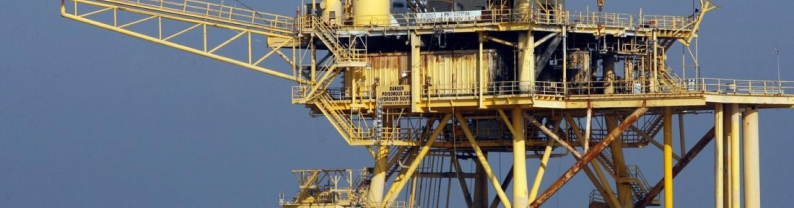
Oil prices stabilized on Thursday (February 12th), as the market reassigned a risk premium to US-Iran tensions despite US inventory data showing swelling domestic supplies. This movement confirms one thing: geopolitical headlines are still more "noise" than signals of a short-term surplus. As of 3:50 PM WIB, Brent was at $69.60/barrel (+0.29%) and WTI was at $64.83/barrel (+0.31%). The gains were moderate, but enough to keep prices near the psychological $70 level for Brent. From a geopolitical perspective, market focus is on the potential for escalation in the Middle East. Recent reports...
US stocks closed higher on Friday, with the S&P 500 and Nasdaq each up 1.6%, while the Dow gained 601 points. Investors weighed a tense exchange between President Donald Trump and Ukraine's Volodymyr Zelenskyy in the Oval Office. Vance called Zelensky "disrespectful," while Trump accused Zelensky of "gambling with World War III." Trump's tariff threats also rekindled warnings of retaliation from China, raising uncertainty, especially in Big Tech. Economic data sent mixed signals: Core PCE inflation eased to 2.6% as expected, but consumer spending unexpectedly fell 0.2% in January. Nvidia...
European stocks pared early morning gains but still closed slightly lower on Friday, ending a volatile week as markets continued to assess the impact of U.S. tariffs on the EU on the European economy. The Eurozone STOXX 50 fell 0.4% to close at 5,451, not too far from a record high hit last week, while the STOXX 600 closed just below the flatline at 557, just below Wednesday's all-time high. Technology stocks led the declines as markets weighed the cautious outlook for the U.S. tech sector and potential tariffs from Washington, with ASML and Infineon down 3-1% and 2.2% respectively. In turn,...
The S&P 500 hovered around the flatline, the Nasdaq fell about 0.6% and the Dow Jones gained nearly 90 points on Friday, with the tech sector remaining under pressure and traders digesting the latest PCE report and escalating trade tensions. Nvidia shares dropped 2%, extending the previous session's sell-off after its quarterly results failed to impress investors. Also, Broadcom was down 0.8%, Tesla fell 0.9%, and Oracle slipped 2%. Meanwhile, PCE price data aligned with expectations, with annual rates easing slightly. This provided some relief over inflationary pressures and reinforced...
European markets opened in negative territory on Friday, after U.S. President Donald Trump threatened once again to slap tariffs on the EU and followed through with new levies on Canada and Mexico. The pan-European Stoxx 600 index was 0.5% lower during early trade, with almost every sector losing ground. All major bourses saw losses, with France's CAC 40 and the German Dax both down more than 0.5%. Regional markets ended Thursday's session lower after Trump threatened to impose 25% duties on imports from the EU, saying the tariffs would be announced "very soon" and apply to "cars and...
The Hang Seng plunged 777 points, or 3.3%, to close at 22,941 on Friday, falling for a second day after the U.S. slapped 10% tariffs on Chinese imports, adding to the 10% tariffs imposed on Feb. 4 to bring the total to 20%. In response, China vowed to take all "necessary" countermeasures, further escalating tensions between the two countries. The market extended its decline from a three-year high, down 2.3% weekly, as losses hit all sectors. The tech index plunged 5.3% after Nvidia's disappointing earnings, prompting profit-taking in stocks such as Horizon Robotics (-14.0%), Sunny Optical...
Shares in Japan and South Korea closed sharply lower on Friday as US President Donald Trump's volley of tariff measures sparked fresh fears about a global trade war. Japan's Nikkei 225 closed down 2.88 percent at 37,155.50, while in Seoul the Kospi ended 3.39 percent lower at 2,532.78. The Hang Seng in Hong Kong was off 3.47 percent in afternoon trade. Source: AFP
Shares in Hong Kong plunged 309 points or 1.3% to 23,415 on the last trading day of February, marking a second session of losses. Sentiment deteriorated as the US will impose an additional 10% tariff on Chinese imports on March 4 while moving forward with 25% levies on products from Canada and Mexico. The Hang Seng fell further from its highest in over three years, hit earlier in the week, and was on track for its first weekly drop in seven, with all sectors suffering sharp losses. The tech index tumbled over 2.5% as an AI-driven rally lost steam after Nvidia's underwhelming earnings...
The Nikkei 225 Index plunged 2.5% to around 37,300 on Friday, hitting its lowest levels in five months and mirroring losses on Wall Street overnight where Nvidia and other technology stocks were sold off. Investors also grappled with Trump's escalating tariffs and mounting economic concerns in the US. Trump confirmed that tariffs against Mexico and Canada will proceed next week, while China will be slapped with an additional 10% tariff. In Japan, the latest economic reports pointed to softening activity, including retail sales, industrial production and Tokyo inflation figures. Chip and...
 Gold rises in the early Asian trade. There's a broad commodities uptrend, driven by macro uncertainty, a weaker dollar, and persistent demand for "hard" assets, says Fawad Razaqzada, market analyst...
 Oil extended declines after OPEC+ agreed to a bigger-than-expected production increase next month, raising concerns about oversupply just as US tariffs fan fears about the demand outlook.
Brent...
Oil extended declines after OPEC+ agreed to a bigger-than-expected production increase next month, raising concerns about oversupply just as US tariffs fan fears about the demand outlook.
Brent...
 The Japanese Yen (JPY) weakened against its US counterpart and reversed part of Friday's recovery from the lowest level since July 23 following Bank of Japan (BOJ) Governor Kazuo Ueda's remarks....