


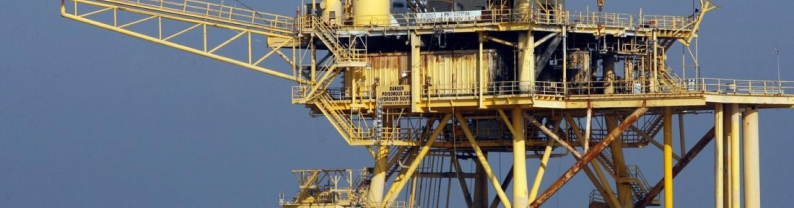
Oil prices stabilized on Thursday (February 12th), as the market reassigned a risk premium to US-Iran tensions despite US inventory data showing swelling domestic supplies. This movement confirms one thing: geopolitical headlines are still more "noise" than signals of a short-term surplus. As of 3:50 PM WIB, Brent was at $69.60/barrel (+0.29%) and WTI was at $64.83/barrel (+0.31%). The gains were moderate, but enough to keep prices near the psychological $70 level for Brent. From a geopolitical perspective, market focus is on the potential for escalation in the Middle East. Recent reports...
The Hang Seng plunged 138 points, or 0.6%, to close at 24,231 on Friday (07/03), snapping a three-day rally. The decline followed trade data from China showing an unexpected drop in imports in January-February, while exports lost momentum amid rising U.S. tariff pressures. The index retreated from a three-year high as investors turned cautious ahead of China's February CPI and PPI data, due over the weekend. Losses were broad-based, with property, financial and technology stocks leading the decline. JD Logistics plunged 14.0% after reporting weaker Q4 net profit growth, while Semicon...
European markets moved lower on Friday, ending a tumultuous week marked by erratic U.S. tariff policy, the European Central Bank's latest interest rate cut, German fiscal reform and increased regional defense spending. The U.K.'s FTSE 100 is set to open down 48.9 points at 8,643, France's CAC 40 is down 80 points at 8,146 and Germany's DAX is down 308 points at 23,136, according to IG data. The regional Stoxx 600 index has swung between losses and gains this week amid geopolitical developments and corporate earnings. The benchmark is now headed for a weekly loss, which would be its first...
The Nikkei 225 Index fell 2.17% to close at 36,887 on Friday, nearing its lowest levels since September and tracking losses on Wall Street, where technology stocks were hit by heavy selling pressure. President Trump's shifting tariff policies and the escalating global trade war fueled fears about the economy, increasing market uncertainty. Additionally, local equities faced pressure from a stronger yen and rising Japanese Government Bond (JGB) yields, as expectations grow that the Bank of Japan will continue raising interest rates this year. Economy Minister Ryosei Azakawa announced that...
The Nikkei 225 Index dropped 2.2% to below 36,900 on Friday, sliding toward its lowest levels since September and tracking losses on Wall Street overnight, where technology stocks came under heavy selling pressure. Trump's shifting tariff policies and escalating global trade tensions also fueled concerns about economic growth, adding to the bearish sentiment. Additionally, local equities faced pressure from a stronger yen and rising JGB yields. These moves come as the Bank of Japan is widely expected to continue raising interest rates this year. BOJ Deputy Governor Shinichi Uchida...
Asia-Pacific markets are set to mostly fall on Friday, mirroring losses on Wall Street after U.S. President Donald Trump's tariff concessions failed to calm investors. Traders were also worried by economic data from the U.S., which raised alarm that Trump's policies could hinder the U.S. economy. The Federal Reserve's Beige Book and the Institute for Supply Management's manufacturing reading both indicated fear of rising input costs because of the tariffs. Data from Challenger, Gray & Christmas released Thursday showed layoff announcements soared to 2020 highs, which the outplacement...
Stocks resumed their steep pullback on Thursday as the latest concessions from the White House on President Donald Trump's controversial tariff policies failed to calm rattled investors. The Dow Jones Industrial Average slid 427.51 points lower, or 0.99%, to 42,579.08, after falling more than 600 points at session lows. The S&P 500 tumbled 1.78% to 5,738.52. The Nasdaq Composite dropped 2.61% to 18,069.26, officially closing in correction territory, which is when an index falls 10% from a recent high. Thursday's declines come as U.S. tariffs on Canadian, Mexican and Chinese imports...
Stocks resumed their pullback on Thursday as the latest concessions from the White House on President Donald Trump's controversial tariff policies failed to calm rattled investors. The Dow Jones Industrial Average traded 523 points lower, or 1.2%. The S&P 500 shed 1.8%, while the Nasdaq Composite lost 2.3%. The major averages have each lost more than 3% this week as U.S. tariffs on Canadian, Mexican and Chinese imports took effect, rocking financial markets. Canada and China responded with retaliatory levies of its own, while Mexico said it would unveil measures over the...
Stocks fell again on Thursday as investors sought more clarity on the latest U.S. tariff measures and their impact on the economy. The Dow Jones Industrial Average was trading 530 points lower, or 1%. The S&P 500 was down 1.5%, and the Nasdaq Composite was down 1.8%. U.S. tariffs on Canadian, Mexican and Chinese imports took effect this week, rattling financial markets. Canada and China responded with their own retaliatory tariffs, while Mexico said it would announce its own measures over the weekend. The major averages have each lost at least 3% this week as trade tensions escalate....
 Gold rises in the early Asian trade. There's a broad commodities uptrend, driven by macro uncertainty, a weaker dollar, and persistent demand for "hard" assets, says Fawad Razaqzada, market analyst...
 Oil extended declines after OPEC+ agreed to a bigger-than-expected production increase next month, raising concerns about oversupply just as US tariffs fan fears about the demand outlook.
Brent...
Oil extended declines after OPEC+ agreed to a bigger-than-expected production increase next month, raising concerns about oversupply just as US tariffs fan fears about the demand outlook.
Brent...
 The Japanese Yen (JPY) weakened against its US counterpart and reversed part of Friday's recovery from the lowest level since July 23 following Bank of Japan (BOJ) Governor Kazuo Ueda's remarks....