


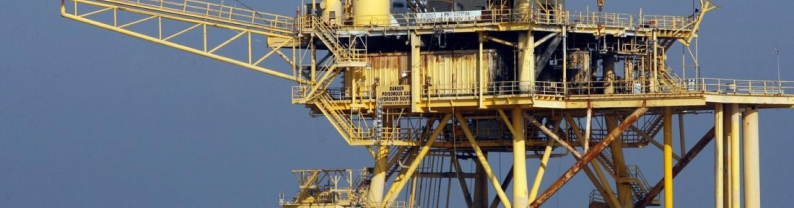
Oil prices stabilized on Thursday (February 12th), as the market reassigned a risk premium to US-Iran tensions despite US inventory data showing swelling domestic supplies. This movement confirms one thing: geopolitical headlines are still more "noise" than signals of a short-term surplus. As of 3:50 PM WIB, Brent was at $69.60/barrel (+0.29%) and WTI was at $64.83/barrel (+0.31%). The gains were moderate, but enough to keep prices near the psychological $70 level for Brent. From a geopolitical perspective, market focus is on the potential for escalation in the Middle East. Recent reports...
European markets started the new trading week on a positive note after recent global market uncertainty and volatility. The pan-European Stoxx 600 moved 0.2% higher shortly after the opening bell on Monday (3/10), with most sectors and all major bourses in positive territory. Germany's Dax and France's CAC 40 both rose around 0.4%. Regional markets closed in negative territory on Friday, ending a volatile week marked by indecisive policy on US tariffs, the latest interest rate cut from the European Central Bank, and key US jobs data showing nonfarm payrolls rose by less than expected by...
Japan stocks were higher after the close on Monday, as gains in the Power, Rubber and Chemical, Petroleum & Plastic sectors led shares higher. At the close in Tokyo, the Nikkei 225 added 0.34%. The best performers of the session on the Nikkei 225 were Lasertec Corp (TYO:6920), which rose 9.98% or 1,380.00 points to trade at 15,210.00 at the close. Meanwhile, SMC Corp (TYO:6273) added 6.82% or 3,750.00 points to end at 58,750.00 and Oriental Land Co Ltd (TYO:4661) was up 5.54% or 172.00 points to 3,277.00 in late trade. The worst performers of the session were Mitsubishi Heavy...
Equities in Hong Kong slumped 321 points or 1.4% to 23,888 on Monday morning, extending losses from the prior period amid widespread sector declines. Traders reacted to fresh data from China over the weekend, which showed that consumer prices fell the most in 13 months in February, while producer deflation persisted for the 29th consecutive month despite a slower fall. Meanwhile, US futures plummeted, as tariffs on key trading partners, an uptick in jobless rates, and federal workforce job cuts fueled concerns about a potential slowdown in US GDP growth, following months of outperformance...
The Nikkei 225 Index rose 0.3% to around 3,990, while the broader Topix Index edged up 0.1% to 2,712 on Monday, recovering some losses from the previous session and mirroring Wall Street's gains from Friday. Investors remained cautious as they navigated US President Donald Trump's evolving trade policies and mounting concerns over the US economy. However, a strengthening yen, which surged to a five-month high on safe-haven demand, may limit further upside for Japanese equities. On the data front, Japan posted a current account deficit in January for the first time in two years, as imports...
Asia-Pacific markets were mixed on Monday after a volatile trading week around the world. U.S. stocks — which are expected to open lower on Monday — have been on a roller-coaster ride since the start of the month given uncertainty surrounding U.S. President Donald Trump's tariff policies — and their impact on the superpower's growth and inflation. Australia's S&P/ASX 200 surged 0.34%, after closing at a six-month high in its previous session. Japan's benchmark Nikkei 225 started the day flat while the broader Topix index edged down 0.1%. The country's cash earnings rose 2.8%...
The S&P 500 regained some ground on Friday, but the index still posted its worst week in several months as the salvo of trade policy actions unnerved investors. The broad index rose 0.55% to 5,770.20, while the Nasdaq Composite gained 0.7% to 18,196.22. The Dow Jones Industrial Average added 222.64 points, or 0.52%, to end at 42,801.72. Friday saw volatile trading, with the Dow falling more than 400 points at session lows before an afternoon rally. The S&P 500 and Nasdaq both fell more than 1% at their worst points in the trading day. Despite Friday's recovery, the S&P 500...
The yield on the 10-year US Treasury note edged up to 4.28% on Friday after Fed Chair Jerome Powell reassured markets that the economy remains solid while emphasizing no urgency to cut rates. However, the yield remained near the four-month low of 4.16% touched on Monday, as uncertainty over US trade policy fueled concerns about economic growth and extended Wall Street's shift toward safer assets. President Trump granted a one-month exemption for Mexican and Canadian goods under the USMCA from new tariffs but vowed to end further relief. Meanwhile, pledges of aggressive spending cuts and...
The S&P 500 rose on Friday, regaining some ground as the benchmark headed for its worst week since September as a series of trade policy moves unsettled investors. The broad index rose 0.4%, while the Nasdaq Composite gained 0.6%. The Dow Jones Industrial Average traded nearly flat. A weaker-than-expected jobs report released Friday raised further concerns about a weakening economy and lower interest rates. Nonfarm payrolls increased by 151,000 jobs in February, short of the consensus estimate for 170,000 from economists surveyed by Dow Jones. The unemployment rate edged up to...
 Gold rises in the early Asian trade. There's a broad commodities uptrend, driven by macro uncertainty, a weaker dollar, and persistent demand for "hard" assets, says Fawad Razaqzada, market analyst...
 Oil extended declines after OPEC+ agreed to a bigger-than-expected production increase next month, raising concerns about oversupply just as US tariffs fan fears about the demand outlook.
Brent...
Oil extended declines after OPEC+ agreed to a bigger-than-expected production increase next month, raising concerns about oversupply just as US tariffs fan fears about the demand outlook.
Brent...
 The Japanese Yen (JPY) weakened against its US counterpart and reversed part of Friday's recovery from the lowest level since July 23 following Bank of Japan (BOJ) Governor Kazuo Ueda's remarks....