


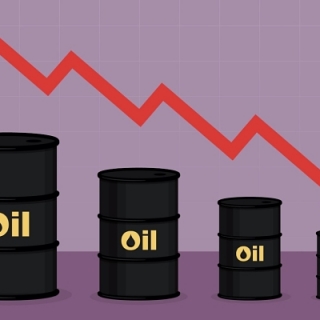
Oil prices fell more than 1% on Friday (November 21), extending their decline for a third session as the United States pushes for a Russia-Ukraine peace deal that could boost global supply, while interest rate uncertainty curbs investor risk appetite.
Brent crude futures fell 83 cents, or 1.3%, to $62.55 a barrel at 08:45 GMT. U.S. West Texas Intermediate crude fell 1.6%, or 92 cents, to $58.08. Both contracts are expected to decline by about 3% for the week, erasing last week's gains.
Market sentiment turned bearish as Washington pushed for a peace plan between Ukraine and Russia to end the three-year war, while sanctions against Russian oil producers Rosneft and Lukoil are set to take effect on Friday.
Ukrainian President Volodymyr Zelenskiy said he would work with Washington on a plan to end the war. "With news of the talks coming just as US sanctions against Russia's two largest oil companies were set to take effect today, the oil market is feeling some relief from the risks to Russian oil supplies," said Jim Reid, managing director at Deutsche Bank.
However, a peace deal may still be a long way off. "A deal is far from certain," ANZ analysts said in a note to clients, adding that Kyiv has repeatedly rejected Russia's demands as unacceptable. "The market is also becoming skeptical that the latest restrictions on Russian oil companies Rosneft and Lukoil will be effective," the analysts said.
Lukoil has until December 13 to sell its large international portfolio. A stronger dollar is also pressuring oil prices, with the currency poised for its best week in more than a month amid investor expectations that the US Federal Reserve is unlikely to cut interest rates next month.
OANDA analyst Kelvin Wong said the CME FedWatch tool shows the chance of a December rate cut has decreased significantly to 35%, down from around 90% a month ago. (alg)
Source: Reuters.com
Oil prices stabilized on Thursday (February 12th), as the market reassigned a risk premium to US-Iran tensions despite US inventory data showing swelling domestic supplies. This movement confirms one ...
Oil prices rose on Wednesday (February 11th), supported by a combination of geopolitical risk premiums from US-Iran tensions and more solid Asian demand signals particularly from India which helped ea...
Oil remained in the green zone on Tuesday (February 10th), as the market refused to abandon the Middle East risk premium. As of 13:07 GMT (20:07 WIB), Brent rose +0.4% to $69.32/barrel, while WTI rose...
Oil prices fell about 1% on Monday as concerns about conflict in the Middle East eased slightly. The market calmed after the US and Iran agreed to resume talks on Tehran's nuclear program, reducing fe...
Oil prices moved slightly higher in a volatile session on Friday, as investors assessed the direction of nuclear negotiations between the United States and Iran. Price movements appeared sensitive to ...
Oil prices stabilized on Thursday (February 12th), as the market reassigned a risk premium to US-Iran tensions despite US inventory data showing swelling domestic supplies. This movement confirms one thing: geopolitical headlines are still more...
Gold prices weakened slightly on Thursday (February 12th), as more solid US employment data reduced market confidence in an imminent Federal Reserve interest rate cut. The strong employment data prompted market participants to shift expectations of...
The Hang Seng Index reversed its downward trend in Hong Kong on Thursday (February 12th), weakening by around 0.9% to around 27,000 after a strong session earlier. This decline halted the momentum of the short term rally, as investors began to...